
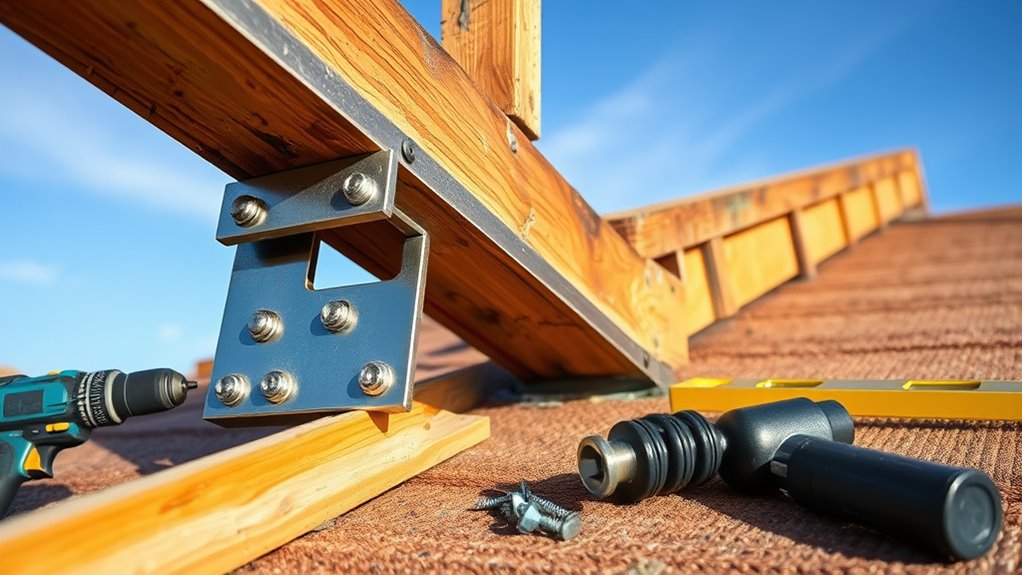
Installing roof braces might seem like a task only seasoned builders can handle, but it’s a manageable DIY project that can greatly enhance your roof’s integrity. You’ll need to assess your roof’s condition and gather the right tools before you proceed. Understanding the intricacies involved in the installation process is essential for ensuring stability and longevity. Let’s explore how you can effectively tackle this important home improvement task.




Understanding Roof Braces and Their Importance
Roof braces are essential structural components that provide stability and support to your roof system. Understanding the different roof brace types, such as tension, compression, and king post braces, is vital for selecting the right one for your project. Each type offers unique structural benefits, enhancing load distribution and reducing the risk of roof sagging. Properly installed roof braces not only improve the integrity of your home but also contribute to its longevity. By recognizing the importance of these braces, you empower yourself to create a safer and more resilient structure, allowing for the freedom to enjoy your living space without worry.
Tools and Materials Needed for Installation
Before starting your roof brace installation, you’ll need to gather essential tools and materials. This includes a specific list of hardware and safety equipment to guarantee a secure and safe process. Let’s break down what you’ll need to effectively complete the installation.
Essential Tools Overview
Starting a DIY roof brace installation requires a well-equipped toolkit to guarantee a successful and safe project. Depending on your roof types, you’ll need specific tools to work with various brace materials. Here’s a concise list of essential tools:
- Measuring Tape – Accurate measurements are vital for fitting braces properly.
- Level – Confirms your braces are straight and stable.
- Drill and Bits – Needed for securing the braces to the structure.
- Safety Gear – Always prioritize safety with gloves, goggles, and a hard hat.
Having these tools ready will streamline your installation process and enhance your confidence.
Required Materials List
When preparing for your roof brace installation, it’s essential to gather the right materials to guarantee a sturdy and secure outcome. Start with your chosen roof brace types, such as diagonal or vertical braces, depending on your structural needs. You’ll also need screws, brackets, and a level for accuracy. Don’t forget a measuring tape and a saw for precise cuts. These materials enhance the installation benefits, ensuring your roof can withstand harsh conditions. Having everything ready not only streamlines the process but also empowers you to take control of your roof’s integrity, promoting safety and longevity.
Safety Equipment Checklist
As you prepare for your roof brace installation, ensuring you have the proper safety equipment is crucial to protect yourself during the process. Neglecting safety gear can expose you to significant installation risks. Here’s a quick checklist to keep you safe:
- Hard Hat – Protects your head from falling debris.
- Safety Glasses – Shields your eyes from dust and particles.
- Non-slip Footwear – Provides traction on slippery surfaces.
- Harness and Lanyard – Prevents falls while working at height.
Using this essential safety gear will help you maintain your freedom to work efficiently while minimizing hazards during your installation.
Assessing Your Roof’s Condition
Before you begin any DIY roof brace installation, it’s essential to assess your roof’s condition. Conducting a thorough roof inspection helps determine its structural integrity. Look for signs of damage or wear, such as cracks, sagging, or leaks. Here’s a quick checklist to aid your assessment:
| Inspection Area | Signs of Damage | Action Needed |
|---|---|---|
| Roof Surface | Cracks, Blisters | Repair or Replace |
| Rafters | Sagging, Splits | Reinforce or Replace |
| Flashing | Rust, Gaps | Reseal or Replace |
| Gutters | Clogs, Leaks | Clean or Repair |
| Insulation | Wet, Moldy | Replace or Dry |
Ensure your roof is stable before proceeding.
Measuring and Planning Your Brace Layout
With your roof’s condition assessed, the next step involves measuring and planning your brace layout. This vital phase guarantees structural integrity. Follow these layout strategies to optimize your brace types:
After assessing your roof, the crucial next step is to measure and plan your brace layout for optimal structural integrity.
- Identify load-bearing points: Mark where braces will support the most weight.
- Determine brace types: Choose between diagonal, vertical, or horizontal braces according to your roof structure.
- Space your braces: Ensure even distribution, typically every 4 to 6 feet.
- Use a level: Guarantee all braces are aligned and secure for maximum stability.
Preparing the Area for Installation
To guarantee a smooth installation process, preparing the area is essential. Start by clearing debris from the installation site; this guarantees you have a clean and safe workspace. Remove any loose materials, tools, or obstacles that could hinder your progress. Next, mark the boundaries of the brace layout accurately. Use chalk or stakes to define where the braces will be installed, helping you visualize the structure’s alignment. This preparation will not only streamline your installation but also enhance the overall integrity of your roof. A well-prepared area sets the foundation for a successful DIY project.
Step-by-Step Installation Process
Before you start the installation process, gather all the necessary tools, including a drill, safety glasses, and a level. It’s essential to follow safety precautions to protect yourself and guarantee a successful installation. Familiarize yourself with the steps ahead to streamline your work and achieve the best results.
Tools Required for Installation
While starting a DIY roof brace installation, it’s crucial to gather the right tools to guarantee a smooth process. You’ll need to make sure you have the appropriate equipment for various roof brace types and installation techniques. Here’s a quick list to help you get started:
- Measuring Tape – For accurate length measurements.
- Drill – Necessary for creating holes and securing braces.
- Level – To make certain your braces are installed evenly.
- Hammer – Useful for driving in nails or adjusting components.
With these tools in hand, you’re well on your way to a successful roof brace installation.
Safety Precautions to Follow
Since working on a roof can be hazardous, it is essential to prioritize safety throughout the installation process. First, make certain you wear a hard hat and non-slip footwear to protect against falls. Use a safety harness attached to a secure anchor point for added security. Follow installation guidelines meticulously, avoiding shortcuts that compromise your safety. Make sure your work area is clear of debris, and always have a first aid kit nearby. If you’re unsure about your ability to complete the task safely, don’t hesitate to consult a professional. Remember, roof safety should never be overlooked during your DIY project.
Ensuring Proper Alignment and Stability
Guaranteeing proper alignment and stability is essential for the effectiveness of your roof brace installation. To achieve this, follow these alignment techniques and conduct thorough stability assessments:
- Measure Accurately: Use a level to guarantee braces are straight and positioned correctly.
- Secure Fasteners: Tighten all screws and bolts to prevent movement.
- Check Angles: Utilize a protractor to confirm the angles meet structural requirements.
- Inspect Load Distribution: Ensure weight is evenly distributed across braces for maximum support.
Maintenance Tips for Your Roof Braces
To maintain the structural integrity of your roof braces, it’s essential to perform regular inspections and upkeep. Look for common roof issues like sagging, cracks, or water damage. Inspect the braces for signs of wear, ensuring they’re secure and free from rust or corrosion. Utilize brace maintenance techniques such as tightening bolts and applying protective coatings. Keep gutters clear to prevent water buildup that can weaken support structures. If you notice any significant deterioration, take immediate action. Regular maintenance not only prolongs the life of your roof braces but also enhances your overall roof performance, ensuring your home remains safe and secure.
When to Call a Professional
While regular maintenance can help you identify minor issues with your roof braces, certain situations warrant the expertise of a professional. Knowing when to DIY can save you time and money, but you should call an expert if you notice:
- Significant sagging or movement in the braces.
- Water damage or mold growth around the roof area.
- Extensive cracks or breaks in the braces.
- Structural concerns that may affect the integrity of your roof.
Recognizing these signs of damage early can prevent further complications, ensuring your roof remains safe and secure. Don’t hesitate to seek help when needed.
Frequently Asked Questions
Can I Install Roof Braces in Bad Weather Conditions?
You shouldn’t install roof braces in bad weather conditions. Prioritize safety precautions, as slippery surfaces and strong winds can increase risks. Wait for favorable conditions to guarantee both your safety and the effectiveness of the installation.
How Long Does a Roof Brace Installation Typically Take?
Typically, a roof brace installation takes about four to six hours, depending on the brace material options you choose. Planning for installation timeframes guarantees you have the freedom to complete the project efficiently and effectively.
What Types of Roofs Are Suitable for Brace Installation?
Gable roofs and hip roofs are ideal for brace installation. Their structural designs allow for effective weight distribution and stability, enhancing durability. You’ll find braces can greatly improve performance in these roof types.
How Do I Know if My Roof Needs Braces?
You can determine if your roof needs braces by conducting a thorough roof inspection. Look for signs of sagging or damage, as these indicate compromised structural integrity that may require additional support to maintain stability.
Are Roof Braces Visible From the Ground After Installation?
Yes, roof braces can be visible from the ground after installation. While they enhance structural integrity, you must weigh aesthetic considerations, as some designs may disrupt your home’s visual appeal, impacting your freedom of expression.