
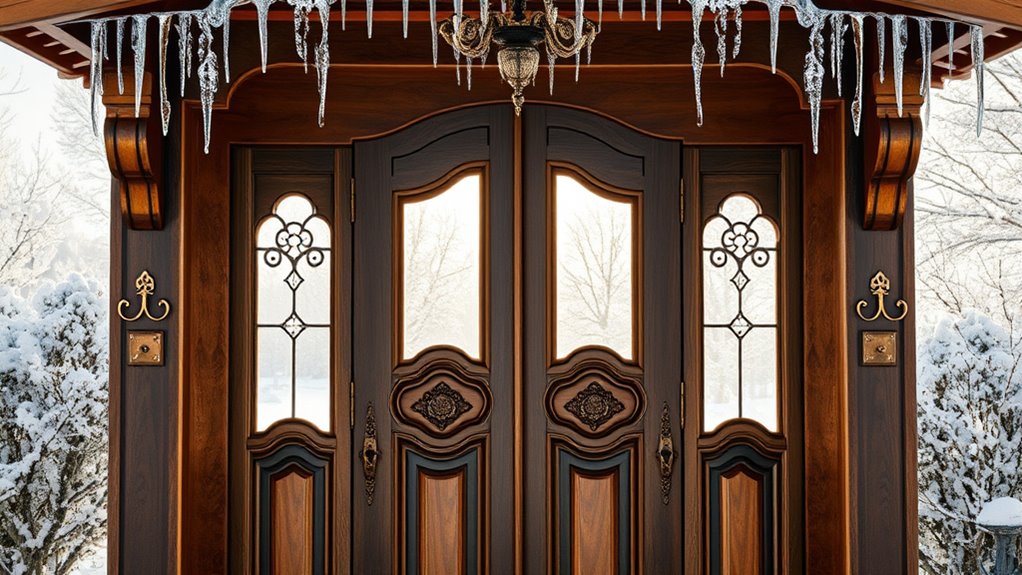
Many might think that a gazebo entry door can’t withstand harsh winter conditions, but with the right approach, it can. By prioritizing effective insulation and robust weatherproofing, you can create a door that not only keeps the cold out but also enhances your gazebo’s overall functionality. Let’s explore how to choose the right materials and techniques to guarantee your entry door performs at its best against the elements.




Choosing the Right Materials for Insulation
When you’re selecting materials for insulating your gazebo entry door, it’s crucial to take into account both thermal performance and durability. You’ll want to explore various insulation types, such as foam boards, fiberglass, or reflective barriers, each offering unique benefits. Foam boards provide high R-values, enhancing energy efficiency, while fiberglass is lightweight and cost-effective. Consider weatherstripping and door sweeps to complement your insulation choice, sealing gaps that could compromise thermal integrity. Prioritize materials that withstand environmental conditions, ensuring your door remains functional and appealing. Ultimately, a well-insulated entry door can greatly enhance your gazebo’s comfort and energy efficiency.
Designing for Airflow and Ventilation
Although it might seem counterintuitive to prioritize airflow in a cold-proof gazebo entry door, effective ventilation is essential for maintaining a comfortable indoor environment. Implementing proper airflow control guarantees that moisture and stale air are expelled, preventing mold and unpleasant odors. Consider these ventilation methods:
- Passive Vents: Install small vents high and low to promote natural airflow.
- Adjustable Louvers: Use adjustable louvers to control airflow based on seasonal needs.
- Incorporate Screens: Add screens to keep insects out while allowing fresh air in.
- Air Circulation Fans: Use discreet fans to enhance air movement during warmer months.
Weatherproofing Techniques for Your Door
To guarantee your gazebo entry door withstands harsh weather conditions, it’s essential to implement effective weatherproofing techniques. Start by applying weather resistant seals around the door frame to prevent drafts and moisture infiltration. Make certain these seals can accommodate thermal expansion, allowing for movement without compromising their integrity. Use high-quality weatherstripping materials that withstand extreme temperatures while maintaining flexibility. Reinforce the door with a solid, insulated core to enhance thermal resistance. Finally, consider adding a storm door to provide an additional barrier against the elements, making sure your gazebo remains a cozy retreat regardless of the weather outside.
Enhancing Aesthetic Appeal With Style
When enhancing the aesthetic appeal of your gazebo entry door, consider various design options that complement your overall structure. The right color palette can greatly influence the visual impact, while careful material selection plays a vital role in both durability and style. By thoughtfully integrating these elements, you can create a door that’s not only functional but also visually striking.
Design Options Available
As you consider design options for a cold-proof gazebo entry door, it’s essential to balance functionality with aesthetic appeal. You can choose from a variety of styles that cater to your preferences. Here are four options:
- Modern designs: Sleek lines and minimalist features create a contemporary look.
- Traditional styles: Classic craftsmanship adds warmth and charm.
- Mixed materials: Combining wood and metal enhances durability while maintaining beauty.
- Glass inserts: Translucent panels provide natural light while insulating effectively.
These choices allow you to express your personal style while ensuring your gazebo remains functional against the cold.
Color Palette Choices
Choosing the right color palette for your cold-proof gazebo entry door can greatly enhance its aesthetic appeal while complementing the overall design of your outdoor space. Consider current color trends—rich earth tones evoke warmth, while cool blues and greens promote tranquility. Understanding color psychology can guide you in selecting hues that reflect your personality and purpose. For instance, red can symbolize passion, while neutral shades offer versatility. By carefully combining colors, you can create a striking focal point that invites freedom and creativity, ultimately transforming your gazebo into a welcoming retreat regardless of the cold weather outside.
Material Selection Impact
The color palette you’ve selected for your gazebo entry door sets the stage, but the choice of materials plays a pivotal role in enhancing both aesthetics and durability. Consider these factors for ideal material selection:
- Wood: Offers natural beauty but requires treatment for moisture resistance.
- Fiberglass: Combines aesthetic appeal with high thermal efficiency and low maintenance.
- Steel: Delivers superior material durability and security, often enhanced with decorative finishes.
- Vinyl: Provides a versatile look with excellent insulation properties, ensuring energy efficiency.
Adding Security Features to Your Entry Door
When it comes to securing your gazebo entry door, you’ll want to focus on strong locking mechanisms to deter unauthorized access. Reinforced door materials can enhance durability and resistance against forced entry. Additionally, installing a security camera adds another layer of protection, allowing you to monitor activity around your entry point effectively.
Strong Locking Mechanisms
While you may prioritize insulation and weather resistance for your gazebo entry door, ensuring robust security with strong locking mechanisms is equally essential. Consider the following features during lock installation:
- Deadbolt Types: Opt for single or double-cylinder deadbolts for enhanced security.
- Smart Locks: Integrate keyless entry systems for convenience and advanced features.
- Strike Plates: Use reinforced strike plates to resist forced entry.
- Key Control: Implement restricted key systems to limit unauthorized duplication.
Reinforced Door Materials
Reinforced door materials play an essential role in enhancing the security of your gazebo entry door. By selecting materials like steel, fiberglass, or reinforced wood, you’ll greatly increase door durability and resistance to forced entry. Steel doors offer superior strength, while fiberglass provides excellent insulation and impact resistance. Reinforcing the door frame with metal or installing a multi-point locking system further enhances security. Consider adding security plates to vulnerable areas, which can thwart tampering. Investing in these reinforced materials not only safeguards your space but also grants you the freedom to enjoy your gazebo without constant worry about intruders.
Security Camera Installation
Installing security cameras at your gazebo entry door can greatly enhance your overall security system. To guarantee effective monitoring, consider these steps for ideal camera placement and outdoor visibility:
- Height: Mount cameras at least 8–10 feet high to deter tampering.
- Angle: Position cameras to cover entry points and blind spots.
- Lighting: Confirm cameras are placed where they’re well-lit at night, enhancing image quality.
- Wi-Fi signal: Select a location with strong connectivity to maintain video feed reliability.
With these considerations, you’ll effectively safeguard your gazebo entry while enjoying the freedom of peace of mind.
Maintenance Tips for Longevity and Efficiency
To guarantee your cold-proof gazebo entry door remains effective and aesthetically pleasing over time, regular maintenance is essential. Proper door maintenance not only protects your investment but also enhances energy efficiency. Here’s a quick reference table to help you stay on track:
| Maintenance Task | Frequency | Benefits |
|---|---|---|
| Inspect weather seals | Bi-annually | Prevent drafts |
| Clean door surfaces | Monthly | Preserve appearance |
| Lubricate hinges | Every 6 months | guarantee smooth operation |
| Check locks | Annually | Maintain security |
| Tighten screws | Every 6 months | Enhance structural integrity |
Stay proactive for a long-lasting door!
Frequently Asked Questions
What Are the Best Insulation Materials for Extreme Cold Weather?
When tackling extreme cold, consider insulation types like spray foam and fiberglass batts. These materials offer high thermal resistance, ensuring your space stays warm and energy-efficient, giving you the freedom to enjoy winter comfortably.
How Can I Ensure My Door Seals Properly?
You’ll want to guarantee your door’s perfectly aligned, like a soldier at attention. Regular seal maintenance is key, so check for gaps and adjust hinges or thresholds to keep the cold out and your freedom intact.
What Is the Average Cost of a Cold-Proof Entry Door?
The average cost of a cold-proof entry door typically ranges from $500 to $2,500, depending on cost factors like materials and design. Installation expenses can add another $300 to $1,000, depending on complexity and local labor rates.
Are There Specific Door Styles That Perform Better in Cold Climates?
Yes, insulated steel and fiberglass doors provide superior thermal performance in cold climates. These materials minimize heat loss and offer durability, ensuring your entry remains comfortable and energy-efficient, allowing you to enjoy your space year-round.
How Often Should I Replace Weatherstripping on My Door?
You should check your weatherstripping maintenance every six months and replace it as needed. Different door seal types can wear out at varying rates, so stay vigilant for drafts or visual wear to guarantee peak performance.