
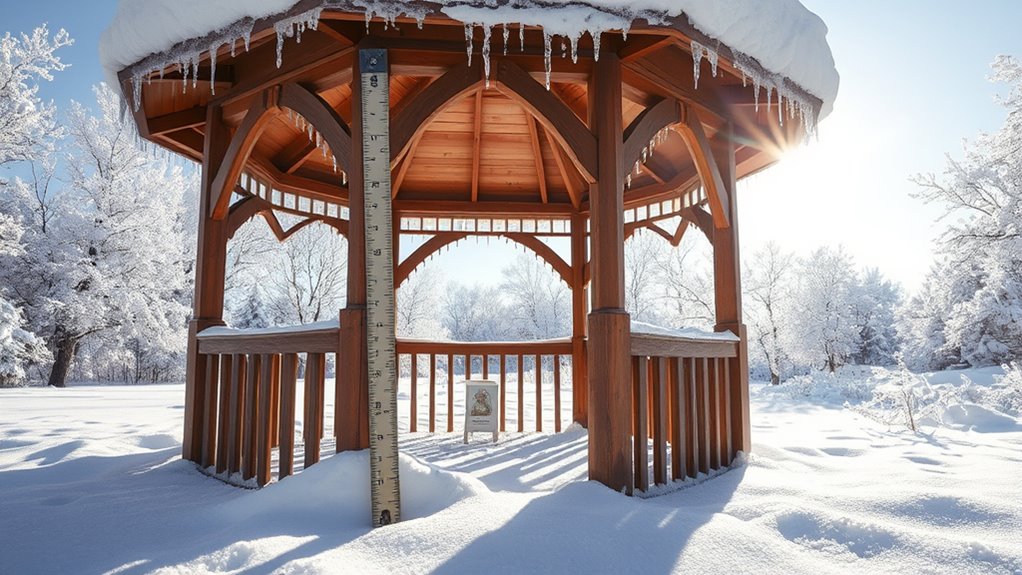
When it comes to snow load, gazebos can often appear as fragile as a house of cards in a winter storm. You might believe that any gazebo can handle heavy snow, but that’s a dangerous misconception. The materials and design play critical roles in this equation, and neglecting these factors can lead to serious risks. What you think you know about snow load could have significant implications for your structure’s safety and longevity.
Understanding Snow Load and Its Importance
Understanding snow load is essential for designing and maintaining gazebos, especially in regions prone to heavy snowfall. Snow accumulation can greatly impact a gazebo’s structural integrity, leading to potential failures if not properly accounted for. You’ll need to take into account factors like roof shape, material strength, and local building codes to guarantee your gazebo can withstand expected snow loads. Regular assessments during winter months can help identify any risk of overload. By prioritizing snow load considerations, you empower yourself with the knowledge to create a safe, durable outdoor space that remains functional and aesthetically pleasing, even under challenging weather conditions.
All Gazebos Can Withstand Heavy Snow
While it might seem that all gazebos are designed to withstand heavy snow, this assumption can be misleading. Gazebo specifications vary greatly, and not every structure undergoes rigorous snow load testing. Some designs may look robust but fail to meet safety standards under heavy snow conditions.
| Type of Gazebo | Snow Load Capacity |
|---|---|
| Wooden | 20-30 psf |
| Metal | 30-40 psf |
| Vinyl | 15-25 psf |
| Custom | Varies by design |
| Portable | 10-15 psf |
Understanding these differences is essential for informed decisions.
Material Durability: Not All Are Equal
When choosing materials for your gazebo, it’s essential to compare wood and metal regarding durability under snow loads. Each material has unique weather resistance factors that can greatly influence its longevity and structural integrity. Understanding these differences will help you make an informed decision for your specific climate conditions.
Wood vs. Metal
Choosing between wood and metal for your gazebo isn’t just a matter of aesthetics; it greatly affects the structure’s durability and longevity. Wood strength offers natural resilience, but it’s susceptible to rot and insect damage, necessitating regular maintenance. Conversely, metal provides robust support and can withstand significant snow loads, but it faces the risk of metal corrosion, especially in humid climates. While both materials have their advantages, consider how each impacts your gazebo’s lifespan. If you prioritize minimal upkeep and durability, metal may be your best option, but if you appreciate natural beauty, high-quality treated wood could serve you well.
Weather Resistance Factors
The material you select for your gazebo directly influences its ability to withstand various weather conditions, particularly snow loads. Different gazebo materials offer varying levels of weather resistance; for instance, treated wood can rot or warp under moisture, while aluminum or steel provides superior durability. Composite materials may resist fading but can still buckle under extreme snow pressure. Understanding these distinctions is vital for making an informed choice. Select gazebo materials that align with your climate to guarantee longevity and safety. Ultimately, the right choice empowers you to enjoy your outdoor space, regardless of the weather challenges it faces.
The Role of Design in Snow Load Resistance
Although many homeowners might underestimate the impact of design on a gazebo’s ability to withstand snow loads, careful architectural considerations can considerably enhance structural integrity. Incorporating design features like sloped roofs and reinforced beams helps redistribute snow weight effectively. Materials chosen for durability also contribute to overall strength. For instance, using high-quality wood or metal can prevent structural failure under heavy loads. Additionally, considering the gazebo’s geometry can optimize snow shedding, reducing accumulation. Ultimately, a well-thought-out design not only guarantees safety but also provides the freedom to enjoy your gazebo year-round, regardless of harsh winter conditions.
Location Matters: Snow Load Variations
When considering snow load for your gazebo, regional variations play an essential role. Different areas have specific building codes that dictate the required snow load capacity based on historical data. Understanding these differences guarantees that your structure can withstand local conditions effectively.
Regional Snow Load Differences
Understanding regional snow load differences is vital for anyone considering a gazebo installation, as snow accumulation can vary greatly based on geographical location. Areas with heavy regional snowfall require careful snow load calculations to guarantee structural integrity. For instance, northern regions may face significant snow loads, while southern areas might see minimal accumulation. It’s important to assess local weather patterns and historical data when determining the necessary specifications for your gazebo. Ignoring these variations can lead to inadequate support, risking damage or collapse under heavy snow. Always prioritize accurate calculations tailored to your region’s unique snowfall characteristics for the best safety.
Building Codes Considerations
How do building codes impact your gazebo’s design in relation to snow load? Understanding local building regulations is vital, as they dictate the safety standards your structure must meet. Snow load requirements vary considerably by region, influenced by historical snowfall data and climatic conditions. If you ignore these codes, you risk structural failure, safety hazards, and potential legal ramifications. Additionally, adhering to these regulations guarantees your gazebo withstands the pressures of accumulated snow, providing peace of mind. Ultimately, integrating these requirements into your design empowers you to create a safe, durable, and aesthetically pleasing outdoor space that meets both personal and legal expectations.
Seasonal Maintenance and Its Impact
Although many homeowners may overlook the importance of seasonal maintenance, its impact on the structural integrity and longevity of gazebos cannot be underestimated. Regular seasonal inspections are essential for identifying potential weaknesses caused by snow load, moisture accumulation, or pest infestations. Implementing maintenance tips, like sealing joints and checking for rot, guarantees your gazebo remains resilient against environmental stressors. Neglecting these tasks can lead to costly repairs or even structural failure. By prioritizing seasonal maintenance, you not only enhance your gazebo’s durability but also preserve its aesthetic appeal, allowing you the freedom to enjoy your outdoor space worry-free for years to come.
DIY Gazebo Construction: Risks and Considerations
Seasonal maintenance not only helps preserve the aesthetic appeal of your gazebo but also sets the stage for any DIY construction you might consider. Before diving into your project, it’s essential to evaluate DIY risks, such as structural integrity and the potential for snow load failure. Verify you’re familiar with local building codes and material specifications to avoid costly mistakes. Consider the gazebo’s design, size, and intended use while factoring in weather conditions. A well-planned approach mitigates risks and enhances safety, allowing you to enjoy your gazebo without the worry of inadequate support or premature deterioration.
How to Choose a Snow-Resilient Gazebo
When selecting a snow-resilient gazebo, it’s essential to take into account several key factors to guarantee it can withstand the weight of heavy snowfall. First, check the snow load ratings for the specific gazebo styles you’re considering; these ratings indicate the maximum snow weight the structure can handle. Opt for designs with a steep roof pitch, as they facilitate snow shedding. Additionally, materials like reinforced wood or metal offer enhanced durability. Ascertain the gazebo’s foundation is stable to prevent shifting under snow load. By prioritizing these elements, you’ll achieve a functional and lasting outdoor space during winter months.
Frequently Asked Questions
What Is the Average Snow Load for My Area?
The average snow load in your area varies based on regional variations. Generally, it ranges from 20 to 60 pounds per square foot. It’s essential to check local building codes for specific requirements and safety.
Can I Reinforce My Existing Gazebo for Snow?
Yes, you can reinforce your gazebo like a knight donning armor. Explore reinforcement techniques such as adding brackets or supports, and consider structural materials like steel for enhanced durability against snow loads and harsh weather.
How Often Should I Clear Snow From My Gazebo?
You should clear snow from your gazebo regularly, ideally after each snowfall. Consistent snow removal is essential for effective gazebo maintenance, preventing structural damage and ensuring it remains a safe, enjoyable space for your freedom.
Do Gazebo Permits Consider Snow Load Regulations?
Yes, gazebo permits typically consider snow load regulations. When planning gazebo construction, you’ll need to guarantee it meets local codes, accounting for potential snow accumulation to maintain structural integrity and safety throughout winter months.
What Are the Signs of Snow Load Damage on a Gazebo?
You’ll notice sagging roofs, cracked beams, and warped structures as signs of snow load damage. Regular gazebo maintenance can prevent these issues, ensuring your outdoor space remains safe, functional, and aesthetically pleasing despite harsh winter conditions.