
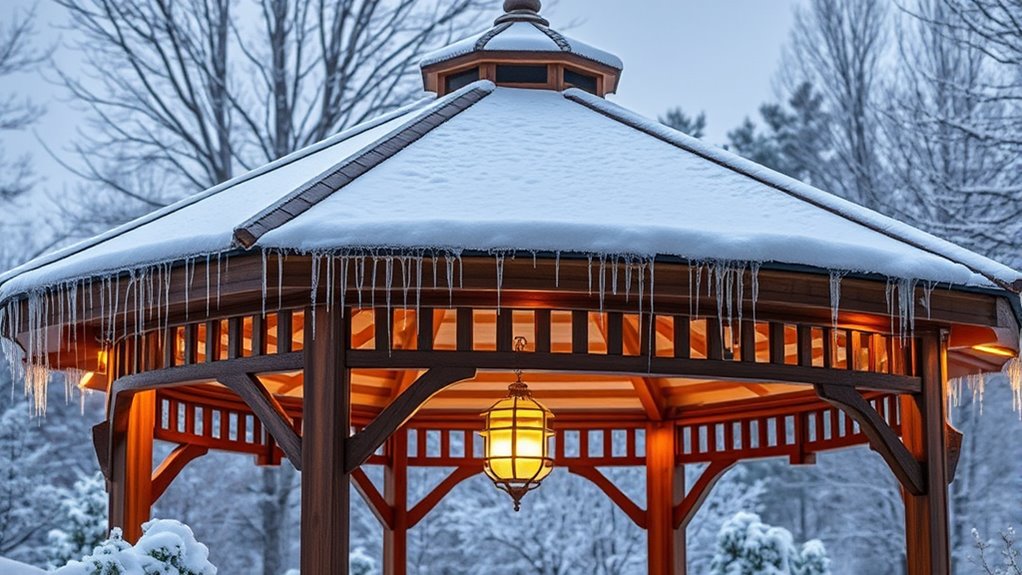
Imagine your gazebo standing proud against a winter backdrop, untouched by the icy grip of snow. Using heated roof cables can make that vision a reality, providing warmth and protection for your structure. These cables not only prevent ice accumulation but also enhance your outdoor enjoyment during colder months. Curious about how to select the right cables and install them effectively? Let’s explore the practical aspects of this winterizing solution.




Understanding Heated Roof Cables
When you think about keeping your gazebo cozy during winter, heated roof cables might not be the first solution that comes to mind, but they can make a significant difference. These cables provide an applications overview that highlights their efficiency in preventing ice buildup and enhancing warmth. Installation techniques vary, but generally, you’ll want to secure the cables along the roof’s edges, ensuring even coverage. With a bit of planning, you can easily integrate these cables into your gazebo’s structure. This practical solution not only adds comfort but also allows you to enjoy your outdoor space, even in chilly weather.
Benefits of Heated Roof Cables for Gazebos
Heated roof cables for your gazebo offer some impressive benefits that can enhance your outdoor experience. They help prevent ice dam formation, which can protect your structure and extend its lifespan. Plus, with reduced maintenance efforts, you can spend more time enjoying your gazebo and less time worrying about winter weather.
Prevents Ice Dam Formation
Ice dams can wreak havoc on your gazebo’s roof, causing potential damage and costly repairs. When winter weather sets in, melting snow can refreeze at the eaves, creating these troublesome barriers. By installing heated roof cables, you can prevent ice dam formation effectively. These cables keep the roof surface warm, allowing snow to melt and drain away safely. This not only protects your gazebo from ice build-up but also guarantees that you can enjoy it without worrying about damage. Investing in heated roof cables gives you peace of mind and keeps your gazebo in great shape through harsh winter conditions.
Enhances Structural Longevity
While snow and ice can be beautiful, they can also take a toll on your gazebo’s structure. Using heated roof cables helps protect your gazebo by preventing the accumulation of heavy snow and ice, which can strain structural materials. This added layer of weather resistance guarantees that your gazebo remains intact and extends its lifespan. By keeping the roof clear, you’re not just preserving aesthetics; you’re maintaining the integrity of your investment. You’ll enjoy your outdoor space longer, free from worries about damage. Embracing this technology truly enhances your gazebo’s structural longevity, allowing you to savor your retreat year-round.
Reduces Maintenance Efforts
Maintaining a gazebo can often feel like a never-ending chore, especially in winter when snow and ice accumulate. Heated roof cables take that burden off your shoulders by ensuring reduced snow accumulation on your gazebo’s roof. You won’t have to climb up to shovel or scrape, saving you time and energy. Plus, with less snow and ice, you’ll experience minimized repair costs over time, since the risk of structural damage decreases. This means more freedom to enjoy your space without the hassle of constant upkeep, allowing you to relax and appreciate your gazebo all year round.
How Heated Roof Cables Work
Heated roof cables work by using electric resistance to generate warmth, ensuring that snow and ice don’t accumulate on your gazebo’s roof. These cables are strategically installed to promote effective heat transfer, melting snow before it can build up. As they operate, they provide energy efficiency, using only the necessary power to keep your roof clear. This means you can enjoy your gazebo without worry, freeing you from the hassle of manual snow removal. With heated cables, you’re investing in both protection for your structure and comfort for your outdoor space, allowing you to embrace winter with ease.
Choosing the Right Heated Roof Cables
When it comes to keeping your gazebo safe from winter’s chill, selecting the right heated roof cables is key. You’ll want to take into account several factors to guarantee optimal performance:
- Types of cables: Choose between self-regulating and constant wattage options.
- Cable wattage: Match the wattage to your gazebo’s size and insulation.
- Length: Measure your roof carefully to avoid excess or insufficient cable.
- Weather resistance: Verify the cables are designed for outdoor use and can withstand harsh conditions.
Installation Process for Heated Roof Cables
Installing heated roof cables for your gazebo can seem intimidating, but with the right tools and a clear step-by-step guide, you’ll have it done in no time. You’ll need a few essential items to get started, and following a systematic approach will guarantee everything functions smoothly. Let’s break down what you’ll need and how to get it all set up properly.
Necessary Tools Required
Before diving into the installation of heated roof cables for your gazebo, it’s vital to gather the right tools to guarantee a smooth and efficient process. You’ll need some important installation tools and safety equipment to make sure everything goes off without a hitch. Here’s what to collect:
- Heated roof cable kit
- Electrical tape and connectors
- Ladder or scaffolding for access
- Safety goggles and gloves
Having these items on hand not only makes the task easier but also helps you work confidently and safely. With the right preparation, you’ll be ready to enjoy your cozy gazebo in no time!
Step-by-Step Installation Guide
As you prepare to install heated roof cables in your gazebo, it’s essential to follow a methodical approach to guarantee both safety and effectiveness. Start by evaluating your gazebo’s roof layout, identifying potential installation challenges. Next, consider the ideal cable placement, ensuring even coverage without exposing cables to sharp edges. Securely attach the cables with adhesive or clips, following any manufacturer guidelines. Connect the cables to a power source, ensuring proper insulation. Finally, test the system before fully relying on it. By taking these steps, you’ll enjoy a cozy, snow-free gazebo while embracing the freedom of outdoor living.
Maintenance Tips for Heated Roof Cables
While maintaining your heated roof cables might seem challenging, it’s essential for guaranteeing their longevity and effectiveness. Regular cable inspections and seasonal maintenance can save you time and money in the long run. Here are some practical tips to keep your cables in top shape:
- Inspect cables for damage or wear each season.
- Clear debris and snow accumulation from the roof.
- Guarantee connections are secure and free from moisture.
- Test the system’s functionality before winter hits.
Safety Considerations When Using Heated Roof Cables
When you’re using heated roof cables, it’s important to prioritize safety to prevent accidents and guarantee peak performance. Start by ensuring you’ve got proper electrical safety measures in place—this means using a GFCI outlet and checking for any frayed cables. Good cable insulation is vital; inspect it regularly for wear and tear to avoid shorts or malfunctions. Make sure to follow the manufacturer’s guidelines for installation and operation. If you notice any issues, don’t hesitate to turn off the power and seek professional help. Keeping your gazebo safe and functional lets you enjoy your outdoor space worry-free.
Cost Analysis: Are Heated Roof Cables Worth It?
After addressing safety measures, it’s important to assess whether investing in heated roof cables for your gazebo is worth it. Conducting a cost comparison can reveal potential long-term savings. Here are some factors to evaluate:
- Initial installation costs versus traditional heating methods
- Reduction in snow and ice damage expenses
- Increased usability during winter months
- Potential rise in property value with enhanced features
Alternative Solutions for Winterizing Your Gazebo
As winter approaches, you might be looking for effective ways to winterize your gazebo without relying solely on heated roof cables. Consider using insulation methods like thermal curtains, which can trap heat and shield against cold drafts. Adding weatherstripping around windows and doors can also help keep your winter gazebo cozy. Moreover, think about a portable heater for extra warmth during those chilly nights. Finally, a sturdy roof cover can prevent snow accumulation, protecting your structure. These alternatives not only enhance comfort but also offer you the freedom to enjoy your gazebo all winter long.
Frequently Asked Questions
Can Heated Roof Cables Be Used on All Gazebo Types?
Heated roof cables aren’t universally compatible with all gazebo types. You’ll need to take into account installation requirements and compatibility factors specific to your structure. Check your gazebo’s materials and design to guarantee safe, effective use.
How Long Do Heated Roof Cables Typically Last?
Heated roof cables typically last 10 to 15 years, depending on installation quality and maintenance requirements. Regular checks and proper care can extend their lifespan, ensuring you enjoy your gazebo without worries for years.
Are There Energy-Efficient Options for Heated Roof Cables?
“Don’t put all your eggs in one basket.” Yes, there are energy-efficient options for heated roof cables. They may have higher installation costs initially, but the long-term energy savings can make them worthwhile.
Can I Install Heated Roof Cables Myself?
Yes, you can install heated roof cables yourself, but make certain you follow safety precautions. Research installation tips thoroughly, and consider consulting a professional if you’re unsure about any steps to guarantee a safe, effective setup.
Are Heated Roof Cables Weather-Resistant?
Yes, heated roof cables are designed to withstand various weather conditions. For installation tips, guarantee proper sealing and secure connections. This way, you can enjoy your outdoor space without worrying about snow buildup or ice formation.