
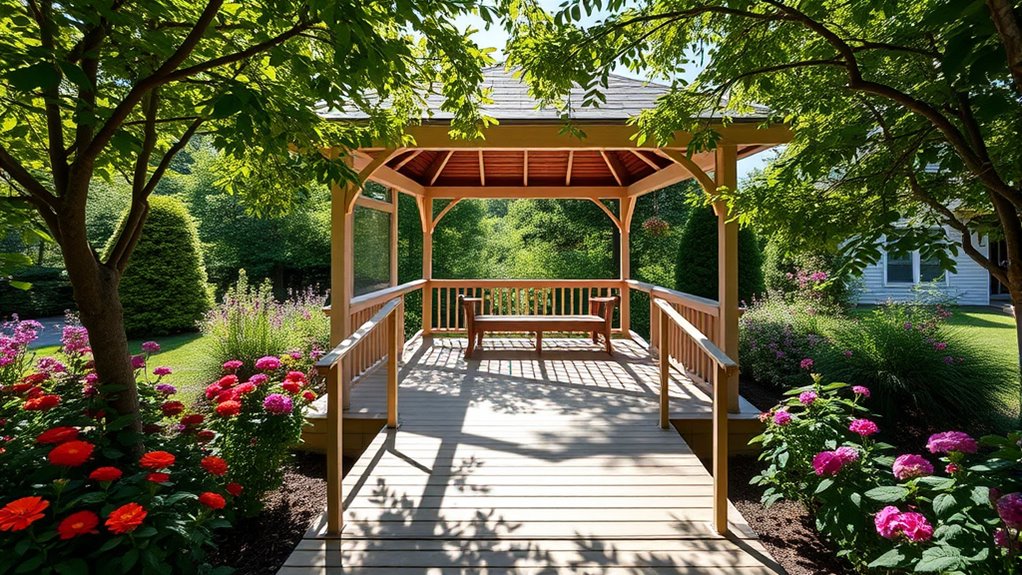
Imagine a serene outdoor retreat where everyone can gather, regardless of mobility challenges. Low-mobility friendly gazebo designs are essential in crafting inclusive spaces that prioritize accessibility and comfort. With thoughtful features like ramps and adjustable seating, these structures cater to diverse needs. However, the true artistry lies in the balance of functionality and aesthetic appeal. How do you guarantee both safety and style in your outdoor sanctuary?
Understanding Low-Mobility Needs
When considering low-mobility needs, it’s essential to recognize that accessibility goes beyond just physical space; it encompasses comfort and safety as well. You’ll find that addressing mobility challenges requires a keen understanding of user experience. Think about how design elements can facilitate ease of movement, such as wide pathways and stable surfaces. Consider the importance of handrails and seating options, which can enhance both comfort and confidence. By prioritizing these aspects, you create an environment that not only accommodates but empowers individuals, allowing them to enjoy outdoor spaces freely and safely, fulfilling their desire for independence and connection with nature.
Key Features of Low-Mobility Friendly Gazebos
Five key features define low-mobility friendly gazebos, ensuring they cater effectively to individuals with mobility challenges. These designs prioritize user friendly layouts and include adaptive features, creating an inviting space for everyone.
Low-mobility friendly gazebos prioritize accessibility, ensuring everyone can enjoy outdoor spaces comfortably and safely.
- Ramp Access: Smooth, gentle slopes for easy entry.
- Wide Doorways: Ample space for wheelchairs and mobility aids.
- Adjustable Seating: Flexible options for comfort and accessibility.
- Non-slip Flooring: Safety first, promoting stability and confidence.
With these features, you can enjoy the freedom and tranquility of outdoor spaces without barriers, making your gazebo experience both enjoyable and inclusive.
Design Considerations for Accessibility
Creating a low-mobility friendly gazebo goes beyond just incorporating key features; it also involves thoughtful design considerations that enhance accessibility. Embracing universal design principles guarantees that everyone, regardless of ability, can enjoy the space. Think about wide pathways, ramped entrances, and handrails that provide support without obstructing movement. Gathering user feedback is vital; it helps you identify potential barriers and refine your design. Consider adjustable seating and surfaces that accommodate various mobility aids. By prioritizing these elements, you’re not just building a gazebo—you’re crafting an inclusive haven where freedom and comfort coexist in harmony.
Materials and Construction for Durability
When building a low-mobility friendly gazebo, choosing weather-resistant materials is essential for long-lasting performance. You’ll also want to take into account structural integrity to guarantee safety and stability, especially with increased usage. Finally, incorporating sustainable construction practices not only enhances durability but also contributes positively to the environment.
Weather-Resistant Materials
Although durability is essential for any outdoor structure, selecting weather-resistant materials becomes even more critical for low-mobility friendly gazebo designs. You want your gazebo to endure the elements while providing a safe haven. Here are four key materials to evaluate:
- Weather resistant fabrics – Look for UV-resistant and water-repellent options.
- Aluminum framing – Lightweight yet strong, it resists rust and corrosion.
- Composite decking – Durable finishes guarantee longevity and low maintenance.
- Tempered glass – Provides visibility and safety without sacrificing sturdiness.
Choosing these materials guarantees your gazebo remains a reliable retreat through any weather.
Structural Integrity Considerations
Guaranteeing structural integrity in low-mobility friendly gazebo designs hinges on thoughtful material selection and construction techniques. You’ll want to prioritize materials with high load bearing capacity, guaranteeing they comply with safety regulations. Here’s a quick comparison of materials:
| Material | Load Bearing Capacity | Durability | Cost |
|---|---|---|---|
| Treated Wood | Medium | Moderate | Low |
| Aluminum Alloy | High | High | Moderate |
| Steel Reinforced | Very High | Very High | High |
| Composite | Moderate | High | Moderate |
Choosing wisely guarantees your gazebo stands the test of time and supports freedom of movement.
Sustainable Construction Practices
Building low-mobility friendly gazebos calls for a keen focus on sustainable construction practices that enhance both durability and environmental responsibility. To create spaces that empower freedom, consider these key elements:
- Eco-friendly materials: Choose sustainably sourced wood or recycled metals for longevity.
- Energy-efficient designs: Incorporate natural ventilation and sunlight for minimal energy use.
- Low-maintenance finishes: Opt for weather-resistant coatings that reduce upkeep.
- Modular construction: Design adaptable components for easy repairs and upgrades.
These practices not only support a healthier planet but also guarantee your gazebo stands the test of time, providing a welcoming retreat for all.
Customization Options for Personalization
When you consider customizing a low-mobility friendly gazebo, you’ll find a plethora of options that can transform a standard structure into a personal haven. You can choose vibrant color schemes that reflect your personality, making the gazebo a true extension of your home. Decorative accents, like unique railings or artistic lighting, enhance both aesthetics and functionality. Add personalized touches such as engraved plaques or custom seating to create a welcoming atmosphere. Consider incorporating functional elements, like adjustable shading or accessible pathways, ensuring your gazebo not only looks great but also provides the freedom you deserve in your outdoor space.
Tips for Maintaining an Accessible Outdoor Space
To guarantee your outdoor space remains accessible, it’s essential to conduct regular surface inspections. Look for cracks, uneven spots, or debris that could hinder mobility. Additionally, keeping pathways clear of obstacles not only enhances safety but also promotes a welcoming environment for everyone.
Regular Surface Inspections
Regular surface inspections are essential for guaranteeing an accessible outdoor space, especially in areas designed for low-mobility users. Keeping surfaces safe and functional requires your attention. Here are some tips for effective surface maintenance:
- Check for cracks or unevenness that could pose hazards.
- Confirm drainage systems are clear to prevent water accumulation.
- Inspect surfaces for debris or obstacles that may impede movement.
- Schedule regular inspections to maintain consistency in upkeep.
Clear Pathway Maintenance
Guaranteeing clear pathways is essential for creating an accessible outdoor environment, as even minor obstacles can greatly hinder mobility for users with disabilities. To maintain accessible pathways, consider these pathway types and maintenance tips:
| Pathway Type | Maintenance Tip | Frequency |
|---|---|---|
| Paved | Remove debris and cracks | Weekly |
| Gravel | Replenish stones and level surface | Monthly |
| Wood Chips | Add fresh chips to maintain depth | Seasonally |
| Concrete | Seal cracks and clean surfaces | Biannually |
| Natural | Trim overgrowth and clear paths | As needed |
These practices guarantee freedom of movement and enjoyment in your outdoor space.
Frequently Asked Questions
What Are the Average Costs of Low-Mobility Friendly Gazebos?
Average costs for low-mobility friendly gazebos range from $2,000 to $10,000. For effective budget planning, consider cost comparisons between materials and features, ensuring you choose a design that enhances freedom and accessibility for all users.
How Do I Choose the Right Size for My Gazebo?
To choose the right gazebo size, consider your intended use and the gazebo dimensions. Verify it accommodates accessibility features, allowing ease of movement, and offers enough space for gatherings, enhancing your outdoor freedom and enjoyment.
Can I Install a Gazebo Myself for Low-Mobility Access?
Yes, you can install a gazebo yourself for low-mobility accessibility. Consider a DIY gazebo installation that prioritizes wide entrances and stable surfaces, ensuring freedom and ease of movement for everyone enjoying the space.
Are There Any Grants for Low-Mobility Outdoor Modifications?
Yes, you can explore grant options through local government programs or non-profit organizations focused on accessibility. These funding sources often assist with outdoor modifications, ensuring you can create a space that enhances your freedom and mobility.
How Long Do Low-Mobility Friendly Gazebos Typically Last?
Typically, low-mobility friendly gazebos last around 15-25 years, depending on durability factors like materials and maintenance tips. To maximize longevity, regularly inspect and treat surfaces, ensuring your outdoor oasis remains a reliable retreat for years.