
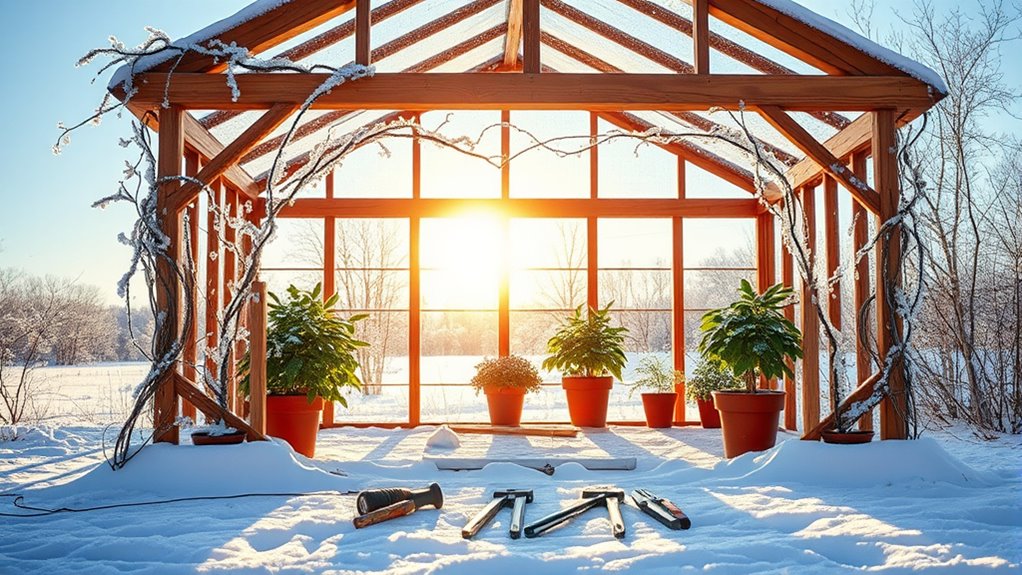
Building a winter greenhouse gazebo might just be the most transformative project you undertake for your gardening ambitions. It’s not just about aesthetics; it’s about creating a controlled environment that keeps your plants thriving through the cold months. From choosing the right materials to optimizing heating and ventilation, every detail matters in ensuring your greenhouse functions effectively. So, how do you begin crafting this multifunctional space that will elevate your gardening experience?
Planning Your Winter Greenhouse Gazebo
When you’re planning your winter greenhouse gazebo, it’s essential to take into account both the design and functionality to guarantee ideal plant growth in colder months. Focus on winter plant selection, opting for hardy varieties like pansies or evergreens that thrive in low light. Make sure your gazebo has adequate insulation and ventilation to maintain a stable environment. Incorporating seasonal decoration can enhance the aesthetic, using natural materials like pinecones or holly. Consider the layout to maximize sunlight exposure, while allowing easy access for maintenance. Balancing beauty and practicality will create a vibrant, productive space for your winter gardening endeavors.
Choosing the Right Location
When selecting a location for your winter greenhouse gazebo, consider the sunlight exposure your plants will need; maximizing direct sunlight is essential for growth during colder months. Additionally, you should evaluate wind protection to shield your structure from harsh winter breezes that can impact temperature stability. A well-chosen site balances these factors, enhancing your greenhouse’s efficiency and plant health.
Sunlight Exposure Importance
Although many factors contribute to the success of a winter greenhouse gazebo, choosing the right location with ideal sunlight exposure is essential for plant health and growth. You’ll need to evaluate sunlight angles throughout the year, as these affect how much light reaches your plants. Ideally, position your gazebo where it receives maximum sunlight during winter months, which may require seasonal adjustments to avoid shading from nearby structures or trees. Analyzing your site’s orientation guarantees your plants thrive, providing the warmth and light they need to flourish. A well-placed gazebo makes all the difference in cultivating a vibrant winter garden.
Wind Protection Considerations
While evaluating the ideal location for your winter greenhouse gazebo, it’s important to take into account wind protection, as strong gusts can damage plants and disrupt the microclimate you’re trying to create. Position your gazebo near natural wind barriers, like trees or hills, to shield it from harsh winds. However, make sure there’s still adequate air circulation to prevent stagnant air conditions, which can promote disease. You might also consider installing artificial wind barriers such as trellises or fences. Balancing protection with airflow is crucial for maintaining a healthy environment, allowing your plants the freedom to thrive throughout winter.
Selecting Materials for Construction
Choosing the right materials for your winter greenhouse gazebo is essential, as it directly impacts both its durability and efficiency in maintaining a suitable environment for your plants. Opt for sturdy wood types, like cedar or redwood, known for their resistance to rot and insects. These materials provide structural integrity while enhancing the aesthetics of your gazebo. For glazing, greenhouse plastics, such as polycarbonate or polyethylene, offer excellent insulation and UV protection. Ascertain the plastics are UV-stabilized to prevent degradation. By selecting the appropriate wood and greenhouse plastics, you’ll create a resilient and effective space for your winter gardening pursuits.
Designing Your Gazebo Layout
When designing your gazebo layout, start by selecting an ideal location that maximizes sunlight exposure while considering wind protection. Next, determine the size requirements based on the intended use and the number of plants you plan to cultivate. Finally, incorporate design features like shelving and ventilation to enhance functionality and plant health.
Selecting Ideal Location
Selecting the ideal location for your winter greenhouse gazebo is essential to its success and functionality. Begin with a thorough site analysis and terrain assessment to identify the best spot. Look for areas with maximum sunlight exposure while considering wind protection. Evaluate soil drainage to prevent water accumulation.
| Factors | Considerations |
|---|---|
| Sunlight | 6+ hours daily |
| Wind Direction | Natural barriers |
| Drainage | Well-drained soil |
| Accessibility | Easy access points |
Determining Size Requirements
Determining the size requirements for your winter greenhouse gazebo is essential for optimizing its functionality and aesthetic appeal. Accurate size estimation guarantees effective space utilization. Here are three key factors to take into account:
- Intended Use: Define what plants and activities will occupy the space; this influences dimensions.
- Occupancy: Reflect on how many people will use the gazebo at once; adequate room promotes comfort.
- Local Regulations: Check zoning laws to verify compliance, as these may dictate maximum size limits.
Incorporating Design Features
With the size of your winter greenhouse gazebo established, focusing on the design features can greatly enhance its usability and aesthetic. Consider incorporating elements like skylights for natural light or built-in shelving for plants, which blend design aesthetics with functional features.
| Feature | Aesthetic Impact | Functionality |
|---|---|---|
| Skylights | Bright, airy feel | Enhanced light access |
| Built-in Shelves | Organized appearance | Efficient space use |
| Decorative Railings | Visual appeal | Safety enhancement |
| Ventilation Louvers | Elegant design | Temperature control |
| Greenery Planters | Lush ambiance | Air purification |
These elements can transform your gazebo into a haven.
Insulation and Heating Options
While planning your winter greenhouse gazebo, understanding insulation and heating options is essential for maintaining an ideal growing environment. Consider these methods:
Planning your winter greenhouse gazebo requires careful consideration of insulation and heating methods to create the perfect growing environment.
- Thermal Mass: Utilize materials like stone or water barrels to absorb and store heat during the day, releasing it at night.
- Passive Heating: Position your gazebo to maximize sunlight exposure, using south-facing windows to capture warmth naturally.
- Insulation Materials: Install double-layer polycarbonate panels or insulated curtains to minimize heat loss and enhance energy efficiency.
Ventilation and Humidity Control
Effective ventilation and humidity control are essential for the health of plants in your winter greenhouse gazebo. Proper ventilation systems help maintain ideal humidity levels, preventing mold and ensuring your plants thrive. You can achieve this with exhaust fans, passive vents, or automated systems. Here’s a quick reference table for effective strategies:
| Strategy | Benefits | Considerations |
|---|---|---|
| Exhaust Fans | Reduces excess humidity | Requires power supply |
| Passive Vents | Cost-effective, natural airflow | Less control over conditions |
| Humidity Sensors | Monitors levels for accuracy | Initial setup investment |
| Automated Systems | Ideal control, energy-efficient | Requires programming |
Lighting Considerations
After ensuring proper ventilation and humidity control in your winter greenhouse gazebo, the next key aspect to address is lighting. Effective lighting is essential for plant growth and your enjoyment of the space. Consider these options:
- LED options: They’re energy-efficient and provide the spectrum needed for plant photosynthesis.
- Solar lighting: Harnessing sunlight reduces energy costs while providing a natural ambiance, especially during the day.
- Supplemental grow lights: Use them for plants requiring extra light during darker winter months.
Furnishing and Organizing Your Space
Creating an inviting and functional space in your winter greenhouse gazebo can greatly enhance your gardening experience. Consider various furniture styles that complement your aesthetic while ensuring comfort. Utilizing smart storage solutions can keep your tools and plants organized and accessible. Here’s a table summarizing essential furnishings and their functions:
| Furniture Type | Style | Purpose |
|---|---|---|
| Benches | Rustic | Seating and planting |
| Shelving Units | Modern | Organizing supplies |
| Storage Bins | Minimalist | Tool and pot storage |
| Planters | Contemporary | Displaying plants |
| Worktable | Industrial | Workspace for projects |
This thoughtful arrangement fosters creativity and efficiency.
Maintenance Tips for Year-Round Use
To keep your winter greenhouse gazebo thriving throughout the year, regular maintenance is key. Here are some essential tips for effective seasonal upkeep and pest management:
- Inspect and Clean: Regularly check for cracks or leaks in the structure and clear debris to guarantee ideal light penetration.
- Monitor Temperature: Install a thermometer and adjust ventilation as needed to maintain a consistent climate for your plants.
- Pest Control: Implement natural pest management strategies, like introducing beneficial insects or using organic sprays, to prevent infestations.
Frequently Asked Questions
What Are the Best Plants to Grow in a Winter Greenhouse Gazebo?
You’ll want to grow herb varieties like basil and parsley, alongside seasonal blooms such as pansies and cyclamen. These plants thrive in winter, providing fresh flavors and vibrant colors to brighten your greenhouse environment.
How Can I Prevent Pests in My Winter Greenhouse Gazebo?
To prevent pests, consider that 85% of greenhouse issues stem from inadequate pest management. Implement organic solutions like neem oil, beneficial insects, and companion planting, ensuring a thriving ecosystem and healthier plants in your winter greenhouse.
Is a Winter Greenhouse Gazebo Suitable for All Climates?
A winter greenhouse gazebo isn’t suitable for all climates. You’ll need to take into account climate considerations and apply effective insulation techniques to guarantee ideal temperature regulation, protecting plants from extreme cold or heat in various environments.
How Much Does It Cost to Build a Winter Greenhouse Gazebo?
The cost to build a winter greenhouse gazebo varies, typically ranging from $2,000 to $10,000. Consider budget breakdowns for materials, labor, and permits to guarantee you stay within your financial limits while achieving desired functionality.
Can I Use Recycled Materials for My Winter Greenhouse Gazebo?
Yes, you can use recycled materials in your greenhouse design. Items like old windows, pallets, or metal scraps can enhance insulation and sustainability while reducing costs. Just make sure they’re structurally sound and suitable for your project.