
You might find it coincidental that many gazebo owners overlook the importance of a solid winter-ready foundation until the first snow falls. When it comes to building a gazebo that can withstand harsh winter conditions, every detail matters. From foundation type to materials, each choice influences your structure’s durability. Understanding these elements is essential, and you’ll want to guarantee your gazebo stands strong through the cold months ahead. What steps should you take to achieve this?
Assessing Your Gazebo Location
Before you break ground on your gazebo, it’s essential to assess your site to guarantee it meets both aesthetic and practical requirements. Start with site selection by evaluating the landscape, ensuring it complements your vision. Consider environmental factors like sunlight, wind patterns, and drainage; these elements impact both comfort and durability. A location that receives ample sunlight can enhance your outdoor experience, while proper drainage prevents water accumulation. Look for existing vegetation that can provide shade and beauty. By choosing wisely, you’ll create a space that not only feels free and inviting but also stands the test of time and elements.
Choosing the Right Foundation Type
When it comes to choosing the right foundation type for your gazebo, you’ll want to weigh the benefits of a concrete slab against the versatility of pier and beam options. A concrete slab offers a solid, low-maintenance base, while pier and beam can adapt to uneven ground and allow for ventilation. Understanding these differences will help you make a well-informed decision that suits your specific needs.
Concrete Slab Advantages
While choosing the right foundation for your gazebo, a concrete slab stands out as a highly durable option that can withstand various weather conditions. Its durability benefits guarantee a stable base, resisting cracking and shifting over time. Plus, the installation process is straightforward, allowing you to enjoy your outdoor space sooner. You won’t need to worry about pests or rot, as a concrete slab provides a solid barrier against moisture. This foundation type grants you the freedom to customize your gazebo without the constraints of lesser materials, assuring it lasts through winters and summers alike. Embrace the strength of concrete!
Pier and Beam Options
Though a concrete slab offers remarkable stability, pier and beam foundations present an alternative that many homeowners find appealing. This method provides flexibility and elevates your gazebo, allowing for better airflow and drainage. When selecting pier options and beam materials, consider these factors:
- Pier Options: Concrete, wood, or metal piers can guarantee your structure’s longevity and adaptability to soil conditions.
- Beam Materials: Choose between pressure-treated wood or engineered lumber, balancing cost and durability.
- Height Adjustment: Adjustable piers help accommodate uneven terrain, giving you freedom to customize your gazebo’s elevation.
Embrace this versatile foundation choice for your winter-ready gazebo!
Essential Materials for a Sturdy Foundation
To create a solid foundation for your gazebo, selecting the right materials is essential. You’ll want to incorporate a concrete and gravel base for stability, complemented by pressure-treated wood beams to resist moisture and decay. Together, these elements form a resilient structure that can withstand the elements and serve you well for years to come.
Concrete and Gravel Base
A sturdy gazebo foundation relies heavily on two essential materials: concrete and gravel. Together, they create a reliable base that can withstand winter’s harsh conditions. Here’s what you need to know for effective installation:
- Gravel Compaction: Begin with a well-compacted gravel layer to promote drainage and stability.
- Concrete Curing: Allow the concrete to cure properly, ensuring maximum strength and resilience against freeze-thaw cycles.
- Layering: Combine gravel and concrete in layers for ideal support, preventing settling or shifting over time.
Pressure-Treated Wood Beams
While the foundation’s strength largely depends on concrete and gravel, pressure-treated wood beams play an essential role in providing structural support and durability for your gazebo. The pressure treatment process infuses chemicals into the wood, enhancing its resistance to moisture, pests, and decay. This treatment markedly boosts wood longevity, ensuring your gazebo withstands harsh winter conditions. When choosing beams, opt for high-quality lumber, as it will maintain its integrity over time. By incorporating pressure-treated wood into your foundation, you’re not just building a structure; you’re creating a sanctuary that stands strong against the elements, offering you freedom and comfort year-round.
Step-by-Step Foundation Construction
Before you immerse yourself in the actual construction of your gazebo foundation, it’s essential to understand the steps involved in creating a sturdy base that will guarantee your structure’s longevity. Follow these key steps for foundation leveling and winter insulation:
- Site Preparation: Clear the area of debris, rocks, and vegetation to ensure a flat surface for your foundation.
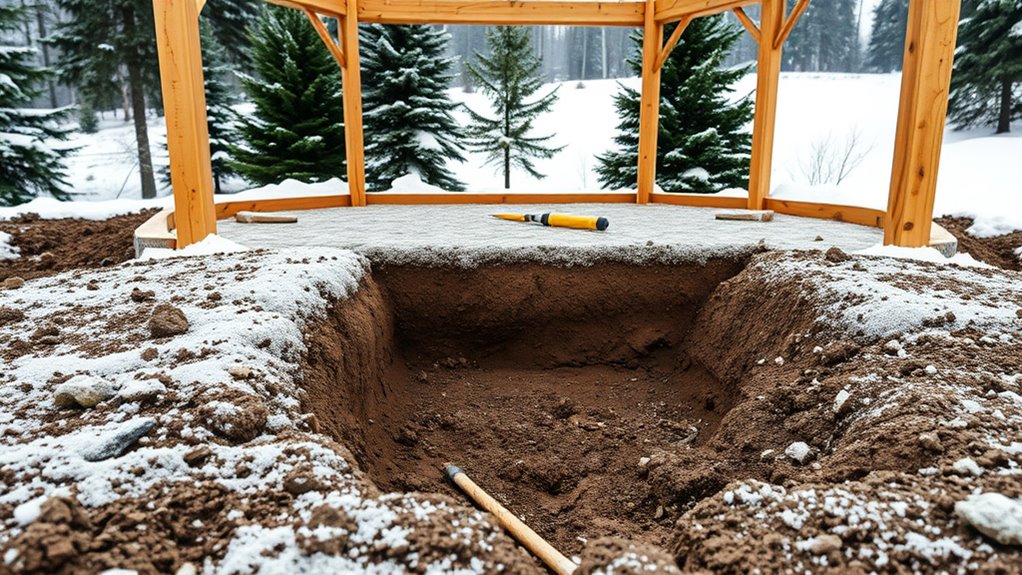
- Excavation: Dig down to an appropriate depth, taking into account frost lines and drainage needs.
- Base Layer Installation: Add a layer of gravel for drainage, followed by concrete blocks or piers to support your gazebo.
This meticulous approach guarantees a solid, winter-ready foundation.
Winter-Proofing Techniques
Once your gazebo foundation is set, it’s time to focus on winter-proofing techniques that will protect your structure from harsh weather conditions. Start by incorporating effective insulation methods, like foam boards or spray foam, to keep heat from escaping. Next, install moisture barriers around the foundation to prevent water infiltration, which can lead to frost heave. These barriers act as a shield against melting snow and rain, ensuring your gazebo remains dry. Finally, consider using gravel or drainage systems to divert water away. With these strategies, you’ll enjoy a cozy, resilient space all winter long, embracing the beauty of the season.
Maintenance Tips for Year-Round Durability
To guarantee your gazebo stands strong through all seasons, regular maintenance is essential. Prioritizing these tips will enhance its durability and weather resistance:
- Seasonal Inspections: Check for any wear and tear, ensuring joints, supports, and roofing remain intact.
- Sealant Application: Reapply weatherproof sealants annually to protect against moisture and UV damage.
- Debris Removal: Clear leaves, snow, and debris regularly to prevent rot and structural damage.
Frequently Asked Questions
How Deep Should I Dig for My Gazebo Foundation?
You should dig at least 24 inches deep for a stable gazebo foundation. Using proper digging techniques and quality foundation materials guarantees durability, allowing you the freedom to enjoy your outdoor space regardless of the season.
Can I Build a Gazebo on Uneven Ground?
Yes, you can build a gazebo on uneven ground by employing leveling techniques. Using proper foundation materials, like concrete blocks or piers, guarantees stability and durability, allowing your structure to stand strong through varying conditions.
What Tools Do I Need for Foundation Construction?
To lay a solid foundation, you’ll need excavation equipment like shovels and post hole diggers, plus foundation materials such as gravel and concrete. With these tools, you’ll craft a sturdy base that stands the test of time.
How Long Does It Take to Build a Gazebo Foundation?
Building a gazebo foundation typically takes one to two weeks, depending on your construction timeline and foundation preparation. You’ll need to factor in weather conditions and curing time for concrete to guarantee durability.
Should I Hire a Professional for My Gazebo Foundation?
You should consider hiring a professional for your gazebo foundation. The pros include expertise and time savings, while cons involve cost factors. Weigh both sides carefully to guarantee your project meets your standards and budget.