
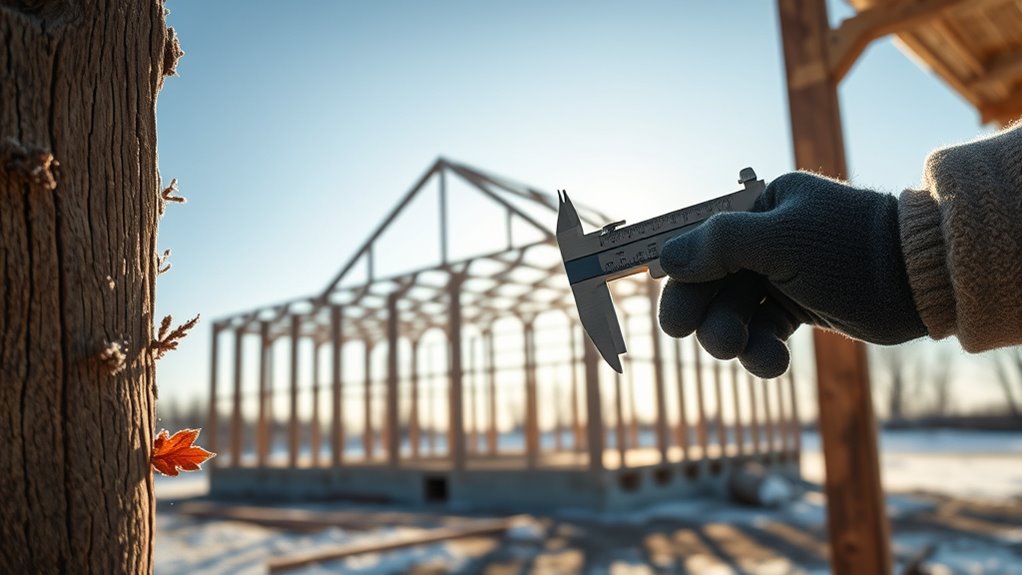
Before winter arrives, you must assess your roof, inspect your gutters, and evaluate your doors. Each element plays an essential role in your home’s ability to endure harsh weather. Identifying weaknesses now can save you from costly repairs later. Focusing on structural strength means examining every detail thoroughly. Are your windows sealed properly? Is your plumbing insulated against freezing? Understanding these factors can greatly impact your winter preparedness.
Assessing Your Roof for Winter Readiness
Before winter sets in, it’s essential to assess your roof for potential vulnerabilities, as neglecting this step can lead to costly damage during harsh weather conditions. Start by examining your roof material; verify it’s suitable for your climate, offering ideal weather resistance. Look for cracks, loose shingles, or signs of wear that could compromise integrity. Additionally, inspect flashing around chimneys and vents, as these areas are prone to leaks. Addressing any issues now not only secures your home but also promotes a sense of freedom, knowing you’ve taken proactive steps to protect your investment against winter’s unforgiving elements.
Inspecting Gutters and Downspouts
After confirming your roof is ready for winter, attention must turn to your gutters and downspouts. Regular gutter cleaning is essential to prevent clogs that can lead to water damage. Inspect for debris, leaves, and dirt accumulation. Clear out any blockages to guarantee proper water flow. Simultaneously, assess downspout maintenance; check for bends or breaks that could disrupt drainage. Make sure downspouts direct water away from your foundation to avoid pooling. By addressing these components, you’ll safeguard your home’s structural integrity and maintain freedom from costly repairs throughout the winter months. Prioritize these inspections for a resilient and dry living space.
Evaluating Windows and Doors for Proper Sealing
As winter approaches, guaranteeing that your windows and doors are properly sealed is vital for maintaining energy efficiency and comfort in your home. Evaluate the following aspects to achieve ideal sealing:
- Check for gaps in window insulation.
- Inspect door alignment for a snug fit.
- Look for cracked or worn weather stripping.
- Test for drafts by feeling around edges.
- Confirm locks and latches close securely.
Addressing these areas will not only enhance your home’s comfort but also reduce energy costs. Proper sealing is essential for creating a sanctuary against cold weather, allowing you to enjoy your space freely.
Checking the Foundation for Cracks and Damage
To guarantee your foundation’s integrity, start by inspecting visible cracks for size and pattern, as these can indicate underlying issues. Next, assess your drainage systems to confirm they’re effectively directing water away from the foundation, preventing further damage. Finally, monitor soil erosion around your property, since it can compromise stability and lead to additional structural concerns.
Inspect Visible Cracks
While examining your foundation for signs of distress, inspecting visible cracks is essential for maintaining structural integrity. Effective crack identification can prevent further damage and costly repairs. Here’s what to look for:
- Horizontal cracks may indicate soil pressure issues.
- Vertical cracks often result from settling.
- Diagonal cracks can signal structural movement.
- Cracks wider than a quarter-inch require immediate attention.
- Surface cracks might just be cosmetic but should still be monitored.
Identifying these issues enables you to explore appropriate repair solutions, ensuring your home remains safe and stable through winter’s harsh conditions.
Assess Drainage Systems
Effective drainage systems are essential for protecting your foundation from moisture-related damage, especially as winter approaches. Assess your drainage design to verify it effectively directs water flow away from your foundation. Inspect gutters, downspouts, and drainage pipes for blockages or damage. Ascertain that the grading around your property slopes away from the foundation, preventing water accumulation. Look for signs of standing water, which can lead to erosion and cracks in your foundation. By maintaining a robust drainage system, you can mitigate the risks of winter weather and preserve the structural integrity of your home for years to come.
Monitor Soil Erosion
As winter approaches, monitoring soil erosion becomes essential for maintaining your foundation’s stability and integrity. Erosion can undermine your structure and lead to significant damage. To prevent this, focus on the following:
- Inspect slopes and drainage areas for signs of erosion.
- Maintain vegetation to enhance soil stability.
- Use barriers to redirect water flow away from your foundation.
- Regularly assess for cracks or settling in your foundation.
- Implement erosion prevention techniques, such as silt fencing.
Reinforcing Walls and Structural Supports
Before winter sets in, you need to assess the integrity of your walls and structural supports. Look for signs of wear or damage that could compromise their strength, and consider reinforcing support beams as necessary. Ensuring these elements are robust will greatly enhance your structure’s resilience against harsh winter conditions.
Assessing Wall Integrity
While evaluating wall integrity may seem intimidating, it’s essential for maintaining structural stability, especially before winter. Conducting a thorough structural analysis can help identify potential weaknesses in your walls. Pay attention to the following factors:
- Inspect wall materials for cracks or damage.
- Check for signs of moisture intrusion or mold.
- Assess the alignment and plumb of walls.
- Evaluate anchoring systems and connections to the foundation.
- Monitor for any bowing or bulging.
Strengthening Support Beams
To guarantee the structural integrity of your home, strengthening support beams is essential, particularly in preparation for winter’s increased load. Begin with careful beam material selection; options like steel and laminated veneer lumber offer superior strength. Ascertain proper support beam installation by consulting with a structural engineer to assess existing beams and their load capacities. Consider reinforcing beams through techniques such as adding steel plates or using additional support posts when necessary. Regular inspections will help identify weaknesses early, allowing for timely interventions. By prioritizing these steps, you enhance your home’s stability, ensuring it can withstand winter’s demands without compromising your freedom.
Preparing Plumbing to Prevent Freezing
As temperatures drop, ensuring your plumbing is adequately prepared can prevent costly damage from freezing pipes. Here are essential steps you should take:
- Apply pipe insulation to exposed pipes, especially in unheated areas.
- Disconnect and drain outdoor hoses to eliminate trapped water.
- Insulate your crawl space and attic to maintain consistent temperatures.
- Allow faucets to drip slightly during extreme cold, providing movement and reducing pressure.
- Use faucet protection covers on outdoor spigots to shield them from frigid air.
Taking these measures can greatly reduce the risk of frozen pipes, giving you peace of mind this winter.
Developing a Winter Maintenance Plan
Creating a thorough winter maintenance plan is essential not only for your home’s structural integrity but also for ensuring comfort during the colder months. Start by compiling a seasonal checklist to manage winter equipment effectively. This plan should include regular inspections and necessary maintenance tasks.
| Task | Frequency | Equipment Needed |
|---|---|---|
| Inspect roof | Bi-annually | Binoculars, ladder |
| Clear gutters | Monthly | Ladder, gloves |
| Check insulation | Annually | Thermal camera |
Frequently Asked Questions
How Can I Identify Hidden Structural Issues Before Winter?
You can identify hidden structural issues by inspecting for hidden cracks and moisture buildup in walls, ceilings, and foundations. Use moisture meters and visual assessments to detect problems before they escalate during winter’s harsh conditions.
What Tools Are Needed for a Thorough Winter Readiness Inspection?
For a thorough winter readiness inspection, you’ll need inspection tools like moisture meters, infrared cameras, and structural safety gauges. These tools help you identify vulnerabilities and guarantee your property remains secure throughout the winter months.
Should I Hire a Professional for Structural Assessments?
You should definitely consider hiring a professional for a structural assessment. Their expertise guarantees a thorough inspection, identifying potential issues you might overlook, ultimately safeguarding your freedom from future structural complications and costly repairs.
How Often Should I Check My Home’s Structural Integrity?
You should conduct regular inspections of your home’s structural integrity, ideally every six months. Seasonal check-ups allow you to identify potential issues early, ensuring your home remains safe and maintains its value over time.
What Are the Signs of Potential Winter-Related Damage?
When winter approaches, watch for roof leaks, foundation cracks, and peeling paint. These signs can signal potential damage, like a whisper of trouble lurking beneath your home’s surface. Don’t ignore them; act swiftly to protect your haven.