
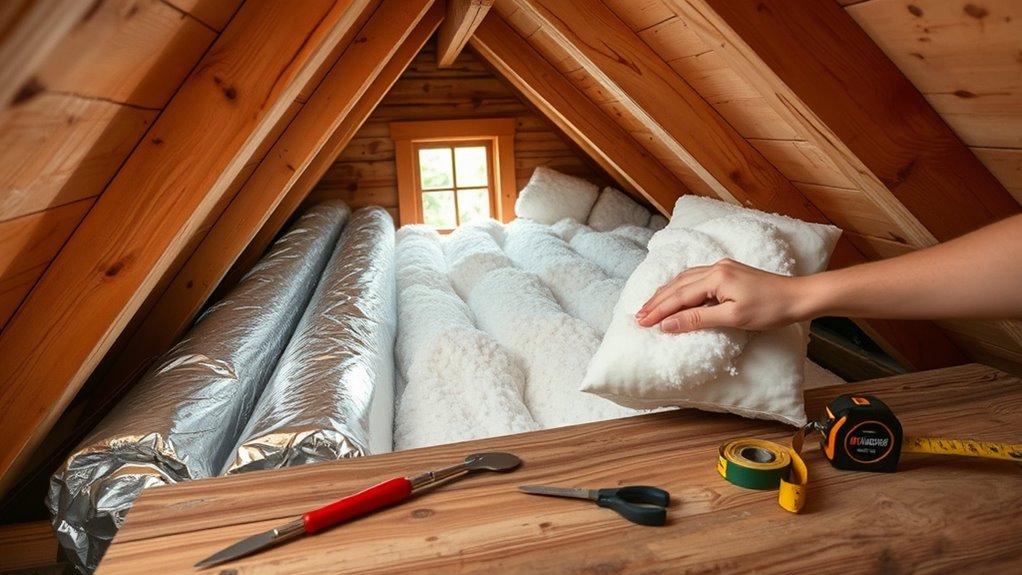
Did you know that proper ceiling insulation can reduce your energy bills considerably? Tackling this DIY project not only improves comfort but also enhances your home’s energy efficiency. You’ll need to choose the right materials and tools for the job. Understanding the installation techniques is essential, as it can make or break your efforts. Let’s explore the various methods you can use to guarantee your ceilings are effectively insulated.
Understanding the Importance of Ceiling Insulation
When you consider how much energy escapes through your home’s ceiling, it becomes clear that proper insulation is essential for both comfort and efficiency. By enhancing your ceiling’s insulation, you greatly improve energy efficiency, which translates to lower utility bills and a more sustainable lifestyle. Additionally, effective insulation offers soundproofing benefits, creating a peaceful environment by reducing noise from outside or other rooms. This not only enhances your living space but also provides a sense of freedom, allowing you to enjoy tranquility without distractions. Investing in ceiling insulation is a practical step toward a more comfortable and energy-conscious home.
Materials Needed for DIY Ceiling Insulation
When you’re gearing up for DIY ceiling insulation, it’s essential to understand the different types of insulation available and the tools you’ll need. You’ll find that options like fiberglass batts, spray foam, or cellulose each have their own advantages. Alongside this, having the right tools—such as a utility knife, measuring tape, and safety gear—will make your project much smoother and more efficient.
Insulation Types Overview
Choosing the right insulation material for your ceiling can considerably impact your home’s energy efficiency and comfort. Fiberglass insulation is a popular choice due to its affordability and ease of installation. It’s lightweight, non-combustible, and provides excellent thermal resistance. On the other hand, cellulose insulation, made from recycled paper products, offers a sustainable option that effectively reduces air leaks and provides superior soundproofing. Both materials come in various forms, such as batts or loose-fill, allowing you to select the best fit for your project. Ultimately, your choice should reflect your budget, environmental concerns, and specific insulation needs.
Essential Tools Required
To successfully tackle your DIY ceiling insulation project, you’ll need a few essential tools to guarantee a smooth installation. First, grab a utility knife for precise cuts and a tape measure for accurate measurements. A staple gun will help secure the insulation material, while a drywall saw is handy for any adjustments. Don’t forget a ladder for easy access and safety goggles to confirm safety precautions are met. Wearing gloves is also wise to protect your hands. These tools will not only streamline your process but also enhance insulation efficiency, giving you a cozy home environment that feels just right.
Insulating an Attic With Batt Insulation
Insulating an attic with batt insulation can greatly improve your home’s energy efficiency and comfort, especially during extreme weather conditions. Start by measuring your attic space to determine how much insulation you’ll need. Choose fiberglass or mineral wool batt insulation for easy installation. Guarantee proper attic ventilation to prevent moisture buildup, which can lead to mold and structural damage. Lay the batts between the joists, fitting them snugly without compressing. Use a vapor barrier if moisture control is a concern. Finally, check for air leaks around ducts and vents to maximize your insulation’s effectiveness. Enjoy a cozier, more efficient home!
Using Spray Foam for Air Sealing
Using spray foam for air sealing can greatly enhance your home’s energy efficiency by reducing drafts and preventing moisture buildup. This insulation method expands to fill gaps and cracks, creating a tight seal that traditional materials often miss. In this section, you’ll learn about the benefits of spray foam and the best techniques for applying it effectively.
Benefits of Spray Foam
Spray foam insulation offers a powerful solution for air sealing, enhancing both energy efficiency and comfort in your home. It effectively fills gaps and cracks, preventing air leakage that can drive up your energy bills. When considering a cost comparison, spray foam may require a higher initial investment, but its long-term savings and durability often outweigh the upfront costs. Additionally, its environmental impact is minimal compared to traditional insulation options, making it a greener choice. By opting for spray foam, you can create a more sustainable living environment while enjoying the freedom of a comfortable, energy-efficient home.
Application Techniques Explained
When it comes to achieving effective air sealing, applying spray foam insulation requires a bit of technique to maximize its benefits. Start by selecting the right application methods, like using a professional spray foam kit or hiring a contractor. Verify the surface is clean and dry before installation. Use steady, even strokes to apply the foam, filling gaps and cracks thoroughly. For best results, consider layering the application—this can enhance insulation and air sealing. Pay attention to curing times, as proper installation strategies guarantee that the foam expands and adheres correctly, providing you with the freedom from drafts and energy loss.
Installing Radiant Barrier Foil
Installing a radiant barrier foil can considerably enhance your home’s energy efficiency, especially in areas with extreme temperatures. Start by measuring your ceiling space to determine the amount of foil needed. Next, staple the radiant barrier foil to the underside of your roof rafters, ensuring the shiny side faces inward to reflect heat. Overlap the seams by at least 2 inches and seal them with tape for added durability. Make sure to cut the foil carefully around any obstructions. This easy-to-install technique can effectively reduce heat gain in summer and heat loss in winter, giving you more comfort and freedom in your home.
Improving Insulation With Blown-In Fiberglass
Blown-in fiberglass insulation is a highly effective way to enhance your home’s thermal performance. With its lightweight nature and excellent coverage, it fills gaps and voids that traditional batts might miss. The blown-in benefits include improved energy efficiency, reduced noise, and a comfortable living environment. To install, you’ll need a blowing machine, safety gear, and the right amount of fiberglass material. Familiarize yourself with proper installation techniques to guarantee even distribution and avoid overpacking. This DIY project not only saves you money but also empowers you to take control of your home’s comfort and energy costs.
Tips for Maintaining Your Ceiling Insulation
Although maintaining your ceiling insulation might not seem like a priority, regular checks can considerably extend its lifespan and effectiveness. Schedule ceiling inspections at least once a year, looking for signs of wear, moisture, or pest damage. Make sure any leaks are sealed promptly, as water can compromise insulation quality. If you notice any gaps, consider adding more insulation for maximum performance. Keep insulation dry and free from debris, which can hinder its efficiency. Finally, maintain proper ventilation to prevent mold growth. By staying proactive with insulation maintenance, you’re guaranteeing a comfortable, energy-efficient living space for years to come.
Frequently Asked Questions
How Much Can I Save on Energy Bills With Ceiling Insulation?
You’ll feel like you’ve found hidden treasure when you see energy savings from ceiling insulation. It can cut bills by 20-30%, offering insulation benefits that keep your home cozy, while your wallet stays happy.
Can I Install Ceiling Insulation Myself Without Professional Help?
Yes, you can install ceiling insulation yourself! With the right installation tools and insulation materials, you’ll find it manageable. Just guarantee you follow safety guidelines and take your time for a successful project.
What Are the Signs of Inadequate Ceiling Insulation?
You’ll notice signs of inadequate ceiling insulation through drafty rooms and increased energy loss. If your heating bills rise or rooms feel uncomfortable, it’s time to assess and improve your insulation for better comfort and efficiency.
How Long Does Ceiling Insulation Typically Last?
Ceiling insulation typically lasts 20 to 40 years, depending on the insulation lifespan and material durability. Regular checks can help you maintain efficiency, ensuring your home stays comfortable and energy costs stay low.
Are There Any Safety Concerns During Installation?
When tackling your ceiling project, don’t forget your safety gear! Installing insulation can be tricky, so take necessary precautions to protect yourself from dust and irritants. A little preparation goes a long way toward a smooth experience.