
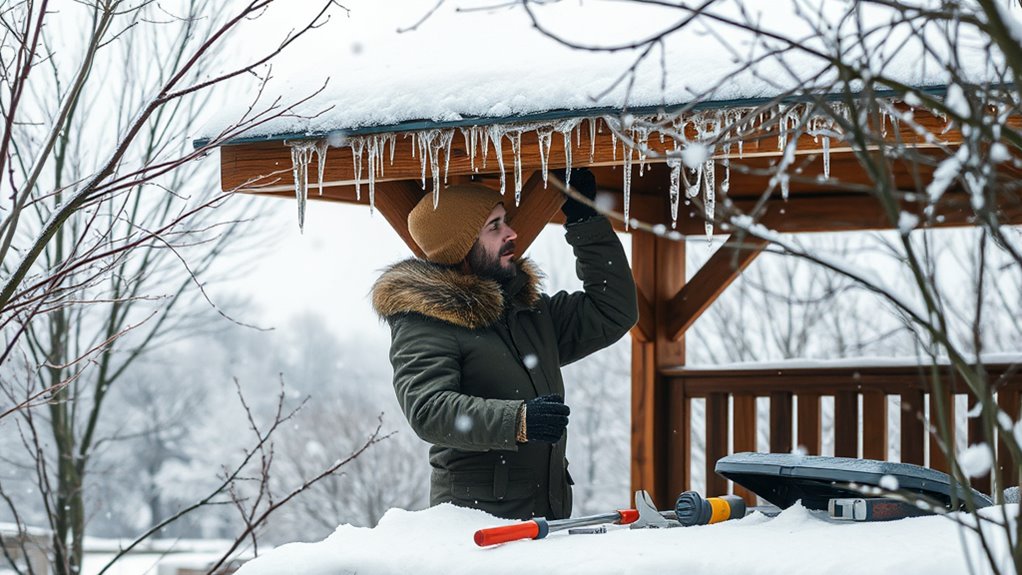
When winter hits, a leaking gazebo roof can become a real headache. You need to identify the source of the leak quickly, as cold weather can complicate repairs. With the right materials and techniques, you can tackle the issue effectively. But before you grab your tools, there are vital steps to follow to guarantee a successful repair. Let’s explore what you need to know to keep your gazebo intact this winter.
Identifying the Source of the Leak
When you notice water pooling inside your gazebo, identifying the source of the leak is crucial to prevent further damage. Start with a thorough roof inspection; look for cracked shingles, damaged flashing, or gaps where water might enter. Use leak detection methods, like checking for discoloration or moisture along the rafters. Pay attention to seams and joints, as these areas are often prone to leaks. If your gazebo has a gutter system, verify it’s clear of debris. Remember, addressing these issues promptly not only preserves your gazebo but also allows you the freedom to enjoy it without worry.
Essential Materials for Winter Repairs
Preparing for winter repairs on your gazebo requires a specific set of materials to guarantee a durable fix against the elements. First, gather high-quality waterproof sealant designed for cold temperatures; this is an essential winter material. Next, get a sturdy tarp to protect your workspace and any exposed areas during repairs. You’ll also need roofing nails and a hammer for secure attachment. Don’t forget a ladder for reaching those tricky spots, and a utility knife for cutting materials. Finally, insulated gloves and goggles are repair essentials to keep you comfortable. With these items, you’re ready to tackle those winter leaks!
Tips for Working in Cold Weather
Although working in cold weather can be challenging, there are several strategies to make your gazebo roof repair more manageable and effective. Here are some tips:
- Wear proper cold weather gear: Insulated gloves, waterproof boots, and thermal layers help you stay warm and comfortable.
- Take breaks: Regularly step inside to warm up and avoid fatigue.
- Check for ice hazards: Verify your workspace is clear to prevent slips and falls.
- Stay hydrated: Drink warm fluids to maintain energy levels and keep your body warm.
Step-by-Step Repair Process
To effectively repair a gazebo roof leak, you’ll want to follow a systematic approach that guarantees no steps are overlooked. Start with leak detection; inspect your roof for cracks or damaged shingles. Once located, clear debris and clean the area thoroughly. Next, apply a waterproof sealant to the affected spot, ensuring even coverage. If shingles are missing or damaged, replace them with new ones that match your gazebo’s style. Finally, perform regular roof maintenance by checking for new leaks and addressing them promptly. This proactive approach not only fixes the current issue but also extends your gazebo’s lifespan.
Preventing Future Leaks
Since preventing future leaks is crucial for maintaining your gazebo’s integrity, regular inspections and proper maintenance are key. Here are some practical tips to help you out:
Preventing leaks is vital for your gazebo’s integrity; regular inspections and maintenance are essential for long-lasting protection.
- Conduct Regular Inspections: Check for cracks or damage in roofing materials at least twice a year.
- Clean Gutters and Drains: Make certain water flows freely to prevent buildup and leaks.
- Use Quality Roofing Materials: Invest in durable materials designed for your climate.
- Apply Sealant: Regularly seal joints and seams to enhance waterproofing.
Frequently Asked Questions
Can I Repair a Gazebo Roof Leak With Snow on It?
You can’t repair a gazebo roof leak with snow on it. First, remove the snow for a proper leak assessment. For instance, neglecting this led to further damage in a neighbor’s gazebo, costing them more.
How Long Do Winter Repairs Typically Last?
Winter repairs can last several months, but their longevity depends on the materials used and how well you maintain them. Regular winter maintenance, like inspections, guarantees your repairs hold up against harsh conditions, providing lasting protection.
Are There Specific Tools Needed for Winter Repairs?
Yes, you’ll need specific tools for winter repairs. Essential items include proper roofing materials, a heat source for adhesive, and techniques like flashing and sealing. These guarantee durability and effectiveness, granting you peace of mind during cold months.
Is It Safe to Use Ladders in Icy Conditions?
It’s not safe to use ladders on icy surfaces. Ladder safety’s essential; icy conditions increase your risk of slips and falls. Wait for better weather or find alternative ways to address your repair needs safely.
What Are Signs of a Serious Roof Leak?
You’ll notice signs of a serious roof leak through water stains, mold growth, or peeling paint. Employing leak detection techniques can help you identify underlying issues, preventing serious damage and preserving your freedom from costly repairs.