
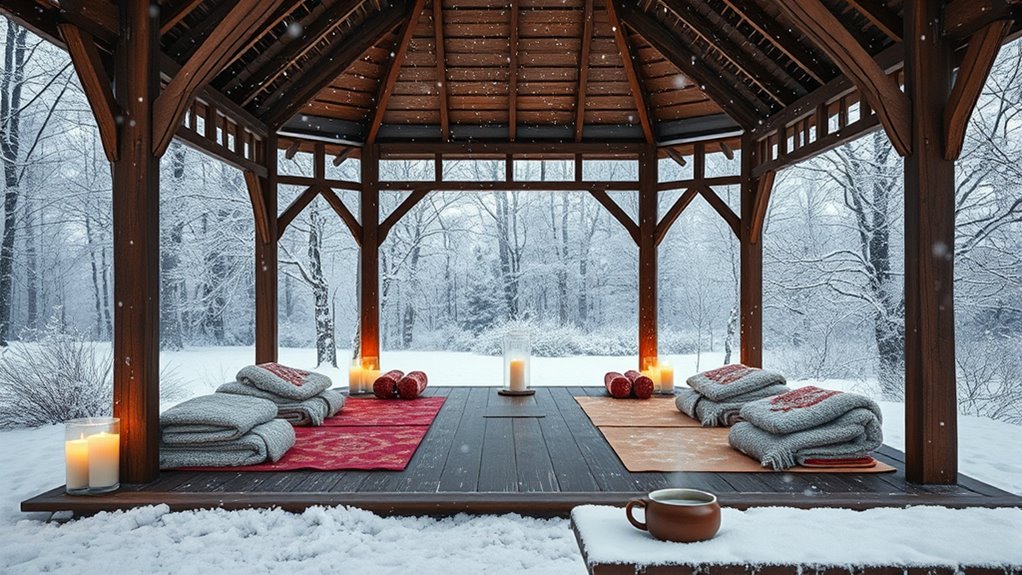
Setting up your gazebo for yoga in cold weather can transform your practice into a cozy retreat. By insulating the space and layering your clothing, you can create a warm and inviting environment. Adding soft lighting and comfortable props enhances the experience, making it easier to stay motivated. But how do you guarantee that your outdoor sessions remain enjoyable and effective during the chill? Let’s explore the essential elements to keep your practice flourishing even in the cold.
Assessing Your Gazebo Space
When evaluating your gazebo space for cold weather yoga, have you considered how the elements might impact your practice? Think about your gazebo layout and how it interacts with wind, sun, and temperature fluctuations. You’ll want to identify any space limitations that could hinder your flow. Is there enough room for you to move freely without obstacles? Assess the direction your gazebo faces; maximizing sunlight can help create a warmer environment. By understanding these factors, you can create a harmonious space that supports your practice, allowing you to embrace the freedom of yoga even in cooler conditions.
Insulating Your Gazebo for Warmth
To keep your gazebo cozy during winter yoga sessions, consider using thermal curtains to trap warmth and block cold drafts. Adding space heaters can also boost the temperature, making your practice comfortable even in chilly conditions. With these simple adjustments, you can create a welcoming environment for your outdoor workouts.
Use Thermal Curtains
As the chill of winter settles in, using thermal curtains can greatly enhance the warmth of your gazebo yoga space. These curtains provide effective thermal insulation, keeping the cold at bay while creating a cozy atmosphere. When choosing curtain materials, look for options like heavy-duty polyester or velvet, which trap heat efficiently. Not only do they block drafts, but they also add a touch of style to your yoga haven. By installing thermal curtains, you’ll enjoy uninterrupted practice, even on the coldest days. Embrace the tranquility of winter yoga, knowing you’ve made a smart choice for comfort and warmth.
Add Space Heaters
Adding space heaters to your gazebo can transform your chilly yoga sessions into a warm and inviting experience. With various space heater types available—like electric, propane, and infrared—you can choose one that suits your needs. For effective heater placement, consider positioning the heater near your yoga mat while ensuring it’s safe and away from flammable materials. Make sure to maintain proper ventilation if using gas heaters. By creating a cozy environment, you’ll not only enjoy your practice more but also embrace the freedom of outdoor yoga, no matter the weather. Stay warm and centered as you flow!
Choosing the Right Yoga Mat
When you’re choosing a yoga mat for cold weather, you’ll want to reflect on the material and insulation to keep you warm during your practice. Grip and stability are also essential, as they help prevent slips on chilly surfaces. Finally, think about thickness and comfort to guarantee your sessions remain enjoyable, no matter the temperature outside.
Material and Insulation
Choosing the right yoga mat is essential for maintaining your practice during cold weather, especially since the surface can greatly impact your comfort and stability. Look for mats made from insulation materials that provide effective thermal barriers against the cold ground.
| Material Type | Insulation Quality |
|---|---|
| Natural Rubber | High |
| PVC | Moderate |
| TPE | Low |
Grip and Stability
While the right insulation is essential for warmth during cold weather yoga, grip and stability are equally important for your practice. Choosing a mat with excellent grip helps you maintain balance and focus, especially when you’re working on challenging poses. Look for mats designed with textured surfaces; they enhance grip techniques, preventing slips. For added stability, consider incorporating stability exercises into your routine, using your mat as a foundation. This not only improves your practice but also fosters a deeper connection with your body. Remember, a well-chosen mat can empower your journey towards freedom and confidence in every pose.
Thickness and Comfort
Having a mat that provides grip and stability is important, but the thickness and comfort of your yoga mat can greatly impact your practice as well. Consider your comfort levels; a thicker mat can cushion your joints, especially on cold surfaces. If you prefer a more grounded feel, a thinner mat could be perfect. Aim for a balance between mat thickness and stability to enhance your flow. Remember, everyone’s needs are different, so try out a few options. The right mat can truly liberate your practice, allowing you to explore poses without distraction or discomfort. Enjoy your journey!
Layering Up: Clothing Tips for Cold Weather Yoga
When it comes to practicing yoga in cold weather, layering your clothing is essential for comfort and mobility. To keep yourself warm while ensuring freedom of movement, consider these tips:
- Base Layer: Start with moisture-wicking, layered fabrics that hug your skin, keeping sweat away.
- Insulating Layer: Add a lightweight fleece or thermal layer for warmth without bulk.
- Outer Layer: Finish with a windproof jacket to shield against chilly breezes.
These layers work together to provide effective moisture management and flexibility, allowing you to focus on your practice while staying cozy and free to flow.
Utilizing Blankets and Props for Comfort
After layering up for your cold weather yoga practice, it’s time to think about how blankets and props can enhance your comfort. Start by using blanket folding techniques to create a cushioned support for your spine or knees. Whether you’re sitting or lying down, a folded blanket can provide warmth and softness. For prop placement, consider using blocks or bolsters to support your poses, allowing for deeper stretches without strain. These adjustments not only keep you cozy but also help you maintain focus during your practice. Embrace these tools, and you’ll find greater freedom in your movements and breath.
Setting Up a Portable Heater
Though the chill can be invigorating, a portable heater can transform your gazebo into a cozy sanctuary for yoga practice. Here are some essential heating options and safety precautions to take into account:
Transform your gazebo into a warm sanctuary for yoga practice with portable heating options and essential safety tips.
- Electric heaters: These are efficient and easy to use—just plug them in and enjoy the warmth.
- Propane heaters: Ideal for those who prefer outdoor setups, but make sure proper ventilation.
- Infrared heaters: They provide instant warmth and can be great for smaller spaces.
Always keep flammable materials away from your heater, and never leave it unattended. With the right setup, you can practice comfortably, no matter the temperature!
Incorporating Warm Beverages Into Your Practice
As you settle into your chilly gazebo for yoga, embracing the warmth of a delicious beverage can enhance your practice and keep you cozy. Consider a soothing tea selection, like chamomile or ginger, to promote relaxation and focus during your session. If you prefer coffee options, a warm cup of spiced latte can invigorate your spirit and keep you alert. Sipping on these beverages before or after your practice not only warms you up but also creates a comforting ritual that deepens your connection to your yoga routine. So, brew your favorite drink and enjoy the warmth it brings!
Timing Your Sessions for Optimal Warmth
Finding the right time for your yoga sessions can greatly enhance your experience, especially in colder weather. Consider these ideal timing strategies for warmth:
- Sunrise Sessions: Embrace the tranquility of early morning—it’s peaceful and the sun’s rays can gently warm you.
- Mid-Morning: By late morning, temperatures often rise, providing a comfortable environment for your practice.
- Afternoon Warmth: If you prefer later sessions, aim for early afternoon when the sun’s heat peaks, ensuring a cozy atmosphere.
Enhancing Ambiance With Lighting and Decor
To create a warm and inviting atmosphere for your cold-weather yoga sessions, consider the impact of lighting and decor on your space. Soft ambient lighting, like fairy lights or lanterns, can set a calming mood, helping you relax and focus. Pair this with decorative accents, such as cozy blankets or natural elements like plants, to enhance your gazebo’s aesthetic. Choose colors that resonate with tranquility, like earthy tones or cool blues. These small touches not only beautify the space but also foster a sense of freedom, allowing you to fully immerse in your practice, regardless of the chilly weather outside.
Maintaining Motivation in Cold Weather
When the temperature drops, it can be tough to stay motivated for your yoga practice. Embracing warm clothing and creating a cozy environment can make all the difference, helping you feel more inclined to step onto your mat. Plus, setting realistic goals allows you to stay focused and celebrate your progress, no matter how small.
Embrace Warm Clothing
Embracing warm clothing can make all the difference in maintaining your motivation for outdoor yoga during the colder months. By choosing the right attire, you can stay comfortable and focused on your practice. Consider these layering techniques to elevate your experience:
- Start with a moisture-wicking base layer made from warm fabrics to keep sweat away.
- Add an insulating layer, like a fleece or wool, for extra warmth.
- Top it off with a windproof, breathable jacket to shield against the elements.
With the right clothing, you’ll feel free to flow through your poses, no matter the chill in the air!
Create Cozy Environment
Although cold weather might tempt you to stay indoors, creating a cozy environment for your gazebo yoga practice can keep your motivation high. Start by layering your space with cozy blankets; they not only provide warmth but also add a touch of comfort. Incorporate warm scents, like cinnamon or vanilla, using essential oils or candles to uplift your spirits and enhance your focus. Consider adding soft lighting to create an inviting atmosphere. By transforming your gazebo into a snug oasis, you’ll find it easier to embrace your practice and enjoy the freedom of outdoor yoga, even in chilly conditions.
Set Realistic Goals
Setting realistic goals is essential for maintaining motivation during cold weather yoga sessions. To keep your practice engaging and fulfilling, consider these three focus points:
- Set intentions for each session, whether it’s enhancing flexibility or finding inner peace.
- Track progress by journaling your experiences, noting how you feel before and after each practice.
- Adjust goals based on how your body responds, allowing for flexibility in your routine.
Frequently Asked Questions
Can I Practice Yoga in My Gazebo During Heavy Snow?
You can practice yoga in your gazebo during heavy snow, but guarantee snow safety by checking for structural integrity. Adding gazebo insulation helps maintain warmth, allowing you to enjoy your practice in comfort and freedom.
What Is the Best Time of Day for Cold Weather Yoga?
The best time for cold weather yoga’s often in the morning for energy and focus, while evenings provide relaxation after a long day. Choose what resonates with you to enhance your practice and enjoy the freedom it brings.
How Can I Keep My Yoga Props Warm?
To keep your yoga props warm, consider using blankets for insulation and placing them near a heat source for ideal heat retention. It’s all about finding comfort in the cold while staying flexible and free!
Are There Specific Yoga Poses Better Suited for Cold Weather?
Yes, warming poses like Sun Salutations and gentle backbends are great for cold weather. Incorporating cold adaptations, such as adding layers, can enhance your practice, making it cozy and invigorating while you flow freely.
Should I Avoid Certain Types of Yoga in Cold Temperatures?
You shouldn’t avoid all yoga in cold temperatures; instead, focus on cold yoga practices that incorporate warming techniques. Surprisingly, 70% of people report feeling invigorated when practicing yoga outdoors, even in chilly weather!