
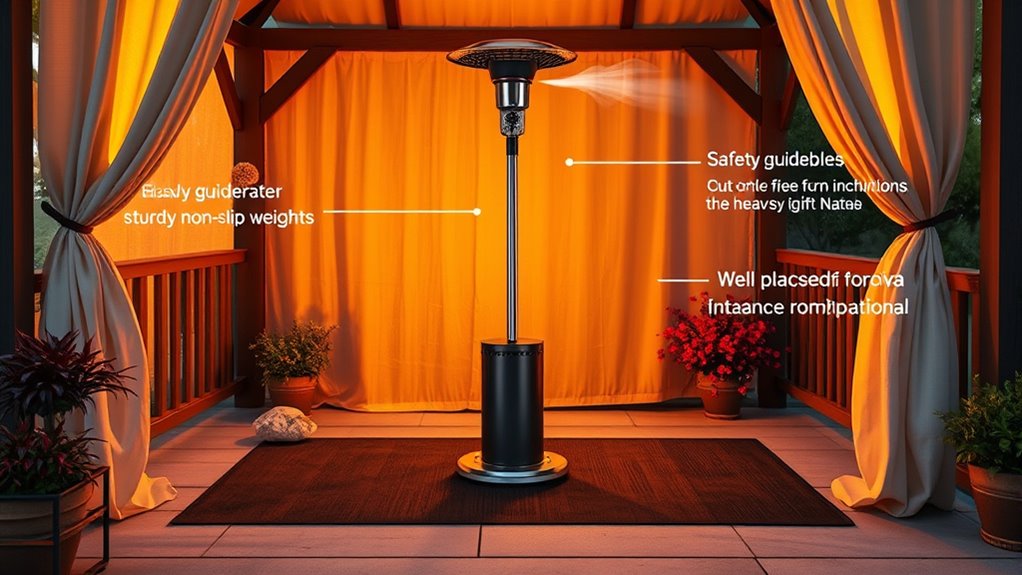
When using heaters in gazebos, it’s vital to understand the risks of tip-overs. These accidents can happen unexpectedly if the heater isn’t properly secured or positioned. To guarantee safety, you need to take into account several factors, from choosing the right heater to educating your guests on safe practices. By following specific guidelines, you can greatly reduce the chances of a mishap. Let’s explore the essential steps to create a safer environment.
Choose the Right Heater for Your Gazebo
When selecting a heater for your gazebo, it’s essential to take into account both safety and efficiency to guarantee a cozy atmosphere. You’ll face the choice between electric vs. propane heaters. Electric heaters offer convenience and lower emissions, while propane heaters provide more heat output and portability. Consider the heater size; it should match your gazebo’s dimensions for ideal warmth. A heater that’s too small won’t effectively warm the space, while one that’s too large can waste energy and create discomfort. Assess your needs, weigh the pros and cons, and choose a heater that fits your lifestyle and gazebo perfectly.
Positioning Your Heater Safely
To guarantee your heater operates safely in your gazebo, start by placing it on a stable, level surface that can support its weight. Make sure to leave ample space around the heater, free from any flammable materials or obstructions. This careful positioning will greatly reduce the risk of tip-overs and enhance your safety.
Optimal Heater Placement
Although placing your heater correctly may seem straightforward, it’s essential for ensuring safety and efficiency in your gazebo. First, consider the heater types you’re using—some require more clearance than others. For instance, propane heaters should be positioned away from flammable materials. Next, take into account your gazebo designs; open layouts allow for ideal airflow, reducing overheating risks. Ideally, place the heater centrally, making sure it’s at least three feet from walls or furniture. This not only maximizes heat distribution but also minimizes the chances of accidental tip-overs. Always prioritize safety in your setup for a worry-free experience.
Stable Surface Requirements
Proper placement isn’t just about where you position your heater; it’s also about ensuring it’s on a stable surface. A level ground or a stable foundation is essential to prevent any accidental tip-overs.
| Surface Type | Stability Level |
|---|---|
| Concrete | High |
| Paved Stone | Medium |
| Grass | Low |
| Uneven Terrain | Very Low |
Always check that the area beneath your heater is firm and even. This helps maintain the heater’s balance, allowing you to enjoy your gazebo without the worry of it tipping over.
Clear Surrounding Space
Creating a safe environment around your heater is essential for preventing accidents in your gazebo. Verify there are no surrounding obstacles, like furniture or decorations, that could obstruct movement or accidentally knock into the heater. Maintain clear pathways, allowing easy access to the heater for refueling or adjustments. A minimum distance of three feet from any object is recommended to minimize fire risks. Regularly check the area for fallen leaves or debris that could ignite. By positioning your heater safely and keeping the surrounding space clear, you’ll enjoy the warmth without compromising safety in your outdoor retreat.
Secure the Heater to Prevent Movement
To guarantee your heater remains stable, you should consider using anchor weights to add necessary weight and prevent tipping. Additionally, installing safety straps can further secure the heater to fixed structures, minimizing the risk of movement. These simple measures can greatly enhance safety in your gazebo.
Use Anchor Weights
One effective way to prevent heater tip-overs in gazebos is by using anchor weights to secure the heater in place. Choosing the right anchor weight types and proper anchor weight placement is essential for stability. Here are some tips to take into account:
- Use sandbags or water-filled weights for flexibility
- Confirm weights are evenly distributed around the base
- Opt for heavy-duty materials to resist wind
- Check weight capacity requirements for your heater model
- Regularly inspect anchor weights for wear and tear
Install Safety Straps
While anchor weights provide a solid foundation for stability, installing safety straps can further enhance the security of your heater in a gazebo. There are various safety strap types, such as adjustable nylon and heavy-duty ratchet straps, which effectively secure your heater. When installing, verify the straps are tightly fastened to both the heater and a stable structure, like a gazebo post. Use installation tips like checking the tension regularly and inspecting for wear and tear. This added layer of protection not only keeps your heater in place but also gives you peace of mind, allowing you to enjoy your space freely.
Regular Maintenance and Inspections
Regular maintenance and inspections are essential for guaranteeing your heater operates safely and efficiently, especially in a gazebo setting. Implementing routine checks and heater upkeep can prevent accidents and prolong your heater’s life. Here’s what you should focus on:
- Inspect for gas leaks or damaged hoses.
- Clean the heater’s exterior and vents regularly.
- Check the stability of the heater and its base.
- Verify all safety features are functional.
- Test the ignition and flame controls.
Use Safety Features and Accessories
After ensuring that your heater is well-maintained and thoroughly inspected, it’s important to utilize the safety features and accessories that come with it. Many heaters are equipped with tip-over protection, automatically shutting off if they’re knocked over. Always check for this essential safety feature. Additionally, consider using heater accessories like stabilizing bases or anti-tip brackets to enhance stability. If your heater has a protective guard or shield, make sure it’s properly installed to prevent accidental contact. By leveraging these safety features and accessories, you’ll create a safer environment in your gazebo, allowing you to enjoy warmth without unnecessary worry.
Monitor Weather Conditions
As you enjoy your time in the gazebo, it’s essential to keep an eye on the weather conditions, since sudden changes can pose risks to your heater’s stability and safety. Regularly checking weather forecasts can help you stay informed. Be mindful of:
Stay vigilant about weather changes while in your gazebo to ensure your heater remains safe and stable. Regular forecasts are key.
- Sudden wind gusts that could topple the heater
- Rain or snow accumulating around the base
- Temperature drops during seasonal changes
- High humidity leading to slippery surfaces
- Severe storms that may require heater relocation
Educate Guests on Heater Safety
While enjoying your time in the gazebo, it’s crucial to educate your guests on heater safety to prevent accidents. Start by providing clear heater education, explaining how to operate the unit properly and highlighting the importance of keeping flammable materials at a safe distance. Encourage guest awareness by reminding them to never leave the heater unattended and to turn it off when not in use. You might also share the significance of maintaining a clear path around the heater to prevent tip-overs. By fostering a culture of safety, you guarantee everyone can relax and enjoy the warmth without worry.
Frequently Asked Questions
Can I Use a Gas Heater in a Wooden Gazebo?
You shouldn’t use a gas heater in a wooden gazebo without considering safety. The risk of fire is high, so guarantee proper ventilation, keep flammable materials away, and always prioritize gas heater safety for your peace of mind.
What Types of Surfaces Are Safe for Heater Placement?
When it comes to heater safety, think of a sturdy foundation as your shield. Opt for non-flammable surface materials like concrete or stone; avoid wood, carpet, or plastic, which can ignite under heat’s embrace.
Are There Specific Brands Recommended for Gazebo Heaters?
For gazebo heaters, consider brands like Mr. Heater and Patio Comfort. These brands excel in safety features and reliable performance. Always check brand comparisons to guarantee you’re choosing a heater that meets your needs safely.
How Often Should I Replace My Heater?
You should replace your heater every 5 to 10 years, depending on its lifespan. Look for replacement indicators like unusual noises, inconsistent heating, or frequent malfunctions to guarantee safety and peak performance.
What Should I Do if My Heater Tips Over?
If your heater tips over, immediately unplug it and guarantee everyone’s safe. For example, in a recent incident, quick emergency response prevented a fire. Always follow safety precautions and keep a fire extinguisher nearby.