
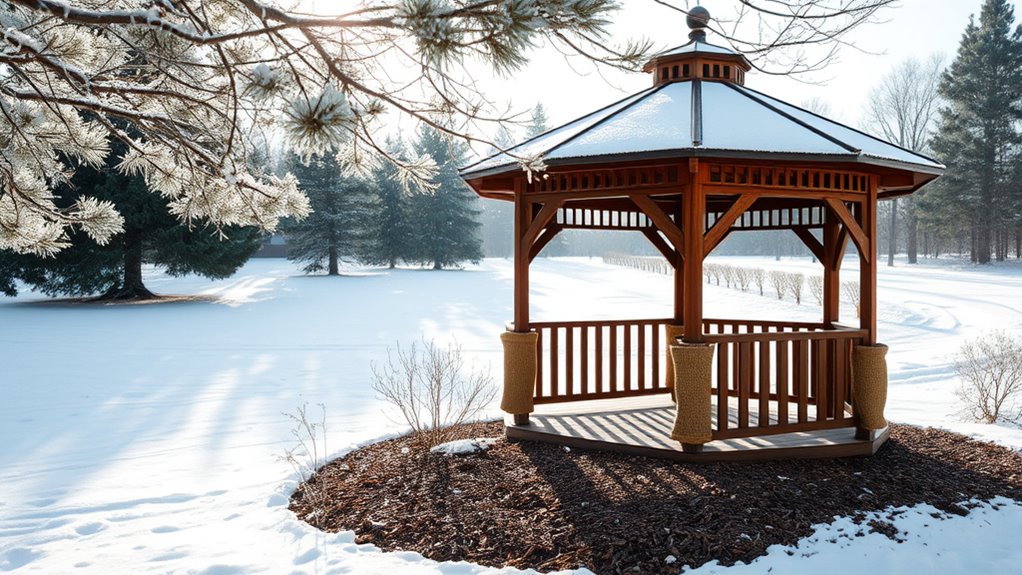
Imagine your gazebo standing resilient against a backdrop of icy winds and frost-laden branches. To guarantee it withstands the harsh winter, you’ll need to assess its condition and take proactive measures. From applying protective coatings to insulating key areas, every step counts in safeguarding your structure. But where do you even begin? Understanding the specifics of each protective measure can make all the difference in preserving your gazebo’s integrity through the cold months ahead.
Assessing the Condition of Your Gazebo
Before you can effectively protect your gazebo from frost damage, you need to assess its current condition. Inspect the gazebo structure closely for any signs of wear, such as cracks, splintering wood, or rusted metal joints. These imperfections can weaken your gazebo, making it more susceptible to weather effects like frost. Pay particular attention to the foundation; verify it’s stable and free from moisture buildup. A sound structure will offer better resistance against harsh winter elements. By understanding its vulnerabilities, you can take proactive measures to safeguard your cherished outdoor space and maintain its integrity for seasons to come.
Cleaning and Maintaining Your Gazebo
Although it might seem like a hassle, cleaning and maintaining your gazebo is essential to prevent frost damage and prolong its lifespan. Regular gazebo cleaning not only enhances aesthetics but guarantees structural integrity. Here are some maintenance tips to keep in mind:
Cleaning and maintaining your gazebo is crucial for preventing frost damage and ensuring its longevity. Regular upkeep enhances both appearance and structural integrity.
- Remove debris: Clear fallen leaves, dirt, and snow to prevent moisture buildup.
- Check for mold: Inspect wooden surfaces for mold growth and treat it promptly to avoid rot.
- Inspect joints and fasteners: Tighten loose screws and bolts to guarantee stability and safety, especially during winter.
Applying Protective Coatings
To protect your gazebo from the harsh effects of frost, applying protective coatings is crucial. Start by selecting high-quality protective sealants designed for outdoor use. Before coating application, verify the surface is clean and dry. Use a brush or sprayer for even coverage, focusing on joints and seams where moisture can seep in. Allow the first coat to dry thoroughly before applying a second layer for maximum protection. This process not only enhances durability but also maintains the aesthetic appeal of your gazebo. Regularly inspect and reapply sealants as needed to guarantee your structure remains a haven for relaxation.
Insulating Key Areas
Insulating key areas of your gazebo is essential for mitigating frost damage during the colder months. To enhance heat retention and protect your structure, consider these insulation materials:
- Foam Board: Install rigid foam boards in corners and walls for effective insulation.
- Reflective Insulation: Use reflective barriers on the ceiling to bounce heat back into the space.
- Insulated Curtains: Hang thermal curtains over windows to minimize heat loss while maintaining aesthetics.
Using Weather-Resistant Materials
Once you’ve insulated key areas of your gazebo, the next step is to focus on using weather-resistant materials that can withstand harsh winter conditions. Opt for durable wood, like cedar or redwood, which naturally resist moisture and insects, ensuring longevity. For the structure, consider weather resistant fabrics for your canopy or curtains; materials like solution-dyed acrylic or polyester provide UV protection and repel water. These choices not only enhance durability but also maintain your gazebo’s aesthetic appeal. By investing in quality materials, you can enjoy your outdoor space without the worry of frost damage, embracing the freedom of every season.
Proper Drainage Solutions
While you might not think about it, proper drainage solutions are essential for protecting your gazebo from frost damage. Install effective drainage systems to guarantee water diversion away from your structure. Here are three key strategies:
- Grading: Guarantee the ground slopes away from your gazebo to prevent water pooling.
- French Drains: Create trenches filled with gravel and a perforated pipe to redirect excess water.
- Downspouts: Position downspouts strategically to channel water away from the gazebo’s foundation.
Installing a Roof Cover
To effectively shield your gazebo from the harsh effects of frost, installing a roof cover is an essential step that shouldn’t be overlooked. You’ll find various roof material options, such as durable tarps, heavy-duty canvas, or weather-resistant vinyl, all designed to withstand winter’s chill. Consider seasonal cover types that can be easily deployed or removed, allowing you to adapt to changing weather. A fitted cover not only prevents ice accumulation but also protects your structure from moisture damage. By taking this proactive measure, you guarantee your gazebo remains a sanctuary, free from the burdens of frost and winter’s relentless grip.
Securing Loose Parts
To keep your gazebo sturdy through frosty conditions, you need to inspect fasteners regularly for any signs of wear or loosening. Tightening these components not only fortifies its structure but also prevents further damage from harsh winter weather. A proactive approach now can save you from costly repairs later.
Inspect Fasteners Regularly
Regularly inspecting fasteners is essential for maintaining the structural integrity of your gazebo, especially as winter approaches and frost threatens its stability. Different fastener types, such as screws, bolts, and anchors, can loosen over time. To guarantee your gazebo remains secure, follow this inspection frequency:
- Weekly Checks: During the fall, inspect fasteners weekly for any signs of loosening.
- Pre-Winter Review: Conduct a thorough review before the frost sets in, tightening any loose components.
- Post-Winter Assessment: After winter, check for any damage caused by frost and replace any compromised fasteners immediately.
Stay proactive for lasting enjoyment!
Tighten Loose Components
After ensuring that all fasteners are secure, the next step is to tighten any loose components throughout your gazebo. This involves tightening screws and checking joints to prevent any wobbling or misalignment that could lead to frost damage. A well-maintained gazebo not only stands strong against the elements but also enhances your outdoor experience.
Here’s a simple table to guide you:
| Task | Frequency |
|---|---|
| Tightening Screws | Every season |
| Checking Joints | Bi-annually |
| Inspecting Rails | Monthly |
| Evaluating Roof | After heavy snow |
Removing Furniture and Accessories
Before the frost sets in, it’s crucial to remove furniture and accessories from your gazebo to prevent potential damage. By taking these items out, you’ll not only protect them but also keep your gazebo in great shape. Here’s what you should focus on:
Before frost arrives, safeguard your gazebo by removing furniture and accessories to prevent damage and maintain its condition.
- Patio Furniture – Store your chairs and tables in a dry, sheltered place to avoid rust and deterioration.
- Seasonal Accessories – Remove decorative items like cushions and lanterns, as they can absorb moisture and get damaged.
- Outdoor Rugs – Roll up and store rugs to prevent mold or mildew from forming during freezing temperatures.
This proactive approach guarantees freedom from worries about winter damage.
Regular Inspections and Maintenance
While you might think your gazebo is safe once the furniture is stored away, regular inspections and maintenance are essential to confirm it withstands the harsh winter months. Schedule routine checks to assess the roof, walls, and foundation for any signs of damage or wear. Make seasonal adjustments, like reinforcing joints and applying weatherproof sealants, to enhance durability. Don’t forget to clear debris from gutters and drainage systems to prevent ice buildup. By staying proactive with these tasks, you confirm your gazebo remains a cherished retreat, free from the burdens of frost damage, ready to welcome you back come spring.
Frequently Asked Questions
Can I Use a Tarp to Cover My Gazebo During Winter?
Yes, you can use tarp materials for winter preparation. Make certain the tarp is durable and weather-resistant to shield your gazebo from harsh elements, preventing moisture buildup and protecting its structure throughout the winter months.
How Often Should I Inspect My Gazebo for Frost Damage?
You should inspect your gazebo for frost damage at least bi-weekly during winter. Regular gazebo maintenance guarantees early detection, allowing you to implement frost prevention strategies and protect your structure from the harsh elements.
What Materials Are Best for Insulating a Gazebo?
For insulating your gazebo, consider using foam insulation panels and reflective bubble wrap. Additionally, high-quality gazebo covers can provide extra protection against frost, ensuring a cozy, inviting space even during the coldest months.
Are There Any Specific Plants to Avoid Near My Gazebo?
You don’t want to invite trouble near your gazebo. Avoid invasive plants like bamboo or English ivy; their aggressive root systems can damage foundations and disrupt your peaceful retreat. Choose wisely for a serene environment.
Should I Worry About Frost Damage in Warmer Climates?
You shouldn’t ignore frost impact, even in warmer climates; it can affect your gazebo’s longevity. Climate considerations like occasional cold snaps can lead to unexpected damage. Stay proactive to guarantee your structure remains intact.