
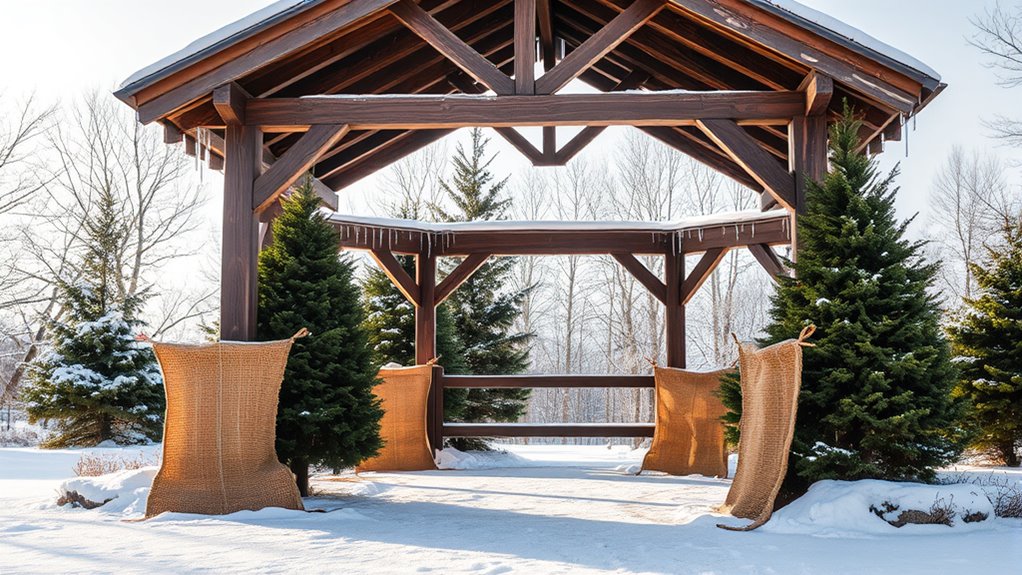
When winter approaches, protecting your gazebo from ice winds becomes vital. You’ll want to start by evaluating its structure to identify any weak points. Strengthening joints and guaranteeing proper anchoring can greatly enhance stability. But that’s only the beginning. Implementing windbreaks and utilizing protective covers are essential steps too. As you prepare, consider the importance of maintaining proper drainage. What other strategies can help guarantee your gazebo withstands the harshest elements?
Assessing Your Gazebo’s Structure
When it comes to protecting your gazebo from ice winds, the first step is evaluating its structure. Begin by examining the overall design; check for any signs of wear or weakness. Look closely at joints and connections, as these areas greatly affect structural integrity. Evaluate the material quality—whether it’s wood, metal, or composite—since durability is essential in withstanding harsh conditions. Consider the gazebo’s foundation too; a solid base can prevent shifting or damage. By thoroughly evaluating these elements, you’ll guarantee your gazebo stands strong against ice winds, allowing you the freedom to enjoy your outdoor space year-round.
Reinforcing Weak Points
Although your gazebo may seem sturdy, reinforcing weak points is essential to ensuring it can withstand the relentless force of ice winds. Start by strengthening joints, as these areas often bear the brunt of stress. Use metal brackets or wood glue to secure connections, creating a tighter, more resilient structure. Next, focus on reinforcing corners, where stability is fundamental. Consider adding corner braces or extra posts to distribute the wind’s pressure evenly. By strategically enhancing these weak points, you’ll give your gazebo the fortitude it needs to stand strong against the harsh elements, preserving your outdoor haven for years to come.
Installing Windbreaks
How can you effectively shield your gazebo from ice winds? Installing windbreaks is essential for creating a protective barrier. Consider these windbreak materials:
- Natural barriers: Plant dense shrubs or trees to absorb wind.
- Fabric screens: Use heavy-duty tarps or mesh to deflect gusts.
- Solid panels: Install wooden or vinyl boards for a sturdy shield.
For ideal windbreak placement, position them strategically around the gazebo, ensuring they’re high enough to block airflow without obstructing your view. With the right materials and careful placement, you’ll enjoy your gazebo even during harsh winter conditions, preserving your freedom to relax outdoors.
Using Protective Covers
What’s the best way to safeguard your gazebo from ice winds? Using protective covers is key. Select cover types that suit your gazebo’s shape and size, like fitted tarps or breathable fabric covers. These protective materials shield against moisture, preventing mold and rot. Make sure the cover is securely fastened to withstand strong gusts, using straps or bungee cords. Ventilated options are ideal, allowing air circulation while keeping out ice and snow. Regularly check for wear and tear, replacing any damaged covers promptly. By investing in quality protective covers, you can preserve your gazebo’s integrity and enjoy your outdoor space year-round.
Maintaining Proper Drainage
To protect your gazebo from ice winds, maintaining proper drainage is vital. Start by evaluating the site grading to guarantee water flows away from the structure, then consider installing effective drainage systems to manage runoff. Don’t forget to clear debris regularly, as it can obstruct drainage and lead to water accumulation, compromising your gazebo’s integrity.
Assess Site Grading
While it may seem like a minor detail, evaluating site grading is essential for maintaining proper drainage around your gazebo. A well-assessed site slope can prevent drainage issues that might undermine your gazebo’s integrity. Here are key factors to take into account:
- Slope Direction: Confirm water flows away from the gazebo.
- Surface Material: Choose permeable materials to enhance drainage.
- Elevation: Position your gazebo higher than surrounding areas to minimize pooling.
Install Drainage Systems
When considering how to protect your gazebo from ice winds, installing effective drainage systems is essential for maintaining proper drainage and guaranteeing the structure’s longevity. Utilize various drainage techniques to direct water away from your gazebo, preventing pooling and soil erosion. Consider incorporating French drains or surface channels to enhance water diversion. These systems can greatly reduce moisture accumulation around your gazebo’s foundation. Additionally, make sure that downspouts are positioned strategically to guide runoff effectively. By implementing these drainage solutions, you’re not just protecting your gazebo but also creating a more stable outdoor environment, allowing you the freedom to enjoy your space year-round.
Clear Debris Regularly
Regularly clearing debris is essential for maintaining proper drainage around your gazebo. Through effective debris removal, you can prevent water accumulation and protect your structure from ice winds. Incorporate seasonal cleanup into your routine to guarantee your gazebo remains a haven.
- Remove leaves, twigs, and dirt that can block drainage paths.
- Check gutters and downspouts for obstructions to promote water flow.
- Trim overhanging branches to minimize debris buildup.
Regular Inspection and Maintenance
To guarantee your gazebo withstands the harshness of ice winds, conducting regular inspections and maintenance is essential. Implementing preventive measures through routine checks not only preserves its beauty but also enhances its durability. Here’s a simple maintenance checklist to guide you:
| Task | Frequency | Notes |
|---|---|---|
| Inspect structure | Monthly | Look for cracks or damage |
| Check roof integrity | Bi-annually | Ascertain shingles are secure |
| Clean gutters | Every season | Prevent water accumulation |
| Tighten hardware | Every season | Secure bolts and screws |
| Treat wood | Annually | Apply protective sealant |
Securing Loose Accessories
While it might seem minor, securing loose accessories is essential for protecting your gazebo from the damaging effects of ice winds. Neglecting this step can lead to costly repairs. Here are some tips to guarantee everything stays in place:
- Secure furniture: Use weights or anchors to prevent furniture from being blown away.
- Store cushions: Keep cushions indoors or in waterproof storage bins to avoid damage and prolong their lifespan.
- Remove loose items: Take down decorations or other lightweight accessories that can become projectiles in strong winds.
Planning for Snow Accumulation
When planning for snow accumulation, it’s essential to assess the potential snow load your gazebo will face. Selecting the right materials can help guarantee your structure withstands heavy snow without compromising its integrity. By understanding these factors, you can effectively safeguard your gazebo from winter’s weighty challenges.
Assess Potential Snow Load
As winter approaches, understanding the potential snow load your gazebo may face is essential for guaranteeing its longevity and stability. By evaluating snow weight and load distribution, you can safeguard your structure from collapse. Consider the following:
- Roof design: Steeper angles allow snow to slide off, reducing accumulation.
- Local snowfall averages: Research your area’s historical snowfall to gauge potential loads.
- Material strength: Confirm your gazebo’s materials can withstand the anticipated snow weight.
Choose Proper Materials
Choosing the right materials for your gazebo is essential in ensuring it can withstand the harsh effects of snow accumulation and ice winds. Look for materials that offer superior durability, like pressure-treated wood or aluminum, which resist rot and corrosion. Opt for roofing materials designed for weather resistance, such as metal or specially coated shingles, to shed snow effectively. Reinforced joints and sturdy framing will enhance structural integrity, allowing your gazebo to stand strong against heavy snowfall. By prioritizing material durability and weather resistance, you’ll create a sanctuary that remains inviting, even under the most challenging winter conditions.
Frequently Asked Questions
What Materials Are Best for Building a Winterized Gazebo?
For a winterized gazebo, consider durable wood types like cedar or redwood, which resist moisture. Combine these with insulation options like foam panels or fiberglass to maintain warmth, ensuring your space remains cozy during harsh winter months.
How Can I Prevent Ice From Forming on My Gazebo?
To prevent ice on your gazebo, consider insulation options like foam panels and roof coverings. Ironically, embracing ice prevention techniques might just let you enjoy winter’s chill without worrying about your beloved structure.
Should I Remove Furniture Before Winter?
Yes, you should remove furniture before winter. This protects it from harsh elements, preventing damage and extending its life. Proper winter maintenance guarantees your outdoor space remains inviting and functional when warmer days return.
Can I Use Heat Lamps to Protect My Gazebo?
Yes, you can use heat lamps to protect your gazebo, but prioritize heat lamp safety and energy efficiency. Balancing warmth and security enables you to enjoy your space without compromising safety or increasing costs unnecessarily.
What Are the Signs of Wind Damage in a Gazebo?
You’ll notice signs of wind damage like loose fittings, splintered wood, or bent supports. These indicate wind stress affecting your gazebo’s structural integrity, compromising its stability and safety. Regular inspections can help catch issues early.