
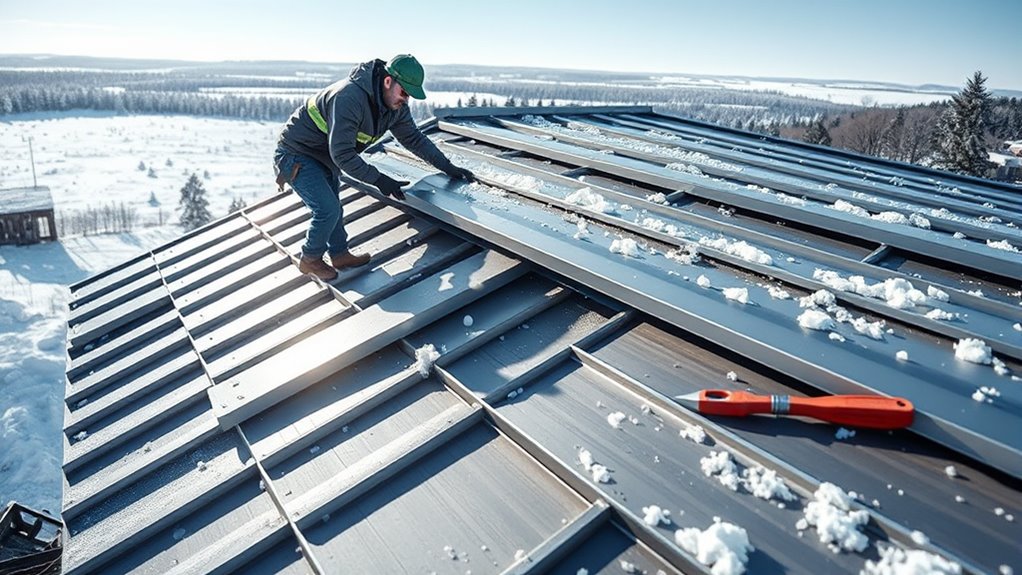
When it comes to tackling winter challenges, angled roofs can be your best ally. Their design promotes efficient snow shedding, which is essential for preventing structural issues. However, understanding the nuances of pitch, materials, and installation practices is important for maximizing their effectiveness. As you explore the significant aspects of angled roofs, consider how their unique advantages can transform your winter experience and safeguard your property. What specific factors should you prioritize for ideal results?
Understanding the Basics of Angled Roofs
When considering the design of a roof, understanding the fundamentals of angled roofs is vital for effective snow shedding. Angled roofs facilitate the downward movement of snow, minimizing accumulation and reducing the risk of excessive snow load. The pitch of the roof considerably influences performance; steeper angles typically encourage quicker snow runoff. In your roof design, you should account for local climate conditions and potential snow load, ensuring structural integrity. Choosing materials that withstand weight and resist moisture is essential. By prioritizing these aspects, you’ll enhance the roof’s functionality, ensuring it efficiently manages winter’s challenges while maintaining your freedom to enjoy the space.
Advantages of Angled Roofs in Winter
One of the primary advantages of angled roofs in winter is their ability to effectively shed snow, markedly reducing the risk of structural damage. By minimizing snow load accumulation, these roofs help maintain structural integrity, preventing potential failures that can arise from excessive weight. The sloped design encourages snow to slide off, rather than sit and compact, which can lead to leaks or even collapse. Additionally, angled roofs facilitate easier maintenance, as removing built-up snow is more manageable. Ultimately, this design choice promotes safety and longevity, allowing you to enjoy winter without the constant worry of roof-related issues.
Comparing Angled Roofs to Flat Roofs
Although flat roofs offer certain aesthetic and functional benefits, they significantly lag behind angled roofs regarding snow management and overall durability during winter months. The angled roof benefits include efficient snow shedding, reducing the risk of structural damage from accumulated weight. In contrast, flat roof drawbacks often lead to water pooling and increased maintenance needs, especially in colder climates. This can compromise the integrity of your roofing system and lead to costly repairs. Ultimately, if you’re seeking a long-lasting, low-maintenance solution for winter conditions, angled roofs present a superior choice for effective snow management and overall building resilience.
Ideal Roof Angles for Snow Shedding
When considering roof angles for effective snow shedding, it’s essential to adhere to recommended roof pitches, typically ranging from 30 to 45 degrees. Additionally, the choice of materials can greatly impact how well the roof performs in shedding snow. Understanding these factors will help you optimize your roof design for winter conditions.
Recommended Roof Pitch
To effectively manage snow accumulation and prevent structural stress, selecting the right roof pitch is essential. Generally, a pitch of 6:12 or steeper is recommended for ideal snow shedding. This angle helps to minimize snow load, reducing the risk of collapse. Here’s a quick reference table for various roof pitches:
| Roof Pitch | Snow Load Capacity | Ideal Use |
|---|---|---|
| 4:12 | Moderate | Residential |
| 6:12 | High | Mixed climates |
| 8:12 | Very High | Heavy snowfall |
| 10:12 | Extreme | Snow-prone areas |
| 12:12 | Maximum | Mountainous |
Select wisely to enhance your roof design’s effectiveness.
Material Considerations for Angles
Choosing the right materials for angled roofs is essential for ideal snow shedding performance. You’ll want to prioritize material durability and weather resistance to guarantee your roof can withstand harsh conditions. Options like metal roofing provide excellent durability, allowing snow to slide off easily without accumulating. Additionally, consider materials with coatings that enhance weather resistance, preventing moisture penetration and ice formation. Asphalt shingles can also be effective if designed for steep pitches. Ultimately, selecting the appropriate materials guarantees your roof remains functional and resilient, granting you peace of mind during heavy snowfall and promoting efficient snow shedding.
Choosing the Right Materials for Angled Roofs
Selecting the right materials for angled roofs is essential not only for aesthetic appeal but also for ensuring structural integrity and effective snow shedding. You’ll want to choose materials that combine durability with visual attractiveness; options like metal, asphalt shingles, or slate can meet these criteria. Metal roofs are particularly advantageous due to their longevity and lightweight nature, promoting better snow runoff. Asphalt shingles offer a cost-effective solution with various styles, while slate provides a timeless elegance but at a higher price point. Prioritize material durability alongside your aesthetic goals to enhance both performance and visual impact in your roofing project.
Installation Tips for Angled Roofs
While installing angled roofs may seem straightforward, attention to detail is essential for guaranteeing a successful outcome. Start by selecting appropriate installation techniques that suit your roof’s design and material. Ascertain precise roof alignment; misalignment can lead to significant issues such as water pooling and structural stress. Use a level to confirm each section is correctly positioned before securing it. Additionally, consider the angle of the roof; a steeper incline may require different fastening methods. Don’t overlook the importance of proper ventilation to prevent trapped moisture. Following these guidelines will enhance your roof’s efficiency in snow shedding and longevity.
Maintenance Practices for Optimal Performance
To guarantee your angled roof performs at its best, you need a systematic maintenance approach. Regular inspections, effective snow removal techniques, and consistent gutter cleaning are essential practices that prevent damage and enhance longevity. Neglecting these elements can lead to costly repairs and reduced efficiency in snow shedding.
Regular Inspections Schedule
Regular inspections are essential for maintaining the performance of angled roofs designed for snow shedding, as they help identify potential issues before they escalate into significant problems. Establish an inspection frequency that suits your environment, ideally biannually, ensuring both pre-winter and post-winter assessments. Utilize an inspection checklist to systematically evaluate critical components, including roof integrity, flashing, and drainage systems. This proactive approach not only extends the life of your roof but also enhances its efficiency in snow shedding. By staying vigilant, you can enjoy the freedom of a reliable roof that withstands winter’s challenges without compromising your safety or investment.
Snow Removal Techniques
Effective snow removal techniques are essential for maintaining the performance of angled roofs, especially in regions prone to heavy snowfall. To guarantee winter safety, regularly assess snow accumulation and remove it promptly to prevent structural strain. Use a roof rake to carefully pull snow away from the eaves, avoiding damage to shingles. For thicker layers, consider hiring professionals equipped with proper tools. Always prioritize safety—never compromise your well-being for snow removal. By implementing these techniques, you’ll enhance the roof’s efficiency while safeguarding your property against the potential hazards of excessive snow loads. Stay proactive to guarantee peak performance and longevity.
Gutter Cleaning Frequency
After addressing snow removal, it’s important to evaluate gutter cleaning frequency as part of your maintenance routine for excellent roof performance. Regular gutter cleaning is essential, especially during seasonal maintenance periods, to prevent debris buildup that can obstruct water flow. Ideally, you should clean gutters at least twice a year—once in spring and once in fall. However, if you live in an area with heavy foliage, consider more frequent cleaning. By maintaining clear gutters, you’ll enhance your roof’s efficiency and longevity, ensuring effective snow shedding and minimizing potential water damage during thaw cycles. Prioritize this for peak performance.
Common Mistakes to Avoid During Installation
While installing angled roofs for snow shedding, it’s crucial to be aware of common mistakes that can compromise the roof’s effectiveness and longevity. One major issue is improper roof alignment—if the angles aren’t precise, snow can accumulate unevenly, leading to potential structural damage. Additionally, installation errors, such as inadequate fastening or using incompatible materials, can weaken the roof’s integrity. Verify you double-check measurements and alignments throughout the process. Remember, investing time in meticulous installation prevents costly repairs and enhances the roof’s performance, allowing you to enjoy the freedom of a well-functioning roof during winter’s challenges.
Enhancing Energy Efficiency With Angled Roofs
Angled roofs can greatly enhance insulation performance by allowing for better airflow and temperature regulation. This design minimizes heat loss during colder months, leading to reduced heating costs. By optimizing your roof’s angle, you’re not just improving snow shedding; you’re also increasing energy efficiency.
Improved Insulation Performance
When considering energy efficiency in roofing design, improved insulation performance is a critical factor that angled roofs can notably enhance. Utilizing advanced insulation materials, you can greatly boost the thermal performance of your roof system. The sloped design facilitates better airflow, reducing heat loss in colder months while keeping your space cooler during warmer seasons. Additionally, angled roofs provide ample space for high-performance insulation, optimizing energy retention. This strategic design not only contributes to a comfortable living environment but also aligns with sustainable building practices, giving you the freedom to maintain efficient energy usage without sacrificing aesthetic appeal.
Reduced Heating Costs
By incorporating angled roofs into your building design, you can considerably reduce heating costs throughout the colder months. The sloped surfaces facilitate efficient snow shedding, preventing ice buildup that can compromise insulation. This design enhances energy savings by optimizing heat retention, allowing your heating system to operate more effectively. Additionally, the cost benefits are significant; lower energy consumption translates to reduced utility bills, increasing your overall financial freedom. With angled roofs, you not only improve your building’s aesthetic but also gain a strategic advantage in energy efficiency, ensuring you’re not overspending on heating during harsh winter months.
Real-Life Examples of Successful Angled Roof Installations
While many homeowners face the challenge of snow accumulation on their roofs, several have successfully implemented angled roof designs that enhance snow shedding. Successful projects, like those in the snowy regions of Colorado and Vermont, showcase design innovations that optimize pitch and materials. For instance, a steeply pitched roof in a Colorado home allows snow to slide off effortlessly, reducing weight and preventing ice dams. Similarly, a Vermont cabin utilizes metal sheathing, further encouraging snow to fall away. These examples demonstrate how strategic roof design can greatly improve snow management, ensuring safety and longevity while providing homeowners the freedom to enjoy their spaces year-round.
Frequently Asked Questions
How Do Local Building Codes Affect Angled Roof Installations?
Local building codes dictate safety standards, ensuring your angled roof adheres to necessary regulations. Ignoring these can lead to structural failures. Compliance not only protects your investment but also secures your freedom to build responsibly.
What Are the Costs Associated With Installing an Angled Roof?
Installing an angled roof typically involves significant material costs for quality roofing materials and additional labor expenses due to the complexity of the installation. You should budget accordingly for both to guarantee a durable, efficient structure.
Can I Install an Angled Roof Myself, or Should I Hire a Professional?
You can tackle an angled roof yourself, but it’s a double-edged sword. Weigh DIY considerations against potential safety precautions required. If you lack experience, hiring a professional might save you trouble down the line.
How Does Roof Color Impact Snow Shedding Efficiency?
Roof color affects snow melting efficiency markedly; darker colors absorb more heat, accelerating snow shedding. In contrast, lighter colors reflect sunlight, potentially prolonging snow accumulation. Choosing the right hue can optimize your roof’s snow management performance.
Are There Specific Tools Required for Angled Roof Installation?
If you think angled roofs install themselves, think again! You’ll need essential roofing tools like nail guns, saws, and safety gear, plus solid installation techniques to guarantee your masterpiece stands tall against nature’s whims.