
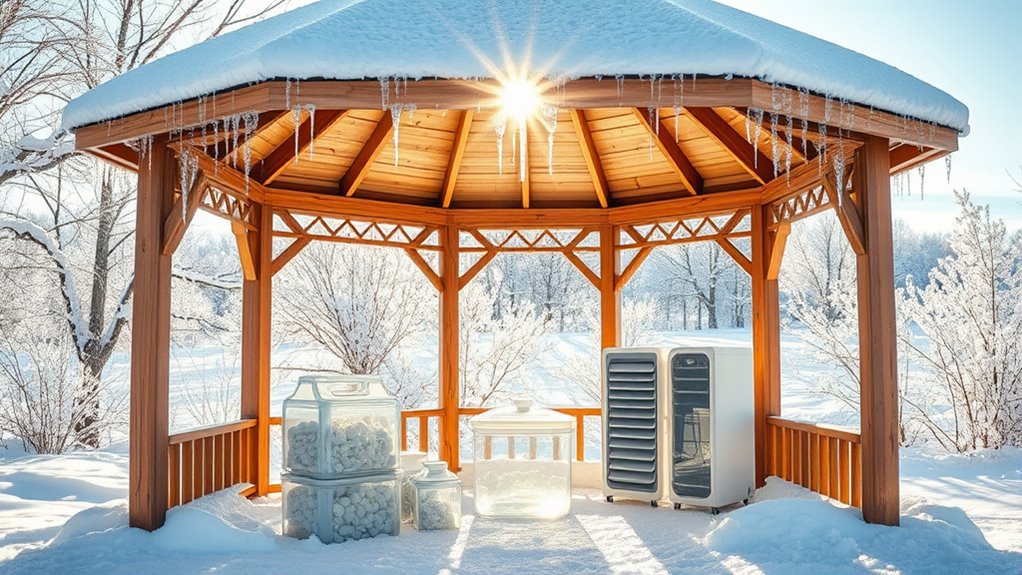
Mold growth in winter gazebos can ruin your relaxing retreats and gatherings. It thrives in damp environments, making moisture control essential for a pleasant space. By understanding the causes and implementing effective strategies, you can greatly reduce the risk of mold. Curious about the best practices to keep your gazebo mold-free this winter? Let’s explore the key steps you can take to protect your investment and enhance your outdoor experience.
Understanding the Causes of Mold Growth
When you think about mold growth in winter gazebos, it’s crucial to understand the factors that contribute to this problem. Mold spores thrive in damp environments, and high humidity levels can create the perfect breeding ground. During winter, condensation can build up inside your gazebo, especially if it’s not well-ventilated. This moisture, combined with organic materials like wood, provides an ideal habitat for mold. To prevent growth, keep humidity levels low and guarantee proper airflow. Regularly check for signs of moisture accumulation, and you’ll maintain your gazebo as a comfortable, mold-free retreat throughout the winter months.
Choosing the Right Location for Your Gazebo
When picking a spot for your gazebo, consider how much sunlight it’ll get; ample sunlight helps prevent mold. You also want to assess the drainage and ground elevation to guarantee water doesn’t pool around your structure. A well-chosen location can make a big difference in keeping your gazebo mold-free all winter long.
Sunlight Exposure Importance
Although you might be tempted to place your gazebo in the shadiest spot of your yard, proper sunlight exposure is essential for preventing mold growth during the winter months. Sunlight benefits your gazebo by naturally drying moisture, reducing the chances of mold developing. When you select a location that receives adequate sunlight, you’re also providing UV protection, which helps preserve the materials and structure of your gazebo. Aim for a spot that gets plenty of direct sunlight during the day. This way, you can enjoy your outdoor space while keeping it mold-free and maintaining its beauty throughout the winter season.
Drainage and Ground Elevation
While sunlight exposure plays a key role in preventing mold, the location of your gazebo is equally important, especially regarding drainage and ground elevation. Choose a spot with proper drainage systems to divert water away and prevent pooling around your gazebo. Look for natural ground slopes that encourage runoff, reducing moisture retention. Avoid low-lying areas where water collects, as this can lead to mold and mildew growth. By selecting the right location, you’ll enhance your gazebo’s longevity and guarantee a comfortable space for relaxation. Remember, a few thoughtful choices on placement can make all the difference in mold prevention.
Proper Ventilation Techniques
To effectively prevent mold growth in your winter gazebo, ensuring proper ventilation is key. You’ll want to facilitate airflow patterns that keep humidity at bay. Consider implementing ventilation systems like exhaust fans or strategically placed windows. Here’s a quick overview:
| Ventilation Method | Benefits | Considerations |
|---|---|---|
| Exhaust Fans | Reduces humidity | Requires power source |
| Windows | Natural airflow | Seasonal use |
| Roof Vents | Heat escape | Installation needed |
| Louvered Shutters | Controlled airflow | Maintenance required |
| Dehumidifiers | Moisture control | Regular monitoring |
Regular Cleaning and Maintenance
Proper ventilation sets the stage for a mold-free environment, but regular cleaning and maintenance are just as important to keep your winter gazebo in top shape. Establishing a consistent cleaning schedule will help you enjoy your space without worry. Here’s a handy maintenance checklist to guide you:
- Wipe down surfaces weekly to remove dust and debris.
- Inspect and clean gutters and drainage regularly to prevent water buildup.
- Check for signs of mold or mildew monthly and address issues immediately.
Moisture Control Strategies
To keep mold at bay in your winter gazebo, focusing on moisture control is essential. You’ll want to implement proper ventilation techniques, guarantee your insulation and sealing are of high quality, and consider using humidity monitoring devices. By addressing these areas, you can create a healthier, mold-free environment.
Proper Ventilation Techniques
Although you might enjoy the cozy atmosphere of your winter gazebo, neglecting proper ventilation can lead to excessive moisture buildup. To maintain a healthy environment, consider implementing effective ventilation systems that promote air circulation. Here are some techniques you can use:
- Install vents: Allow fresh air to flow in and out, reducing humidity.
- Use exhaust fans: These help pull damp air out, keeping the space drier.
- Open windows: When weather permits, crack open windows to encourage airflow.
Insulation and Sealing
When it comes to preventing mold in your winter gazebo, effective insulation and sealing are essential for moisture control. Choose insulation materials like fiberglass or foam boards to create a barrier against the cold and moisture. Pair this with reliable sealing techniques, such as weather stripping and caulking, to eliminate drafts and leaks.
| Insulation Materials | Sealing Techniques | Benefits |
|---|---|---|
| Fiberglass | Weather Stripping | Energy Efficient |
| Foam Boards | Caulking | Moisture Barrier |
| Spray Foam | Door Seals | Temperature Control |
| Mineral Wool | Window Seals | Easy Installation |
Implementing these strategies helps keep your gazebo mold-free!
Humidity Monitoring Devices
One of the best ways to prevent mold in your winter gazebo is by using humidity monitoring devices. These handy tools help you maintain ideal humidity control, ensuring a comfortable space without the risk of mold growth.
Consider these options for effective monitoring:
- Digital hygrometers: Easily track humidity levels in real-time.
- Smart sensors: Receive alerts on your phone when humidity spikes.
- Analog gauges: Simple and reliable, these devices don’t require batteries.
Insulation and Weatherproofing Tips
To keep your winter gazebo cozy and free of mold, effective insulation and weatherproofing are essential. Choose the right insulation materials like fiberglass or foam boards to minimize heat loss. Combine these with weatherproofing techniques, such as sealing gaps and applying waterproof coatings. Here’s a quick reference table:
| Insulation Material | Weatherproofing Technique | Benefits |
|---|---|---|
| Fiberglass | Caulk around joints | Energy-efficient |
| Foam Board | Weatherstripping doors | Moisture barrier |
| Spray Foam | Waterproof sealant | Prevents mold growth |
| Reflective Foil | Insulated covers | Temperature regulation |
| Mineral Wool | Storm windows | Improved durability |
Implementing these strategies helps guarantee a mold-free environment.
Utilizing Mold-Resistant Materials
Choosing the right materials for your gazebo can greatly reduce the risk of mold growth during winter months. By utilizing mold-resistant materials, you can maintain a healthier space. Consider these options:
- Mold resistant coatings for wood and metal surfaces, protecting them from moisture.
- Breathable fabrics for curtains or covers, allowing air circulation while preventing water accumulation.
- Composite materials that resist moisture absorption, ensuring longevity and durability.
Monitoring and Addressing Problems Early
While winter can create a cozy atmosphere in your gazebo, it also brings challenges like mold growth if left unchecked. To enjoy your space freely, focus on early detection and proactive measures. Regularly inspect your gazebo for moisture or dark spots, which could indicate mold. If you spot any issues, address them immediately—don’t wait for them to escalate. Use a dehumidifier during damp days, and guarantee proper ventilation. Remember, a few minutes of monitoring can save you from costly repairs and health risks down the line. Stay vigilant, and you’ll keep your winter haven mold-free and inviting!
Frequently Asked Questions
Can I Use a Dehumidifier Inside My Gazebo?
Absolutely, you can use a dehumidifier inside your gazebo! Just consider the types available, and guarantee proper ventilation. It’ll help keep the space comfortable, allowing you to enjoy those cozy, memorable moments with friends.
What Plants Should I Avoid Near My Gazebo?
You should avoid moisture-absorbing plants like ferns and certain grasses near your gazebo. Instead, opt for mold resistant plants such as lavender or succulents, which can thrive without promoting excess moisture and mold growth.
How Often Should I Inspect My Gazebo for Mold?
You should inspect your gazebo for mold at least every month during warmer months. Regular mold inspections are essential for effective gazebo maintenance, ensuring a safe, enjoyable space while keeping the freedom to relax unimpeded by unwanted growth.
Is It Safe to Use Bleach for Mold Removal?
Yes, it’s safe to use bleach for mold removal, as its effectiveness can eliminate mold quickly. Just remember to ventilate the area and wear protective gear to guarantee your safety during the process.
Can Outdoor Furniture Cause Moisture Problems Inside the Gazebo?
Yes, outdoor furniture can cause moisture problems inside the gazebo. It can trap moisture, leading to retention that fosters mold growth. Choosing moisture-resistant materials and ensuring proper ventilation can help mitigate this issue effectively.