
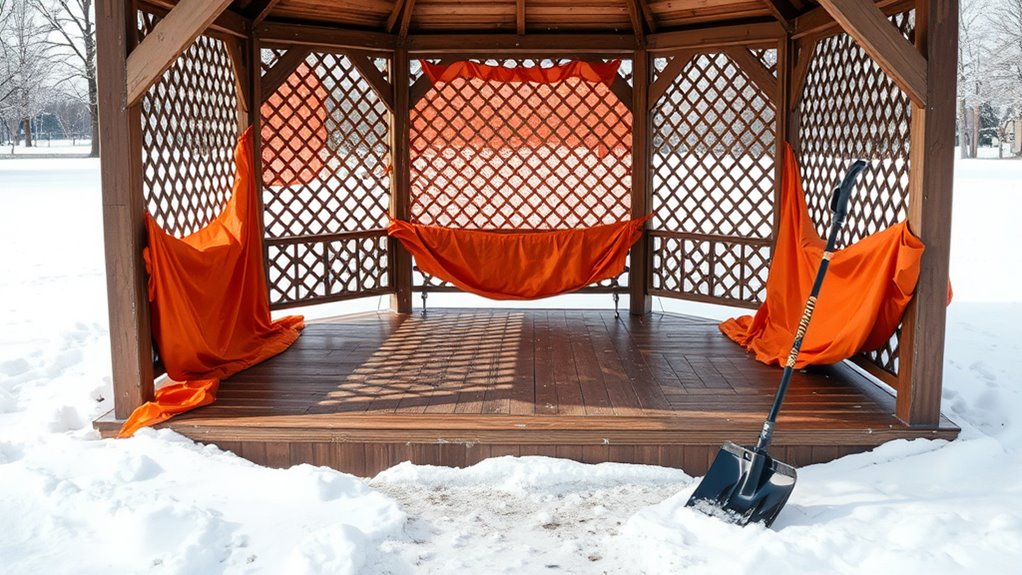
Did you know that improper winter care can reduce the lifespan of gazebo flooring by up to 50%? To avoid such costly damage, it’s essential to implement a thorough maintenance strategy tailored to your specific flooring type. From cleaning to applying protective sealants, each step plays an important role. Understanding these processes will empower you to safeguard your gazebo and guarantee its longevity during harsh winter conditions. Let’s explore how to effectively protect your investment.
Assessing Your Gazebo Flooring Type
When it comes to preventing winter damage to your gazebo flooring, the first step is evaluating the type of flooring you have. If you’ve got wood flooring, it’s essential to check for any signs of wear or moisture damage, as wood can warp or crack in harsh conditions. On the other hand, composite materials offer better resistance to weather, but they still require assessment for any deterioration. Understanding these characteristics allows you to take informed steps to protect your investment. By recognizing your flooring type, you can implement appropriate protective measures and maintain the freedom to enjoy your gazebo year-round.
Cleaning and Preparing Your Flooring for Winter
Although winter can pose significant challenges for gazebo flooring, thorough cleaning and preparation can greatly reduce the risk of damage. Start with floor cleaning to remove dirt, debris, and any mold. Use a gentle detergent suitable for your flooring material, ensuring you don’t leave residues that could attract moisture. After cleaning, inspect for any loose boards or structural issues that need addressing. Proper winter preparation includes ensuring adequate drainage around the gazebo to prevent water accumulation. Finally, consider organizing furniture and decor to minimize potential hazards from snow and ice. This proactive approach will safeguard your gazebo throughout winter.
Applying Protective Sealants
Applying protective sealants is crucial for preserving your gazebo flooring against harsh winter conditions. You’ll want to choose sealant types that suit your flooring material, such as acrylics for wood and urethanes for composite surfaces. Before application, verify the surface is clean and dry to enhance adhesion. Use a high-quality brush or roller for even coverage, applying in thin coats to prevent pooling. Allow adequate drying time between layers, typically 24 hours, for maximum protection. Regular maintenance will prolong your sealant’s effectiveness, so reapply every one to three years, depending on environmental exposure. This proactive approach safeguards your gazebo’s integrity.
Insulating Against Cold Temperatures
To effectively insulate your gazebo against cold temperatures, you need to weigh various insulation material options that suit your flooring. Additionally, exploring floor covering solutions can enhance thermal retention while providing aesthetic appeal. Finally, incorporating appropriate heat sources will help maintain a comfortable environment during winter months.
Insulation Material Options
When considering insulation material options for your gazebo flooring, it’s essential to choose materials that effectively resist cold temperatures while maintaining structural integrity. Various insulation types serve as thermal barriers, ensuring warmth and comfort during winter months. Here’s a quick comparison:
| Material | R-Value | Benefits |
|---|---|---|
| Fiberglass | 2.9-4.3 | Cost-effective, lightweight |
| Foam Board | 5-7 | High insulation, moisture-resistant |
| Spray Foam | 6-7 | Excellent air sealing, expands |
Selecting the right insulation will help you enjoy your gazebo year-round, protecting it from winter damage.
Floor Covering Solutions
Choosing the right floor covering is essential for insulating against cold temperatures in your gazebo. Consider alternative flooring options like rubber or vinyl, which provide excellent insulation while being durable. These materials are often waterproof, ensuring they withstand winter moisture without warping or degrading. Additionally, using interlocking foam tiles can create an insulating barrier against the cold ground while offering easy installation and maintenance. Don’t forget to select colors and textures that enhance your gazebo’s aesthetic. By investing in appropriate floor coverings, you’ll create a cozy retreat that stands up to winter’s challenges while allowing you the freedom to enjoy your outdoor space year-round.
Heat Sources for Gazebos
Effective floor coverings can greatly enhance the comfort of your gazebo during winter, but without proper heat sources, the space may still feel chilly. Consider installing heat lamps or outdoor heaters to provide consistent warmth. Heat lamps are excellent for targeted heating, allowing you to focus warmth where it’s needed most. Outdoor heaters, such as propane or electric models, can efficiently warm the entire gazebo area, ensuring an inviting atmosphere. When selecting heat sources, assess your gazebo’s size and insulation to optimize heating efficiency. With the right combination of insulation and heat sources, you’ll enjoy your gazebo even in the coldest months.
Managing Snow and Ice Accumulation
To effectively manage snow and ice accumulation on your gazebo flooring, regular snow removal is essential to prevent excessive weight and moisture. Employing ice prevention techniques, such as using appropriate de-icing agents, can minimize surface hazards. Additionally, ensuring proper drainage solutions will help channel water away and reduce the risk of ice formation.
Regular Snow Removal
Regular snow removal is essential for protecting your gazebo flooring from winter damage. Implement efficient snow shoveling techniques, such as using a plastic shovel to prevent surface scratches and clearing snow in layers. Aim to remove snow immediately after each snowfall, as compacted snow can lead to moisture retention. When dealing with heavy accumulation, consider using a snow blower for efficiency. Always adhere to winter weather precautions by dressing appropriately and ensuring your footing is secure to avoid slips. This proactive maintenance not only preserves the integrity of your flooring but also enhances your gazebo’s longevity and aesthetic appeal.
Ice Prevention Techniques
Although ice can pose a significant threat to gazebo flooring, implementing proactive techniques can effectively mitigate its accumulation. To promote ice melting, consider applying eco-friendly deicers that won’t harm your flooring. Regularly clearing snow and ensuring proper ventilation can also assist in frost prevention. Installing heated mats or using thermal blankets can help maintain warmth and reduce ice formation. Additionally, maintaining an even surface can prevent water pooling, which often leads to ice buildup. By adopting these strategies, you can protect your gazebo flooring and enjoy your outdoor space without the worries of winter-related damage.
Proper Drainage Solutions
While you may have taken steps to prevent ice accumulation on your gazebo flooring, proper drainage solutions are crucial for managing snow melt and rainfall effectively. Implementing drainage systems can greatly reduce water runoff that collects around your gazebo, minimizing the risk of moisture damage. Consider installing gutters or downspouts to channel water away from the structure. Additionally, grading the land around your gazebo can promote better drainage, directing water away from the flooring. Regularly clearing debris from these systems guarantees they operate at their best, allowing your gazebo to remain a sanctuary, free from the detrimental effects of winter precipitation.
Regular Maintenance Checks During Winter
To guarantee your gazebo flooring withstands the harsh winter conditions, it’s essential to conduct maintenance checks throughout the season. Regular winter inspections can prevent small issues from escalating into significant damage. Use flooring checklists to assess the condition of your flooring, focusing on cracks, warping, or moisture accumulation. Pay special attention to joints and seams where water can infiltrate. Make sure drainage systems remain unobstructed to prevent ice buildup. By proactively monitoring your gazebo’s flooring, you can maintain its integrity and prolong its lifespan, allowing you the freedom to enjoy your outdoor space without worry, even in winter’s grip.
Utilizing Mats and Rugs for Extra Protection
As winter approaches, incorporating mats and rugs into your gazebo can greatly enhance the protection of your flooring. Selecting appropriate rug materials, such as polypropylene or nylon, guarantees durability against moisture and cold. Place mats strategically at entry points to capture snow and debris, minimizing exposure to your flooring. Additionally, consider layering rugs for added insulation and protection, especially in high-traffic areas. Regularly check and clean these mats to prevent mold or mildew buildup. By implementing effective mat placement, you’re not just safeguarding your gazebo’s flooring, but also maintaining its aesthetic appeal throughout the winter months.
Avoiding Heavy Loads on the Flooring
When it comes to maintaining your gazebo flooring during winter, be mindful of seasonal weight limitations. Accumulated snow can exert significant pressure on the floor, leading to potential structural damage. To prevent this, avoid placing heavy objects on the flooring and regularly clear any snow to mitigate risks.
Seasonal Weight Limitations
Although winter can transform your gazebo into a picturesque retreat, it also brings specific challenges regarding the weight that your flooring can safely support. To maintain structural integrity, it’s vital to evaluate weight distribution when placing furniture or decorations. Heavy items, especially under snow or ice, can exceed the flooring’s load capacity. Make seasonal adjustments by minimizing the weight in your gazebo during winter months. This proactive approach not only protects your flooring but also enhances safety. Regularly inspect for any signs of stress, ensuring your gazebo remains a cherished space throughout the season without compromising its durability.
Snow Accumulation Risks
To prevent structural damage, it’s crucial to monitor snow accumulation on your gazebo flooring. Excessive snow load can compromise the structural integrity of your gazebo, leading to potential collapse. Regularly assess the depth of accumulated snow and remove it promptly to avoid exceeding weight limits. Remember, each cubic foot of snow can weigh considerably, increasing the risk of damage. Use a roof rake or similar tool to clear snow safely, ensuring you don’t apply unnecessary pressure on the flooring. By proactively managing snow loads, you’ll maintain your gazebo’s durability and enjoy its beauty for years to come.
Monitoring for Moisture and Mold
As winter approaches, it’s vital to keep an eye on moisture levels and mold development in your gazebo, since prolonged exposure to dampness can lead to significant structural damage. Utilize moisture detection tools, like hygrometers or moisture meters, to regularly assess humidity levels in the air and within the flooring. If you notice elevated moisture, implement mold prevention strategies, such as enhancing ventilation or using dehumidifiers. Regularly inspect hidden areas, including under furniture, where moisture can accumulate unnoticed. By actively monitoring and addressing these factors, you’ll protect your gazebo from the detrimental effects of moisture and mold throughout the winter.
Preparing for Spring Restoration and Repair
Once winter has passed, it’s essential to begin preparing for spring restoration and repair of your gazebo to guarantee its longevity and aesthetic appeal. Start with spring cleaning to remove debris and dirt. Assess the flooring for damage and apply appropriate repair techniques to address any issues.
| Task | Tools Needed | Estimated Time |
|---|---|---|
| Inspect Flooring | Screwdriver, Hammer | 30 minutes |
| Clean Surface | Broom, Water Hose | 1 hour |
| Apply Sealant | Paintbrush, Sealant | 2 hours |
| Replace Damaged Boards | Saw, Replacement Boards | 3 hours |
| Final Inspection | None | 15 minutes |
Frequently Asked Questions
Can I Use Outdoor Furniture During Winter in My Gazebo?
You can use outdoor furniture in your gazebo during winter, but consider its durability against harsh winter weather. Guarantee it’s made from weather-resistant materials to withstand potential damage while maintaining your comfort and enjoyment.
What Materials Are Best for Gazebo Flooring in Cold Climates?
For cold climates, consider composite decking or stone pavers for gazebo flooring. Composite decking offers durability and resistance to moisture, while stone pavers provide excellent insulation and stability, ensuring your outdoor space remains functional and appealing year-round.
Is It Necessary to Remove Decorations Before Winter?
Yes, it’s crucial to remove winter decorations for proper gazebo maintenance. Imagine snow piling on wreaths, causing moisture damage. Clearing decor guarantees your structure remains intact and ready for spring, preserving its beauty and longevity.
How Often Should I Check for Mold During Winter?
You should conduct mold inspections every two weeks during winter maintenance. Regular checks help identify moisture issues early, preventing mold growth. Staying proactive guarantees your gazebo remains safe and enjoyable throughout the colder months.
Can I Paint My Gazebo Flooring in Winter?
You can paint your gazebo flooring in winter, but only if temperatures stay above 50°F. Proper flooring preparation is essential; moisture can lead to peeling. Surprisingly, paint adheres better in colder conditions than people often think.