
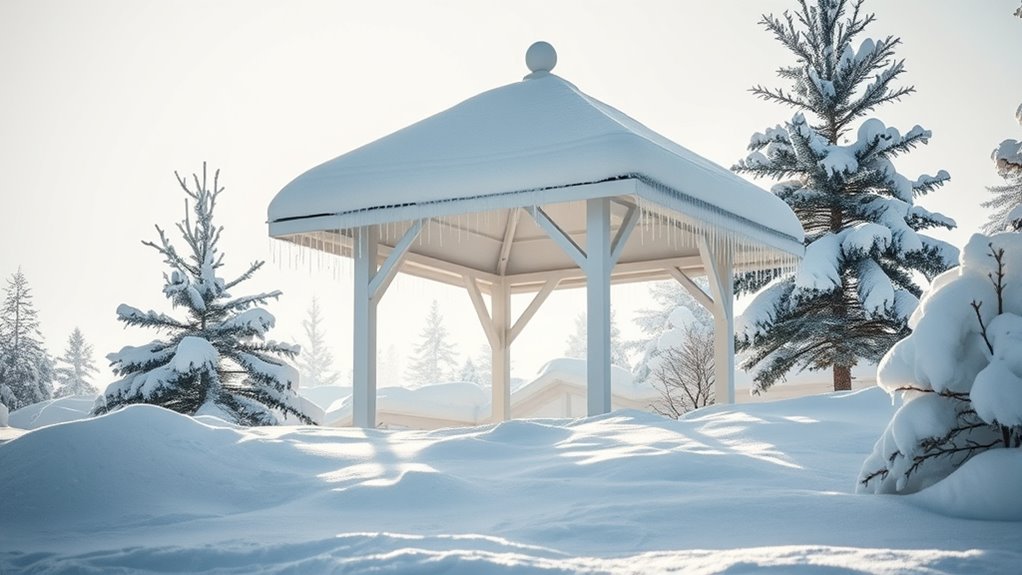
While gazebos offer a cozy retreat in your backyard, they can pose serious risks during heavy snowfalls. Understanding the structural integrity of your gazebo is vital, as factors like material strength and roof design play significant roles in its durability. But how do you guarantee that your gazebo withstands the winter’s weight? Examining the essential elements and maintenance strategies can provide clarity on this pressing concern.




Understanding the Risks of Heavy Snow on Gazebos
Although gazebos can enhance outdoor spaces, they’re not immune to the dangers posed by heavy snow accumulation. The snow load can greatly impact gazebo stability, leading to structural failure if not properly managed. You need to understand that each gazebo design has a specific load-bearing capacity, which may not withstand excessive snow. Regular inspection during winter months is essential to identify any risks. If snow accumulates beyond the recommended limits, it’s critical to remove it promptly to prevent damage. Prioritizing structural integrity will guarantee your outdoor retreat remains a safe haven, allowing you the freedom to enjoy your space year-round.
Factors Influencing Gazebo Durability
When evaluating gazebo durability, two primary factors come into play: material strength and roof design efficiency. You need to gauge the resilience of the materials used, as well as how the roof’s structure can handle heavy snow loads. Understanding these elements will help guarantee your gazebo withstands harsh winter conditions effectively.
Material Strength Considerations
The durability of a gazebo under heavy snow largely hinges on the strength of its materials, as each component must withstand significant weight and pressure. When choosing a gazebo, consider the material strength of the frame and roofing. Metals like aluminum and steel offer superior load capacity compared to wood or vinyl, which may bend or break under extreme conditions. Additionally, the thickness of materials influences their resilience; thicker components generally provide better support. Ultimately, understanding these factors empowers you to make informed decisions, ensuring your gazebo can brave the elements without compromising safety or structural integrity.
Roof Design Efficiency
Material strength is only one aspect of ensuring a gazebo can withstand heavy snow; roof design efficiency plays a pivotal role in overall durability. A well-constructed roof can greatly influence how effectively it handles snow loads.
Consider these factors:
- Roof pitch: A steeper angle helps prevent snow accumulation.
- Material choice: Lightweight materials reduce stress while maintaining strength.
- Structural support: Reinforcements can enhance stability under heavy loads.
- Drainage systems: Properly designed eaves help manage melting snow.
Gazebo Materials: Which Are the Most Resilient?
How do different gazebo materials hold up under heavy snow? When evaluating wood vs. metal, you’ll find that metal structures, such as aluminum or steel, generally outperform wood regarding snow load resistance. Metal’s strength allows it to bear heavier accumulations without warping or breaking. Conversely, wood can suffer from structural strain, especially if untreated. Vinyl, known for its durability, resists moisture and rot, but its performance under heavy snow can be variable depending on the internal frame. Ultimately, selecting the right material is essential to guarantee your gazebo withstands the rigors of winter while providing lasting freedom from worry.
Design Features That Enhance Snow Resistance
When selecting a gazebo material, it’s important to reflect on design features that can further enhance snow resistance. A well-thought-out structural design can greatly impact the gazebo’s ability to handle snow load. Here are some key features to take into account:
- Sloped Roofs: A steeply sloped roof allows snow to slide off rather than accumulate.
- Reinforced Beams: Stronger beams can better support increased snow loads.
- Cross-Bracing: This feature adds stability, preventing structural failure under weight.
- Snow Guards: These prevent snow from sliding off suddenly, reducing risks for people below.
Incorporating these elements can maximize your gazebo’s durability.
Preparing Your Gazebo for Winter Weather
As winter approaches, preparing your gazebo for harsh weather conditions is essential to guarantee its longevity and structural integrity. Begin by clearing the area around your winter gazebo, making sure proper drainage to prevent water accumulation. Check the roof for any damage or debris, as this affects snow readiness. Strengthen the structure by securing loose components and reinforcing weak points. If your gazebo is not designed for heavy snow, consider installing a snow load kit. Finally, regularly inspect your gazebo throughout the season to address any potential issues promptly. Taking these steps assures your gazebo withstands winter’s challenges effectively.
Maintenance Tips for Gazebos in Snowy Conditions
To maintain your gazebo in snowy conditions, you’ll want to focus on snow accumulation prevention and structural integrity checks. Regularly inspecting your gazebo guarantees that it can withstand heavy snowfall without compromising its stability. Establishing a maintenance schedule will help you address potential issues before they escalate.
Snow Accumulation Prevention
Although gazebos are designed to withstand various weather conditions, snow accumulation can pose significant structural risks if not properly managed. To prevent excessive snow load and potential damage, consider implementing these maintenance tips:
- Regularly clear snow off the roof to reduce weight.
- Use a broom or shovel, ensuring you don’t damage the winter insulation.
- Check for any weak spots in the structure before heavy snowfall.
- Install a snow guard to minimize accumulation.
Structural Integrity Checks
After ensuring proper snow accumulation prevention, it’s imperative to conduct structural integrity checks on your gazebo, especially in snowy conditions. Start with thorough structural assessments to identify any signs of wear or damage. Examine joints, beams, and supports for stress or deformation. Perform load calculations based on the expected snow weight, ensuring your gazebo can safely withstand the pressure. If any components appear compromised, consider reinforcing or replacing them before the next snowfall. Regular checks not only enhance safety but also prolong your gazebo’s life, allowing you to enjoy your outdoor space without worry during winter’s harshness.
Regular Maintenance Schedule
While winter can be harsh on outdoor structures, establishing a regular maintenance schedule for your gazebo is essential to guarantee its longevity and resilience against heavy snow. Adhere to a strategic maintenance frequency to avoid costly repairs. Utilize an inspection checklist to streamline your efforts:
- Clear snow accumulation promptly
- Inspect the roof for leaks or damage
- Check support beams and joints for stress
- Treat wooden surfaces with protective sealants
Signs of Damage to Watch For After a Snowfall
As you assess your gazebo following a heavy snowfall, it’s essential to identify potential signs of damage that could compromise its structural integrity. Pay attention to any sagging or bending in the roof, as these may indicate excessive snow weight and resultant structural stress. Inspect joints and connections for cracks or separation; these issues can lead to further instability. Look for any warping in the materials, which may signal that the snow’s burden has exceeded the gazebo’s design limits. Finally, check the foundation for any signs of shifting or settling that could affect overall stability.
Alternatives to Traditional Gazebos for Snowy Climates
Identifying damage to your gazebo after heavy snowfall highlights the importance of choosing structures that can withstand harsh winter conditions. If you’re looking for alternatives, consider the following options:
- Permanent structures: Built with durable materials, these can endure snow loads and resist damage.
- Retractable awnings: Provide seasonal coverage, easily adjusted for winter conditions.
- Yurts: These circular tents are designed to handle snow and can offer a cozy atmosphere.
- Pergolas with snow guards: They allow snow to slide off while offering partial shelter.
When to Consider Removing Your Gazebo for Winter
When considering the removal of your gazebo for winter, it’s crucial to assess the structure’s material and design, as these factors greatly influence its ability to withstand heavy snow. Proper removal timing guarantees your gazebo’s longevity and reduces snow-related damage. If you notice any signs of stress or weakness, it’s wise to remove it for winter storage.
| Material | Design Type | Recommended Action |
|---|---|---|
| Wood | Open | Remove |
| Metal | Closed | Retain |
| Vinyl | Portable | Remove |
| Composite | Permanent | Retain |
| Fabric | Canopy | Remove |
Frequently Asked Questions
Can I Use My Gazebo During a Snowstorm?
You shouldn’t use your gazebo during a snowstorm. Guarantee proper gazebo maintenance beforehand, and consider snowstorm precautions to prevent damage. Prioritizing safety and structural integrity helps maintain your outdoor space for future enjoyment.
How Much Snow Can a Gazebo Typically Support?
You can typically expect a gazebo to support around 20-30 pounds per square foot of snow load, but its structural integrity varies. Always prioritize safety; “an ounce of prevention is worth a pound of cure.”
Are There Specific Gazebo Brands Known for Snow Durability?
Some popular gazebo brands, like Sojag and Sunjoy, utilize snow-resistant materials such as aluminum and reinforced fabric. These features enhance durability, ensuring they withstand significant snow loads while providing you with outdoor freedom during winter.
Will Snow Damage My Gazebo’s Paint or Finish?
Yes, snow can damage your gazebo’s paint or finish. For instance, a homeowner found that inadequate paint protection led to peeling. Regular finish maintenance, like applying sealant, will help preserve your gazebo’s aesthetics and durability.
Can I Reinforce My Gazebo for Better Snow Resistance?
You can reinforce your gazebo for better snow resistance by using reinforcement materials like steel brackets and conducting structural modifications to enhance stability. This guarantees it withstands heavier loads, allowing you to enjoy your outdoor space freely.
