
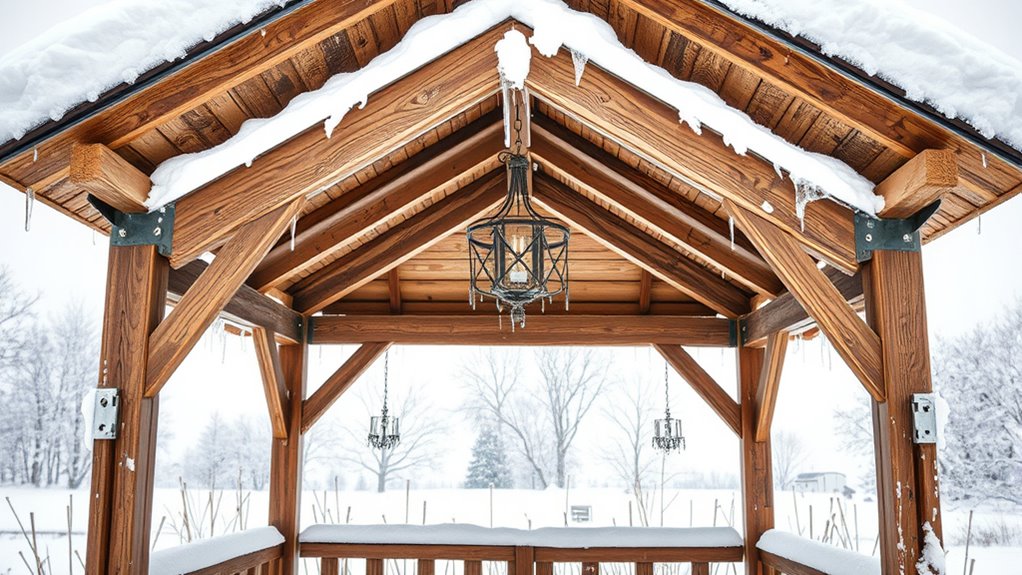
Many homeowners underestimate the impact of heavy snow on gazebo structures, leading to potential damage or collapse. To guarantee your gazebo withstands winter storms, it’s crucial to assess and reinforce its various components. This involves strategic modifications to the roof, foundation, and walls. Understanding these reinforcement methods can greatly improve your gazebo’s resilience, but knowing where to start can be challenging. Let’s explore the best practices for guaranteeing your outdoor space remains intact during harsh conditions.




Assessing Your Gazebo’s Structure
Before reinforcing your gazebo for snowstorms, it’s vital to thoroughly assess its structure. Begin by evaluating the gazebo design, focusing on the materials used and their condition. Examine joints, beams, and supports for signs of wear or weakness; any compromised components can jeopardize structural integrity. Check for proper anchoring to the ground, as stability is essential during heavy snow loads. Consider the overall height and shape—these factors influence how snow accumulates. A robust structure not only enhances durability but also promotes freedom from worry during winter storms. Prioritize these assessments to guarantee your gazebo withstands the elements effectively.
Clearing Snow Accumulation Regularly
To maintain the structural integrity of your gazebo during snowstorms, it’s vital to clear snow accumulation regularly. Excessive weight from snow can lead to sagging or even collapse, so timely removal is imperative. Utilizing the right tools, such as a snow shovel or roof rake, can streamline this process and guarantee safety.
Importance of Regular Clearing
While it might be tempting to leave snow accumulation on your gazebo until the storm passes, regularly clearing the snow is crucial for maintaining its structural integrity. Excess snow weight can weaken supports, leading to potential collapse. Here are four reasons to prioritize regular clearing:
- Prevent roof damage from excessive snow weight.
- Reduce the risk of structural failure.
- Guarantee safety for anyone using the gazebo.
- Extend the lifespan of your gazebo by minimizing stress on materials.
Recommended Snow Removal Tools
Regularly clearing snow is crucial for protecting your gazebo, and having the right tools can make this task more efficient and effective. Invest in high-quality snow shovels designed to reduce strain while maximizing snow removal speed. Look for lightweight materials and ergonomic designs to enhance your experience. Additionally, ice scrapers are important for addressing stubborn ice build-up on surfaces. Choose scrapers with sturdy blades that won’t damage your gazebo’s structure. By utilizing these tools, you’ll guarantee your gazebo remains structurally sound during harsh winter conditions, allowing you to enjoy your outdoor space without unnecessary worry about snow accumulation.
Adding Reinforcement to the Roof
When reinforcing the roof of your gazebo, it is essential to assess both the existing structure and the anticipated snow load. Proper roof angles and effective load distribution are critical to withstand heavy snow. Here are four strategies to reinforce your gazebo roof:
- Install additional cross-bracing to enhance structural integrity.
- Use stronger roofing materials that can better support snow weight.
- Adjust roof angles to facilitate snow shedding and prevent accumulation.
- Add external supports like brackets or cables for extra reinforcement.
Implementing these measures will help guarantee your gazebo remains resilient during snowstorms.
Strengthening the Foundation
To guarantee your gazebo withstands the weight of heavy snow, strengthening its foundation is essential. Start by ensuring foundation stability through proper ground anchoring techniques. This will help prevent shifting during snowstorms. Consider the following table for effective strategies:
| Method | Description | Benefits |
|---|---|---|
| Concrete Footings | Pour concrete beneath each post | Enhances stability |
| Ground Anchors | Install metal anchors to secure base | Prevents movement |
| Leveling Adjustments | Regularly check and adjust for leveling | Maintains structural integrity |
| Gravel Base | Lay gravel under the gazebo | Improves drainage |
Implementing these strategies will enhance your gazebo’s resilience.
Securing the Walls and Screens
To guarantee your gazebo withstands heavy snow, you need to secure the walls and screens effectively. Start by choosing durable materials that can resist the weight and pressure of snow accumulation. Additionally, installing reinforcement straps will enhance structural integrity, preventing potential damage during harsh weather conditions.
Choose Durable Materials
While you may focus on aesthetics, the choice of durable materials for securing the walls and screens of your gazebo is critical for withstanding snowstorms. Selecting the right material options enhances longevity and resilience against harsh weather. Consider these durability factors:
- Aluminum – Lightweight yet strong, resistant to rust.
- Vinyl – Weatherproof and low maintenance, perfect for retaining appearance.
- Fiberglass – Offers excellent strength and thermal properties.
- Pressure-treated wood – Naturally durable, but requires periodic maintenance.
Install Reinforcement Straps
Selecting durable materials sets the foundation for a robust gazebo, but securing the walls and screens with reinforcement straps is equally important. To guarantee stability during snowstorms, utilize effective reinforcement techniques. Begin strap installation by anchoring the straps to the gazebo’s frame, securing them tightly against the walls. Use stainless steel or weather-resistant straps to prevent corrosion. Position straps diagonally to distribute weight evenly, minimizing stress points. Regularly inspect the straps for wear and retighten as needed. By employing these methods, you’ll enhance your gazebo’s resilience, allowing you to enjoy your outdoor space without the fear of structural failure.
Using Weather-Resistant Materials
When reinforcing a gazebo for snowstorms, using weather-resistant materials is essential for ensuring its durability and structural integrity. To effectively prepare your gazebo, consider these key materials:
- Weather Resistant Fabrics: Choose durable, UV-protected fabrics for any curtains or covers.
- Corrosion Resistant Hardware: Use stainless steel or galvanized screws and hinges to prevent rusting.
- Heavy-Duty Framework: Opt for treated wood or metal that withstands harsh conditions.
- Waterproof Sealants: Apply high-quality sealants to joints and seams to prevent moisture infiltration.
Preparing for High Winds
After confirming that your gazebo is equipped with weather-resistant materials, it’s important to address the potential impact of high winds. Begin by evaluating your gazebo’s structural integrity; reinforcing joints and adding diagonal bracing can greatly enhance wind resistance. Secure the base with concrete anchors to prevent uplift during storms. Additionally, consider installing windbreaks, such as strategically placed landscaping or privacy screens, to mitigate wind force. Regular maintenance checks are essential for storm preparation, confirming all components remain intact. By taking these proactive measures, you’ll guarantee your gazebo stands firm against high winds, allowing you the freedom to enjoy your outdoor space year-round.
Frequently Asked Questions
What Types of Snow Loads Should I Consider for My Gazebo?
You should consider two main snow load types: ground snow load, which varies by region, and live load, accounting for additional weight from accumulated snow. Your gazebo design must accommodate these factors for durability and safety.
How Do I Know if My Gazebo Needs Reinforcement?
If your gazebo sways like a tree in winter’s grip, it’s time for a stability assessment. Check for signs of wear and consider winter weather’s impact—reinforcement might be essential for its enduring strength.
Can I Use Regular Wood for Reinforcement?
You can use regular wood for reinforcement, but its durability may compromise structural integrity under heavy snow loads. Opt for treated or engineered wood instead, ensuring better performance and longevity against harsh weather conditions.
What Tools Are Necessary for Gazebo Reinforcement?
You’ll need a drill, screws, a saw, brackets, and reinforcement materials like metal plates or braces for structural stability. These tools guarantee your gazebo can withstand harsh conditions, giving you peace of mind and freedom to enjoy it.
How Often Should I Inspect My Gazebo in Winter?
You should inspect your gazebo weekly during winter maintenance. Establishing a regular inspection schedule guarantees you catch potential issues early, preventing costly damage and ensuring your structure remains stable amidst harsh weather conditions. Stay proactive!