
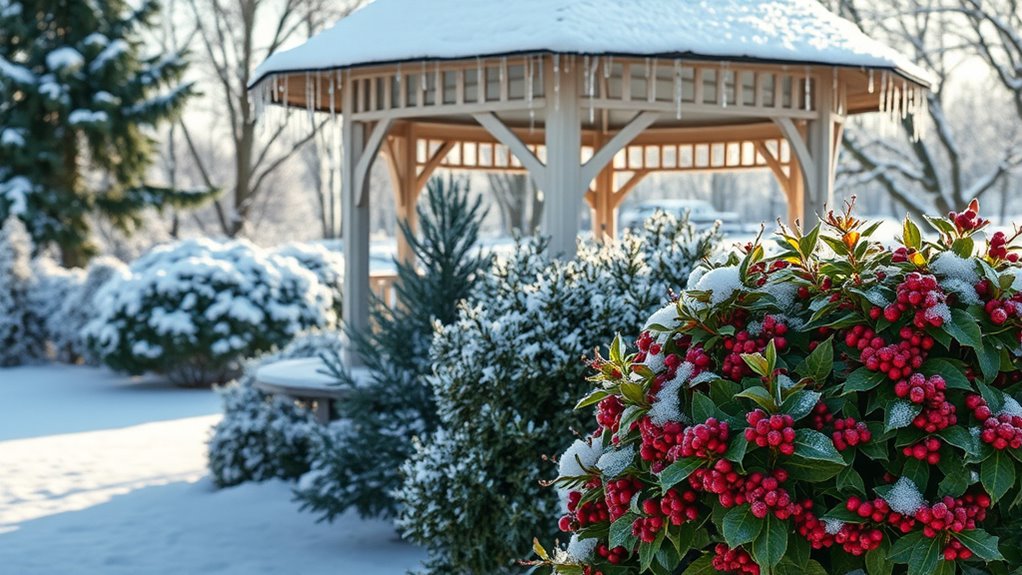
Winter gazebos can be a serene escape, yet they often feel bare and uninviting. To transform this space, selecting the right plants is vital. Hardy evergreens like Eastern Red Cedar provide structure, while colorful blooms like Winter Jasmine add vibrancy. Understanding which plants thrive in these conditions is essential for creating a cozy atmosphere. Explore how to effectively combine various plant types to enhance your winter retreat.




Hardy Evergreens for Winter Gazebos
When you’re looking to create a winter gazebo that remains vibrant and inviting, hardy evergreens are your best bet. These plants offer winter resilience, providing year-round greenery despite harsh conditions. Consider varieties like Eastern Red Cedar or Blue Spruce, which thrive in cold climates and withstand heavy snow. They not only add structure but also create a cozy atmosphere. Additionally, evergreens like Boxwood or Juniper are perfect for shaping and hedging, allowing you to customize your space. Incorporating these hardy evergreens guarantees your winter gazebo stays lively and inviting, giving you a serene retreat throughout the chilly months.
Colorful Winter Blooms to Brighten Your Space
While hardy evergreens provide a strong backdrop for your winter gazebo, incorporating colorful winter blooms can elevate the aesthetic appeal and create a vibrant atmosphere. Selecting the right winter bloom varieties guarantees your space remains lively even in colder months. Consider these options for vibrant winter colors:
| Plant Name | Color |
|---|---|
| Winter Jasmine | Yellow |
| Helleborus | Purple/White |
| Cyclamen | Pink/Red |
| Pansies | Multicolor |
| Ornamental Cabbage | Green/Pink |
These blooms will not only survive but thrive, adding charm and beauty to your winter retreat.
Unique Textures: Grasses and Ferns
When considering unique textures for your winter gazebo, ornamental grasses and hardy ferns stand out as excellent choices. These plants not only provide visual interest with their varying heights and forms, but they also offer seasonal texture contrasts that enhance your space. By incorporating these elements, you can create a dynamic and inviting atmosphere throughout the colder months.
Ornamental Grasses Benefits
Although many people focus on colorful blooms for winter interest, ornamental grasses offer unique textures that can transform your gazebo into a serene retreat. Their architectural forms and varying heights create visual interest even in snow-covered landscapes. Additionally, these grasses exhibit remarkable winter resilience, standing tall against harsh weather conditions. Varieties like Miscanthus and Panicum thrive in colder temperatures, providing movement and sound as they sway in the breeze. With minimal maintenance, they add a natural elegance to your space, enhancing the overall aesthetic while inviting a sense of tranquility—perfect for those seeking freedom in their winter garden design.
Hardy Fern Varieties
Ornamental grasses provide a stunning backdrop, but hardy ferns introduce a different dimension of texture and form to winter gazebos. Varieties like the Christmas fern and the Lady fern thrive in cold climates, showcasing their resilience. For ideal ferns care, verify they’re planted in well-draining soil and provide some mulch to protect roots from frost. These winter varieties not only add visual interest but also create a lush environment even during the colder months. By incorporating hardy ferns, you enhance the aesthetic appeal of your gazebo, allowing you to enjoy a serene outdoor space all year round.
Seasonal Texture Contrast
While incorporating both grasses and ferns into your winter gazebo, you’ll discover a fascinating contrast in textures that enhances the overall aesthetic. This seasonal contrast not only elevates visual appeal but also provides a dynamic texture variety that engages the senses. Grasses, with their upright, feathery plumes, complement the soft, cascading fronds of ferns beautifully.
| Plant Type | Texture Description |
|---|---|
| Grasses | Upright, feathery plumes |
| Ferns | Soft, cascading fronds |
| Ornamental | Textured foliage |
| Evergreen | Dense, rich greenery |
Mixing these elements creates an enchanting winter landscape.
Seasonal Foliage: Plants With Interesting Bark
When selecting plants for your winter gazebo, consider those with unique bark patterns that add visual interest year-round. Some species exhibit remarkable seasonal color changes, enhancing your outdoor space’s aesthetic as temperatures fluctuate. By incorporating these plants, you can create a dynamic winter landscape that captures attention even in the colder months.
Unique Bark Patterns
A variety of trees and shrubs boast unique bark patterns that can add visual interest to winter gazebos, even in the absence of leaves. Consider species like the River Birch, with its exfoliating bark that reveals striking cinnamon tones, or the Shagbark Hickory, showcasing distinctive, peeling layers. These bark textures provide seasonal interest, enhancing the landscape’s aesthetics. Additionally, the smooth, gray bark of the Paper Birch contrasts beautifully against snow, while the twisted patterns of the Eastern Red Cedar lend a rustic charm. Selecting these plants not only enriches your gazebo but also creates a fascinating winter retreat.
Seasonal Color Changes
As you explore plants for your winter gazebo, consider those that exhibit enchanting seasonal color changes, which can enhance the visual appeal even during the colder months. Seasonal foliage can create stunning color shifts, providing interest all year long.
| Plant Name | Seasonal Color Change |
|---|---|
| Japanese Maple | Fiery reds and golds in fall |
| Dogwood | Bright red stems in winter |
| Birch | White peeling bark year-round |
| Coral Bark Maple | Vibrant coral color in winter |
Incorporating these plants not only beautifies your space but also offers a dynamic landscape that evolves with the seasons.
Fragrant Plants to Enhance Your Gazebo Experience
Incorporating fragrant plants into your winter gazebo can transform it into a sensory haven, enhancing both ambiance and comfort. Consider planting fragrant herbs like rosemary and thyme, which not only offer delightful aromas but also serve culinary purposes. For a splash of color and scent, opt for scented flowers such as winter jasmine or hellebore; their subtle fragrances can uplift your space during colder months. Grouping these plants strategically will allow the scents to mingle, creating an inviting atmosphere. Remember to choose varieties suited for your climate, ensuring your gazebo remains a fragrant retreat throughout winter. Enjoy your aromatic escape!
Winter Fruits and Berries for Added Color
Adding winter fruits and berries to your gazebo can infuse vibrant colors and textures during the colder months. Consider incorporating winter fruit varieties like crab apples and ornamental pears for stunning visual appeal. Berry bearing plants, such as winterberry holly and Arctic raspberry, not only add color but also provide habitat for wildlife. These resilient plants thrive in colder climates, ensuring your gazebo remains lively even in frost. For an added touch, mix evergreens with these fruits and berries to create a striking contrast. Embrace the beauty of winter by selecting these hardy, decorative options for your outdoor space.
Container Gardening: Versatile Plant Options
While winter may seem like a challenging time for gardening, container gardening offers a flexible solution that allows you to enjoy a variety of plants even in colder months. You can choose from an array of container choices, combining evergreens, winter blooms, and vibrant foliage for stunning plant combinations.
| Container Choices | Plant Combinations |
|---|---|
| Ceramic | Pansies and Ivy |
| Plastic | Ornamental Kale and Mums |
| Wooden | Hellebores and Winterberry |
These combinations not only thrive but also add life and color to your winter gazebo, creating a warm, inviting atmosphere.
Tips for Maintaining Your Winter Garden
Maintaining your winter garden requires attention to detail and a proactive approach, especially when using container gardening methods. Prioritize winter maintenance by regularly checking soil moisture levels, ensuring they’re not too dry or waterlogged. Select hardy plants that can withstand colder temperatures, like pansies or evergreens, to enhance your garden’s resilience. Rotate your containers to allow even sunlight exposure and minimize frost damage. Additionally, consider using protective covers during extreme cold spells. Keep an eye out for pests and disease, as they can thrive in winter conditions. With proper care, your winter garden can flourish, offering beauty and serenity all season long.
Frequently Asked Questions
Can I Grow Vegetables in My Winter Gazebo?
Yes, you can grow vegetables in your winter gazebo. Consider winter vegetable options like kale and spinach. For successful gazebo gardening, guarantee adequate light, maintain proper humidity, and monitor temperature to support growth effectively.
How Do I Protect Plants From Frost in My Gazebo?
To shield your plants from frost, wrap them in burlap or use frost cloths. Guarantee proper winter care by keeping them well-watered and positioned in sunlight, fostering resilience against the cold’s icy grip.
What Are the Best Pots for Winter Gardening?
For winter gardening, ceramic pots offer durability and insulation, while self-watering containers maintain moisture levels. Both options guarantee your plants thrive during colder months, providing you with the freedom to enjoy your garden effortlessly.
How Often Should I Water Winter Plants in a Gazebo?
You should water winter plants in your gazebo every couple of weeks, adjusting based on humidity. Overwatering can drown them, while under-watering could lead to desiccation. Monitor moisture levels for ideal winter watering success!
Can I Use Artificial Plants in My Winter Gazebo?
Yes, you can use artificial greenery in your winter gazebo. It allows for versatile seasonal decor without maintenance concerns, ensuring your space remains vibrant and inviting throughout the colder months without the need for watering.