
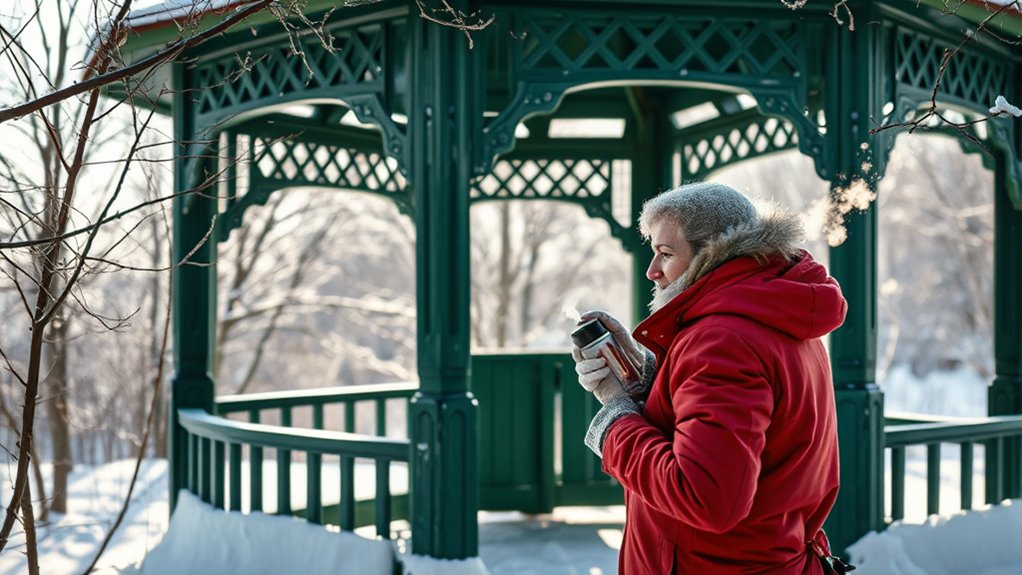
Imagine your gazebo, once a beautiful retreat, succumbing to winter’s harsh elements due to neglect. To prevent such deterioration, it is vital to take proactive steps in preparing and painting your structure. From evaluating its condition to selecting the right paint, each choice plays an important role in ensuring durability. Understanding these steps can make all the difference in keeping your gazebo intact and appealing during winter months. What should you focus on first?




Assessing the Condition of Your Gazebo
Before you jump into painting your gazebo for winter, it’s essential to assess its condition. Start with a thorough gazebo inspection to identify any damage or wear. Check for rot, rust, or loose boards that could compromise its structural integrity. Pay close attention to joints and support beams; if they’re weak, repair them before applying any paint. Remember, a well-maintained gazebo not only looks better but also withstands harsh winter conditions. Taking these steps guarantees your gazebo remains a cherished space for relaxation and enjoyment, even during the cold months ahead. Prioritize its health before transforming its appearance.
Choosing the Right Paint for Outdoor Use
When it comes to painting your gazebo for winter, choosing the right paint is essential for its longevity. You’ll want to take into account weather-resistant options that can withstand harsh conditions, as well as colors that maintain their vibrancy over time. Additionally, using proper application techniques will help guarantee your paint job lasts through the seasons.
Weather-Resistant Paint Options
Choosing the right paint for your gazebo isn’t just about color; it’s crucial for guaranteeing durability against the elements. For outdoor use, consider weather-resistant paint types like acrylic latex or oil-based paints. Acrylic latex offers flexibility and UV resistance, while oil-based paints provide a tough, long-lasting finish. When applying, verify the surface is clean and dry, and use appropriate application methods such as brushing or spraying for even coverage. Don’t forget to use a primer if you’re painting bare wood or metal. Selecting the right paint and application method can make all the difference in protecting your gazebo through winter.
Color Durability Considerations
While it may be tempting to pick a color based solely on aesthetics, understanding color durability is essential for ensuring your gazebo remains vibrant and appealing through harsh winter conditions. Choose high-quality outdoor paint designed to resist color fade, as it’ll help maintain your gazebo’s look over time. Darker colors might absorb more heat, speeding up paint degradation, while lighter shades often resist fading better. Additionally, consider the paint lifespan; a longer-lasting product can save you time and effort in the long run. By prioritizing durability alongside beauty, you’ll enjoy your gazebo’s charm for many winters to come.
Application Techniques for Longevity
Understanding color durability leads naturally to how you apply paint for ideal longevity. Your application methods can greatly impact paint longevity, so consider these tips:
- Surface Preparation: Clean and sand the gazebo to guarantee proper adhesion.
- Weather Conditions: Choose a dry, mild day for painting; extreme temperatures can affect the cure time.
- Layering Technique: Use thin, even coats and allow adequate drying time between layers.
Preparing the Surface Before Painting
Before you plunge into painting your gazebo for winter, it’s vital to prepare the surface properly to guarantee a smooth and lasting finish. Start with surface cleaning; remove dirt, dust, and mildew using a mild detergent and water. Rinse thoroughly and let it dry completely. If your gazebo has old, peeling paint, consider paint stripping to eliminate any remnants that could affect adhesion. Use a reliable paint stripper, following the manufacturer’s instructions, to guarantee a clean surface. Once you’ve completed these steps, you’ll set the stage for a beautiful, long-lasting paint job that withstands the winter elements.
The Best Techniques for Painting a Gazebo
When it comes to painting a gazebo, employing the right techniques can make all the difference in achieving a professional-looking finish. Here are three key tips to enhance your color selection and paint application:
- Choose Quality Paint: Opt for weather-resistant paint that matches your gazebo’s style and environment.
- Use Proper Tools: A high-quality brush or roller guarantees smooth application and reduces drips.
- Apply in Ideal Conditions: Paint on a dry, mild day to allow for even drying and best adhesion.
Protecting Your Gazebo From Moisture Damage
To keep your gazebo safe from moisture damage, start by choosing a high-quality waterproof paint that resists moisture penetration. It’s also essential to seal any gaps and cracks to prevent water from getting in. Regular maintenance will help guarantee your gazebo remains protected throughout the winter months.
Choosing Waterproof Paint
Choosing the right waterproof paint for your gazebo is essential if you want to protect it from moisture damage during the winter months. Here are three waterproof paint types to take into account:
- Acrylic Latex Paint – Offers flexibility and good moisture resistance.
- Oil-Based Paint – Provides a durable finish but requires longer drying times.
- Epoxy Paint – Ideal for high moisture areas, creating a strong barrier.
When selecting a paint, think about your preferred paint application methods, whether it’s brushing, rolling, or spraying. This will guarantee a smooth and effective application, safeguarding your gazebo through harsh winter conditions.
Sealing Gaps and Cracks
Even with the right waterproof paint, gaps and cracks in your gazebo can still let moisture in, leading to potential damage over time. To protect it, focus on gap sealing and crack filling. Inspect your gazebo thoroughly, identifying any openings that could allow water ingress. Use a high-quality sealant for gaps and a flexible filler for cracks to guarantee a tight seal. Apply these materials carefully, following the manufacturer’s instructions for effective results. Once sealed, your gazebo will be much more resilient against harsh winter conditions, giving you peace of mind and allowing you to enjoy your outdoor space freely.
Regular Maintenance Tips
While it may seem like a simple structure, regular maintenance is key to protecting your gazebo from moisture damage. To keep it in top shape, follow these tips:
- Seasonal Inspections: Check for signs of wear, rot, or leaks every season to catch issues early.
- Cleaning Techniques: Use a gentle cleaner and soft brush to remove dirt and mildew, preventing moisture retention.
- Proper Ventilation: Guarantee your gazebo has adequate airflow to reduce humidity buildup inside.
These steps will help maintain your gazebo’s integrity, allowing you to enjoy its beauty for years to come while embracing your freedom outdoors.
Adding a Protective Finish for Extra Durability
A protective finish is essential for ensuring your gazebo withstands the harsh winter elements. Using protective sealants can create a barrier against moisture, preventing rot and decay. You’ve got several finish options to evaluate, like polyurethane or marine varnish, which can enhance durability while allowing the wood to breathe. Before applying, make sure the surface is clean and dry, as this promotes better adhesion. Remember to follow the manufacturer’s instructions for the best results. With the right protective finish, your gazebo can not only survive winter but remain a beautiful retreat for years to come.
Tips for Painting in Cold Weather
Applying a protective finish is just the first step in preparing your gazebo for winter. When you paint in cold weather, you’ll face some challenges, particularly with paint drying times. Here are a few tips to help you succeed:
Preparing your gazebo for winter starts with applying a protective finish, but cold weather can complicate paint drying times.
- Choose the Right Paint: Use paints formulated for low temperatures to guarantee proper adhesion.
- Monitor Temperatures: Aim for temperatures above 50°F if possible; colder conditions can extend drying times.
- Work with the Sun: Plan your painting sessions when the sun is out to aid in quicker drying and curing.
Maintaining Your Gazebo Throughout Winter
To guarantee your gazebo withstands the harsh winter months, regular maintenance is key. Start with proper gazebo insulation to keep it cozy, and make certain any gaps are sealed for effective winter weatherproofing. Regularly check for snow accumulation on the roof to prevent structural damage. Here’s a quick maintenance checklist:
| Task | Frequency |
|---|---|
| Inspect for damage | Monthly |
| Clean gutters | Monthly |
| Check insulation | Before winter |
| Remove snow | As needed |
Enhancing the Aesthetic Appeal of Your Gazebo
After ensuring your gazebo is well-maintained throughout the winter, it’s time to focus on enhancing its aesthetic appeal. You can create a welcoming space that reflects your style by using vibrant color combinations and seasonal themes. Consider these ideas:
- Paint: Choose colors that complement your landscape; soft pastels for spring or warm hues for autumn.
- Decorate: Add seasonal elements like wreaths or garlands that resonate with winter’s charm.
- Lighting: Install string lights or lanterns to create a cozy atmosphere, perfect for chilly nights.
With these tips, you’ll transform your gazebo into a stunning retreat.
Frequently Asked Questions
How Often Should I Repaint My Gazebo in Winter?
Your gazebo’s like a trusty coat; it needs care to withstand winter’s chill. Repaint every two to three years for maximum protection. Regular maintenance guarantees it remains a cozy retreat through the coldest months.
Can I Paint Over Old Paint Without Sanding?
Yes, you can paint over old paint without sanding, but guarantee proper surface preparation for better paint adhesion. Clean the surface and use a bonding primer to enhance the results and achieve a lasting finish.
What Temperature Is Too Cold for Painting?
You shouldn’t paint when temperatures drop below 50°F (10°C). Cold weather can affect paint adhesion and drying time, so always follow temperature guidelines for ideal results, ensuring your project turns out beautifully.
Will Paint Dry Properly in Humid Winter Conditions?
In humid winter conditions, paint might not cure properly. High humidity can slow drying times and affect adhesion. It’s best to wait for drier weather to guarantee your paint job lasts and looks great.
How Can I Prevent Paint From Chipping in Winter?
To prevent paint from chipping in winter, guarantee proper paint adhesion by cleaning surfaces, using a primer, and choosing winter-grade paint. Adequate winter preparation’s key to maintaining your gazebo’s look and durability through colder months.