
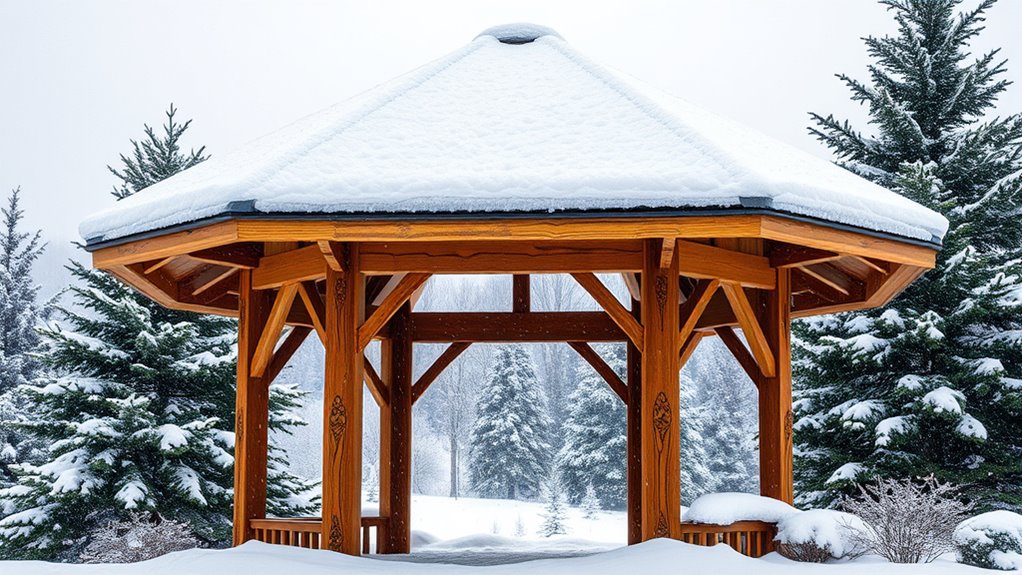
When building a gazebo in regions like the Northeast, where snow can accumulate to several feet, you need to take into account specific structural requirements. Ensuring your design can withstand heavy snow loads is essential for safety and longevity. From material selection to roof pitch, every detail matters. Let’s explore how to create a gazebo that not only endures winter’s weight but also remains functional and appealing throughout the seasons.




Understanding Snow Load Requirements
When you’re building a gazebo in regions that experience heavy snowfall, understanding snow load requirements is essential for ensuring structural integrity. Snow load refers to the weight of accumulated snow on a structure, and accurate load calculations are vital. You’ll need to determine the maximum snow load for your area, typically measured in pounds per square foot. Factor in variables like roof slope and thermal mass, as they influence snow retention. Consulting local building codes helps establish compliance. By meticulously evaluating these requirements, you can design a gazebo that withstands heavy snow, allowing you the freedom to enjoy your outdoor space year-round.
Selecting the Right Materials
When constructing a gazebo in heavy snow regions, choosing the right materials is essential to guarantee structural integrity and longevity. You’ll need to take into account durable roofing options that can withstand significant snow loads, a strong structural framework for support, and weather-resistant finishes to protect against harsh conditions. Each material choice directly impacts the gazebo’s performance and durability under heavy snowfall.
Durable Roofing Options
While selecting roofing materials for a gazebo in heavy snow regions, it is crucial to prioritize durability and performance under extreme conditions. Metal roofing, especially galvanized steel or aluminum, offers excellent strength and snow resistance. Additionally, consider slate or high-quality asphalt shingles for their longevity and ability to shed snow effectively. Don’t overlook insulation options; incorporating rigid foam or reflective insulation can greatly enhance thermal performance, protecting the structure from potential snow load damage. Ultimately, your choice of roofing materials should balance durability, weight, and aesthetic appeal, ensuring your gazebo remains a safe, enjoyable space throughout harsh winter months.
Strong Structural Framework
To guarantee your gazebo can withstand heavy snow loads, selecting the right materials for its structural framework is essential. A strong framework guarantees structural integrity and ideal load distribution. Consider the following materials:
- Pressure-treated lumber: Resistant to rot and pests.
- Steel brackets and connectors: Enhance stability and strength.
- Heavy-duty posts: Support significant weight and resist bending.
- Engineered wood beams: Offer superior load-bearing capabilities.
- Galvanized fasteners: Prevent corrosion in harsh conditions.
Weather-Resistant Finishes
A robust structural framework sets the stage for your gazebo’s durability, but without proper weather-resistant finishes, even the strongest materials can succumb to the elements. To safeguard your investment, you’ll need to choose appropriate weather-resistant coatings and protective sealants. These products create a barrier against moisture, UV rays, and temperature fluctuations, ensuring longevity. Look for oil-based or water-repellent sealants that penetrate deeply into wood fibers. When selecting coatings, consider acrylic or polyurethane options for their flexibility and durability. By prioritizing these finishes, you’ll maintain the integrity of your gazebo in heavy snow regions, promoting both aesthetic appeal and resilience.
Designing a Sturdy Roof Structure
When designing a sturdy roof structure for a gazebo in heavy snow regions, it’s crucial to evaluate both the load-bearing capacity and the materials used. Consider these key aspects:
- Roof shape considerations: Opt for a steep pitch to allow snow to slide off.
- Load distribution techniques: Use trusses to evenly distribute weight across the structure.
- Material selection: Choose durable, lightweight materials that withstand snow loads.
- Reinforcement: Implement additional bracing to enhance structural integrity.
- Local regulations: Guarantee compliance with building codes for safety and durability.
Incorporating Proper Drainage
While ensuring proper drainage may seem secondary to structural design, it plays an essential role in maintaining the gazebo’s integrity in heavy snow regions. Effective drainage systems are crucial for managing water runoff, preventing pooling around the base, which can lead to structural damage or erosion. Incorporating gutters and downspouts directs melting snow and rain away from the gazebo, reducing the risk of ice formation and subsequent weight on the roof. Additionally, consider grading the surrounding land to facilitate natural drainage. By prioritizing these elements, you’ll enhance the longevity and stability of your gazebo, even in harsh winter conditions.
Building a Strong Foundation
Effective drainage systems set the stage for a robust structure, making it imperative to focus on building a strong foundation for your gazebo. The foundation type you choose considerably impacts soil stability and overall integrity. Consider these essential factors:
- Soil analysis: Test for compaction and water retention.
- Foundation types: Opt for concrete piers, slab, or footings based on load requirements.
- Depth: Confirm foundations extend below the frost line.
- Reinforcement: Use steel rebar in concrete for added strength.
- Leveling: Maintain a level surface to prevent shifting under heavy snow loads.
Prioritize these elements to confirm stability and durability.
Utilizing Reinforced Support Beams
To guarantee your gazebo withstands the pressures of heavy snow, utilizing reinforced support beams is essential. Consider employing various reinforcement techniques, such as adding steel brackets or using laminated wood beams, to enhance strength. Opt for durable beam materials, like pressure-treated lumber or engineered wood, which can bear significant loads without warping or cracking. Ascertain the design incorporates proper load distribution, allowing for even weight management across all supports. By strategically reinforcing your beams, you’ll create a robust framework capable of withstanding harsh winter conditions, providing you the freedom to enjoy your outdoor space without concern for structural failure.
Choosing the Right Location
When choosing the location for your gazebo, consider the exposure to sunlight, as this affects snow melt and structural integrity. Additionally, assess the prevailing wind direction to minimize snow accumulation and potential damage. Both factors are essential for ensuring your gazebo remains functional and durable in heavy snow regions.
Sunlight Exposure Considerations
Although it’s easy to overlook, sunlight exposure plays an essential role in determining the ideal location for your gazebo in heavy snow regions. Understanding sunlight angles and seasonal shading is vital for maximizing warmth and minimizing snow accumulation. Here are important factors to take into account:
- Sunlight angles during winter months
- Proximity to trees that may cause shading
- Elevation of the site for best exposure
- Orientation of the gazebo for maximum sunlight
- Potential for future growth of nearby plants
Wind Direction Assessment
Evaluating wind direction is essential in choosing the ideal location for your gazebo, especially in heavy snow regions where wind can exacerbate snow accumulation and structural strain. Understanding local wind patterns and their seasonal changes helps you position your structure strategically. Ideally, place the gazebo in a sheltered area, avoiding open spaces where gusts can whip through and pile snow. Observe how prevailing winds shift during different seasons, as this can influence snow drift and loading on the roof. By thoughtfully reviewing these factors, you’ll guarantee your gazebo withstands harsh conditions, providing a safe and enjoyable outdoor space.
Regular Maintenance and Snow Removal Strategies
To guarantee your gazebo withstands the harsh conditions typical of heavy snow regions, regular maintenance and effective snow removal strategies are essential. Follow these maintenance tips to confirm longevity:
- Inspect the roof and structure regularly for damage.
- Clear snow accumulation promptly to prevent structural strain.
- Use a roof rake to remove snow without damaging the surface.
- Apply a protective sealant to wood to prevent moisture absorption.
- Check for and repair any loose connections or hardware.
Frequently Asked Questions
How Do I Ensure My Gazebo Design Is Aesthetically Pleasing in Winter?
To guarantee your gazebo’s aesthetically pleasing in winter, incorporate seasonal decorations with vibrant color schemes. Use neutral tones for the structure, enhancing it with festive accents like wreaths and lights that complement the snowy landscape.
What Additional Features Can Enhance My Gazebo’s Functionality in Winter?
Consider adding insulation options like weather-resistant panels and installing heating solutions such as electric heaters or a fireplace. These enhancements not only improve comfort but also extend your gazebo’s usability during winter months, ensuring year-round enjoyment.
Can I Use a Pre-Fabricated Gazebo in Heavy Snow Areas?
You can use a pre-fabricated gazebo in heavy snow areas, but make certain it’s designed for high snow loads. Opt for robust materials like galvanized steel or treated wood to withstand harsh winter conditions effectively.
How Much Snow Can My Gazebo Safely Hold Before Needing Reinforcement?
Your gazebo should safely hold a snow load of about 20-30 pounds per square foot. Exceeding this can compromise its structural integrity, necessitating reinforcement to prevent damage or collapse under heavy snow accumulation.
Are There Specific Styles of Gazebos Better Suited for Snowy Climates?
Gable styles with steep roof slopes are ideal for snowy climates. They encourage snow to slide off, reducing weight accumulation. Choose designs that maximize structural integrity, ensuring your gazebo stands resilient against winter’s challenges while preserving your outdoor space.