
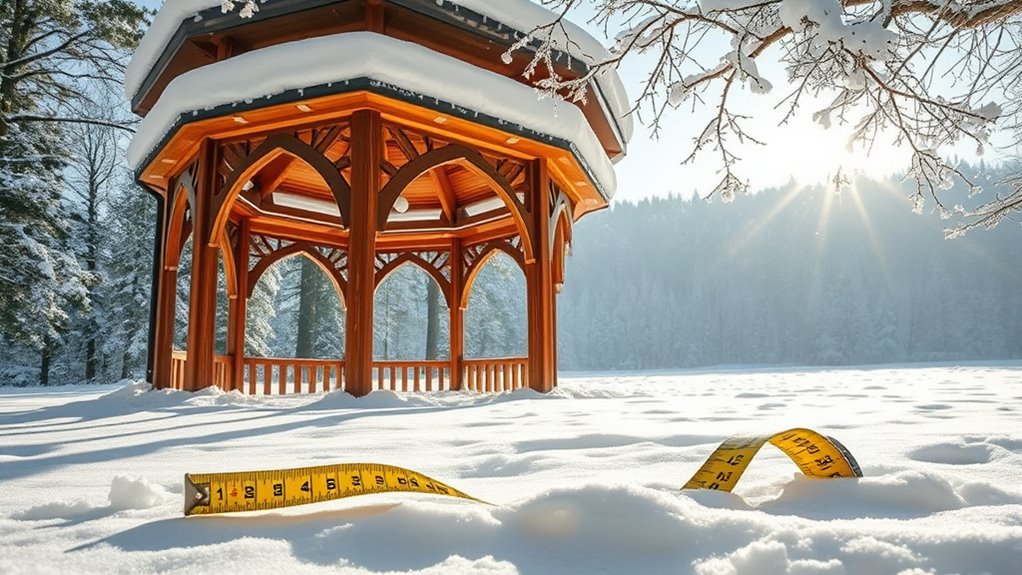
When calculating the snow load capacity for your gazebo, it’s crucial to evaluate various factors that influence structural integrity. The roof slope, snow density, and your geographical location all play critical roles in determining how much weight your gazebo can support. Understanding these elements is important for ensuring safety during heavy snowfall. Let’s explore how to accurately assess the snow load and maintain your gazebo’s stability throughout winter.


Understanding Snow Load Basics
When designing a gazebo, understanding snow load basics is essential for ensuring structural integrity. Snow load refers to the weight of accumulated snow on a structure and varies based on geographical location and weather patterns. You need to assess the potential maximum snow load your gazebo might experience, as this directly impacts its stability and safety. Factors such as roof slope and material choice play significant roles in distributing the weight effectively. By calculating these loads accurately, you can guarantee that your gazebo withstands winter conditions, allowing you to enjoy your outdoor space without compromising safety or durability.
Factors Influencing Snow Load Capacity
Several factors greatly influence the snow load capacity of your gazebo, and understanding them is essential for effective design. Key considerations include:
Understanding the factors influencing your gazebo’s snow load capacity is crucial for effective design.
- Snow Weight: Different types of snow have varying weights, affecting how much load your gazebo can handle.
- Roof Design: The angle and shape of your roof play a vital role in snow distribution. Steeper roofs tend to shed snow more effectively.
- Material Strength: The materials used in construction determine the overall durability and resistance to snow loads.
Calculating the Snow Load for Your Gazebo
To accurately calculate the snow load for your gazebo, you’ll need to contemplate several mathematical factors that reflect your specific conditions. Snow load calculations involve considering factors like roof slope, snow density, and geographical location. Here’s a simplified table to help you.
| Factor | Value | Comments |
|---|---|---|
| Roof Slope | 30° | Affects load distribution |
| Snow Density | 20 lbs/ft³ | Varies by location |
| Design Snow Load | 40 lbs/ft² | Local building codes specify |
| Live Load | 10 lbs/ft² | Additional weight considerations |
| Total Load | 50 lbs/ft² | Combined load to assess |
These elements are vital for effective gazebo design.
Safety Standards and Building Codes
Understanding safety standards and building codes is vital for guaranteeing your gazebo can withstand snow loads effectively. Adhering to building regulations helps maintain structural integrity and guarantees longevity. Here are three significant aspects to reflect on:
- Local Codes: Research your area’s specific regulations regarding snow load capacities.
- Material Standards: Use materials that meet or exceed the required specifications outlined in local building codes.
- Design Compliance: Verify your gazebo design aligns with structural requirements to prevent failure under snow loads.
Tips for Maintaining Your Gazebo During Winter
After confirming your gazebo meets safety standards and building codes for snow loads, maintaining it during winter becomes a priority. Start by inspecting gazebo insulation; verify it’s intact to prevent heat loss and moisture buildup. Regularly clear snow accumulation from the roof to avoid added weight that could compromise structural integrity. Check for ice dams and remove them promptly to prevent water damage. Additionally, inspect the foundation and support posts for signs of wear or frost heaving. Finally, consider applying a protective sealant to wood surfaces to combat moisture and extend the gazebo’s lifespan through harsh winter conditions.
Frequently Asked Questions
How Do I Determine My Area’s Specific Snow Load Requirements?
To determine your area’s specific snow load requirements, check local snow load regulations and analyze recent local weather data, ensuring you understand how seasonal variations impact snow accumulation and structural safety for your projects.
Can I Use a Metal Gazebo for Heavier Snow Loads?
Yes, you can use a metal gazebo for heavier snow loads. Its durability enhances snow load resistance, ensuring stability. However, always verify design specifications to meet local requirements and maintain structural integrity during extreme conditions.
What Are Common Signs of Snow Load Damage on Gazebos?
You’ll notice common signs of snow load damage on your gazebo, like sagging roofs, cracks in the structure, or leaning posts. Regular gazebo maintenance can help prevent severe issues related to excessive snow accumulation.
Is There a Snow Load Calculator App Available?
Indeed, there are sophisticated calculation tools available, including snow load calculator apps. These apps can assist you in accurately evaluating potential snow burdens, ensuring your structure’s safety while allowing you the freedom to enjoy your gazebo.
How Often Should I Inspect My Gazebo for Snow Load Issues?
You should inspect your gazebo seasonally, especially after heavy snowfall, to guarantee structural integrity. Regular assessments can prevent damage, maintaining safety and freedom to enjoy your outdoor space without worry during winter months.