
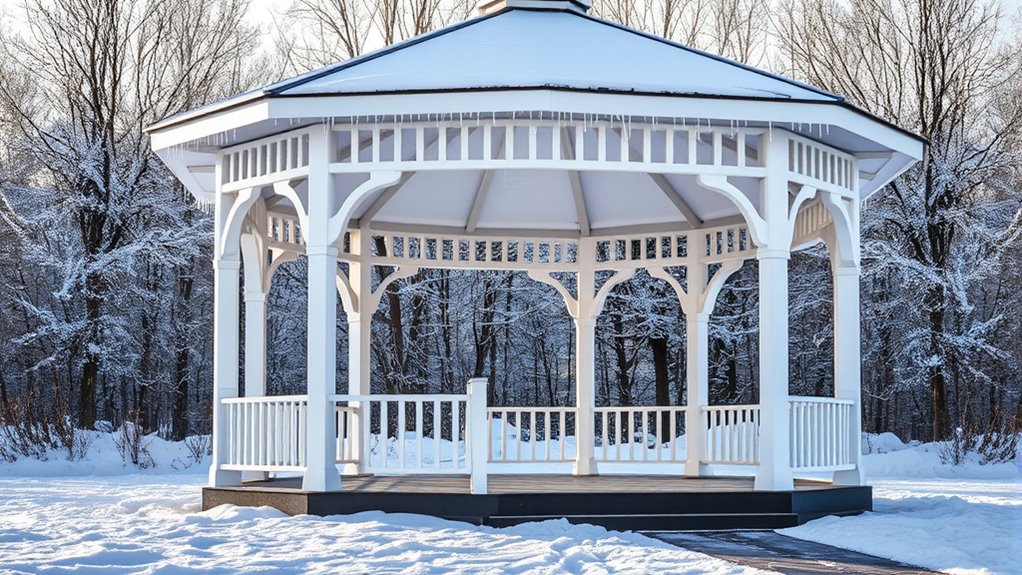
Did you know that many commercial gazebos are not built to withstand the severe snow and ice loads typical of winter? It’s vital to understand the specific design specifications and safety standards that govern these structures. Regular maintenance and inspections play a key role in ensuring safety. As you consider the implications of winter weather on your gazebo, you’ll want to explore essential features and preparedness plans that can safeguard both patrons and staff.


Understanding Commercial Gazebo Design Specifications
When considering the design specifications for commercial gazebos, it is vital to prioritize safety and compliance with relevant regulations. You need to select appropriate design materials that guarantee structural integrity, which not only supports the gazebo but also protects patrons. Strong frameworks, such as treated wood or galvanized steel, are essential for durability. Additionally, you must adhere to local building codes, which often dictate specific requirements regarding load capacities and wind resistance. By focusing on these elements, you can create a safe and inviting space that allows patrons to enjoy their freedom while remaining protected from the elements.
Importance of Regular Maintenance and Inspections
Regular maintenance and inspections play a significant role in upholding the safety and longevity of commercial gazebos. By implementing preventive measures, you guarantee that any potential issues are addressed before they escalate. A thorough maintenance checklist should include checking structural integrity, fasteners, and roofing conditions. Regularly inspecting for signs of wear, rot, or insect damage helps maintain a safe environment for users. Don’t overlook the importance of cleaning debris and guaranteeing proper drainage. By prioritizing these inspections, you not only comply with safety standards but also enhance the gazebo’s durability, allowing you to enjoy the freedom of your outdoor space worry-free.
Snow and Ice Load Considerations
Although snowfall can enhance the beauty of outdoor spaces, it is crucial to account for snow and ice loads when designing and maintaining commercial gazebos. Snow accumulation can greatly impact structural integrity, so make certain your gazebo is engineered to withstand local snow load requirements. Regularly inspect and remove ice to prevent additional weight and potential hazards. Use appropriate tools and techniques for ice removal, avoiding damage to the structure. Stay informed about the regulations in your area regarding snow loads, as compliance guarantees safety and longevity. By prioritizing these considerations, you can enjoy your gazebo without compromising safety during winter months.
Safety Features for Winter Use
Snow and ice loads can create significant challenges for the safe use of commercial gazebos during winter months. To guarantee your gazebo remains a secure retreat, consider integrating reliable heating options like infrared heaters or propane heaters. Additionally, the use of high-quality insulation materials, such as foam panels or insulated curtains, can help maintain a comfortable environment while protecting against harsh weather. Regularly inspect your gazebo for structural integrity, ensuring it can endure snow accumulation. By following these safety features, you can enjoy your gazebo throughout winter, balancing both functionality and safety without compromising your freedom to gather and relax outdoors.
Emergency Preparedness and Response Plans
When planning for the unexpected, having a well-structured emergency preparedness and response plan for your commercial gazebo is essential. You should conduct regular emergency drills to guarantee everyone knows their roles during a crisis. This practice not only builds confidence but also identifies potential weaknesses in your plan. Additionally, implement thorough response training for your staff, focusing on various scenarios like severe weather or medical emergencies. Make certain your plan is easily accessible and reviewed frequently, allowing for updates as regulations change. By prioritizing these elements, you’ll create a safer environment, ensuring freedom from worry amidst winter challenges.
Frequently Asked Questions
What Materials Are Best for Winter Commercial Gazebo Construction?
For winter commercial gazebos, consider durable materials like treated wood or metal. Pair them with quality insulation options, creating a cozy retreat amidst frosty landscapes, ensuring safety and comfort for all who seek refuge inside.
How Can I Improve Drainage Around My Gazebo in Winter?
To improve drainage around your gazebo in winter, consider effective drainage solutions like installing gutters, grading the soil away from the structure, and using permeable surfaces. Regular winter maintenance guarantees these systems function at their best, preventing water buildup.
Are There Specific Codes for Gazebo Installations in Snowy Regions?
Yes, there’re specific building codes and local regulations for gazebo installations in snowy regions. You’ll need to check with your local authorities to guarantee compliance, as standards can vary considerably based on location and climate.
Can I Use My Gazebo for Winter Events Safely?
Yes, you can use your gazebo for winter events safely, but make certain it’s structurally sound, properly anchored, and can withstand snow loads. Regularly check for ice buildup, and maintain compliance with local gazebo safety regulations.
What Are the Signs of Winter Damage to Look For?
You might think winter wear is just for humans, but check for cracked beams, loose fittings, and rust. These signs threaten your gazebo’s structural integrity, jeopardizing your freedom to enjoy winter events safely.