
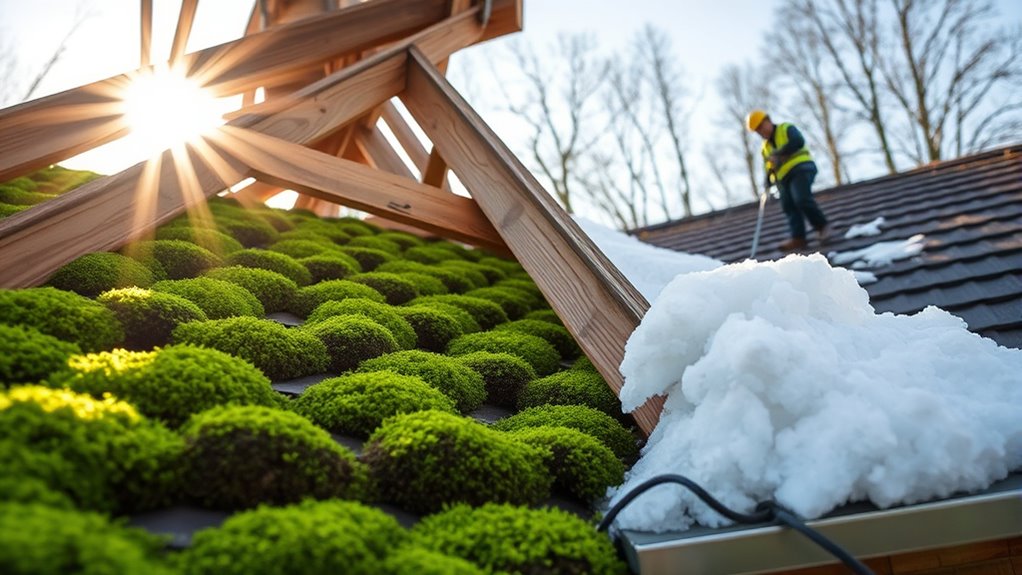
To prevent roof collapse, it’s essential to understand the underlying factors that contribute to structural failure. Regular inspections can help identify issues before they escalate, but maintenance practices are equally important. You’ll want to take into account the weight of accumulated snow, the quality of materials used, and the expertise of your contractors. Are you aware of the specific steps you can take to guarantee your roof stays secure? Let’s explore effective strategies to safeguard your home.



Understanding the Common Causes of Roof Collapse
While roofs are designed to withstand various stresses, several factors can lead to their collapse if not properly managed. Weather conditions play a critical role; heavy snow accumulation or severe storms can exceed a roof’s load-bearing capacity. Additionally, failure to adhere to building codes during construction can compromise structural integrity. Inadequate drainage systems can exacerbate water pooling, increasing risks during rainstorms. Aging materials and lack of maintenance further weaken roofs, making them more susceptible to collapse. Understanding these common causes empowers you to take proactive measures, ensuring your roof remains resilient against the elements and compliant with safety regulations.
Regular Roof Inspections: Why They Matter
Regular roof inspections are essential, especially since neglecting them can lead to costly repairs or even catastrophic failures. By scheduling regular inspections, you can identify potential issues early, saving both time and money. The roof inspection benefits include extending the lifespan of your roof, ensuring safety, and maintaining property value. Frequency recommendations suggest inspecting at least twice a year, ideally in spring and fall.
| Benefit | Frequency Recommendation | Potential Issues Detected |
|---|---|---|
| Extended Roof Life | Twice a year (Spring/Fall) | Leaks, Cracks, Debris |
| Safety Assurance | After major storms | Structural Damage |
| Value Maintenance | Every 3-5 years | Mold Growth |
Maintaining Your Roof: Essential Tips
To maintain your roof effectively, regular inspections are essential for identifying potential weaknesses before they escalate. Additionally, consistent debris removal prevents water accumulation and minimizes the risk of structural damage. Implementing these practices will greatly enhance your roof’s longevity and reliability.
Regular Inspections Importance
Conducting routine inspections of your roof is essential, as this proactive measure can identify potential issues before they escalate into significant problems. To maintain your roof effectively, consider adhering to a regular inspection frequency and utilizing an inspection checklist that includes:
- Checking for visible damage, such as cracks or missing shingles.
- Inspecting flashing and seals around vents and chimneys for wear.
- Evaluating drainage systems to guarantee proper water flow.
Debris Removal Practices
Clearing debris from your roof is essential for its longevity and structural integrity. Different debris types, such as leaves, branches, and snow, can accumulate and exert pressure on your roofing system. To guarantee effective removal, employ techniques like manual clearing with a sturdy rake or using a leaf blower, which can minimize damage. For heavier snow, consider a roof rake designed for snow removal. Regular inspections post-storms can help identify problem areas early. By adopting these practices, you enhance your roof’s durability, reduce the risk of collapse, and maintain the overall safety of your living space.
Managing Snow and Ice Accumulation
To effectively manage snow and ice accumulation on your roof, you must assess the snow load regularly to guarantee it remains within safe limits. Clearing roof snow safely is vital to prevent additional weight and potential hazards. Additionally, proper insulation and ventilation can mitigate ice dam formation, further protecting your structure.
Assess Snow Load Regularly
Regularly evaluating snow load is essential for preventing roof collapse, especially in regions prone to heavy snowfall. You should conduct consistent snow measurements to gauge the accumulation and guarantee safety. Follow these steps for effective load calculation:
- Analyze recent weather data to gauge snowfall rates.
- Measure the snow depth on your roof to determine the current load.
- Compare the total weight of accumulated snow with your roof’s load capacity.
Clear Roof Snow Safely
After evaluating the snow load, addressing the accumulation on your roof is essential to prevent potential hazards. For effective snow removal, use a roof rake to minimize strain and guarantee you’re standing on a stable surface. Always wear safety equipment like harnesses and non-slip footwear to protect yourself from slips or falls. Start at the edges and work your way up to avoid adding weight to the roof’s apex. If snow is heavy or icy, consider hiring professionals equipped with the right tools and knowledge. Prioritize safety to safeguard both yourself and your home from roof collapse risks.
Insulate and Ventilate Properly
Proper insulation and ventilation are essential in managing snow and ice accumulation on your roof. By employing effective insulation techniques and ventilation systems, you can greatly reduce the risk of roof collapse. Here are three key strategies:
- Use Rigid Foam Insulation: This technique minimizes heat loss, keeping your attic cooler.
- Install Soffit Vents: Proper airflow helps prevent ice dam formation by allowing warm air to escape.
- Add Gable Vents: These enhance ventilation, ensuring a balanced airflow throughout your attic.
Addressing Structural Issues Promptly
Although it may be tempting to delay repairs, addressing structural issues promptly is crucial for maintaining the integrity of your roof. Regular structural assessments can identify weaknesses that, if left unresolved, may lead to significant damage or even collapse. By prioritizing prompt repairs, you not only safeguard your home but also enhance its longevity. Ignoring minor cracks or sagging can escalate into costly repairs and safety hazards. Be proactive in evaluating your roof’s condition, and don’t hesitate to consult professionals when necessary. Taking action now empowers you to protect your investment and guarantee a secure living environment for you and your family.
Choosing Quality Roofing Materials
Addressing structural issues is only one part of ensuring your roof remains reliable; the choice of roofing materials plays a significant role in its overall performance and longevity. When selecting roofing materials, conduct a thorough quality assessment by considering:
- Durability: Opt for materials that withstand harsh weather conditions and resist wear over time.
- Weight: Choose lightweight materials that won’t impose excessive strain on your structure.
- Energy Efficiency: Look for materials that offer insulation benefits, reducing energy costs.
Ensuring Proper Ventilation and Insulation
Guaranteeing adequate ventilation and insulation is essential for maintaining your roof’s integrity and preventing moisture buildup, which can lead to structural damage. You should consider various ventilation types, such as ridge vents, soffit vents, and gable vents, which promote air circulation and reduce humidity. Selecting appropriate insulation materials like fiberglass, foam board, or cellulose can further enhance energy efficiency and temperature regulation. Together, these components create a balanced system that minimizes risks. Regularly inspect these elements to ascertain they’re functioning efficiently. By prioritizing proper ventilation and insulation, you protect your roof and enjoy a more secure living environment.
Working With Professional Roofing Contractors
When you decide to work with professional roofing contractors, it’s essential to assess their qualifications and experience to secure your roof’s safety and longevity. Consider these factors for effective contractor selection:
- Roofing Expertise: Verify their certifications and past projects to confirm they’re skilled in various roofing systems.
- References and Reviews: Check customer testimonials and ask for references to gauge their reliability and workmanship.
- Insurance and Warranty: Confirm they carry liability insurance and offer warranties to protect your investment.
Frequently Asked Questions
How Can I Identify Early Signs of Roof Deterioration?
To identify early signs of roof deterioration, watch for water stains indicating roof leaks and inspect for sagging ceilings. Swiftly spotting such signs can save you from significant structural setbacks and costly repairs down the line.
What Are the Best Times of Year for Roof Maintenance?
The best times for roof maintenance are during spring inspections and autumn preparations. These seasons allow you to identify issues and make necessary repairs before extreme weather conditions can exacerbate potential problems, ensuring your roof’s longevity.
Can I Perform Roof Repairs Myself?
You can tackle DIY repairs, but it’s like walking a tightrope—balance is key. Make certain you follow safety precautions, use proper tools, and assess your skills honestly to avoid costly mistakes or injuries.
How Does Climate Affect My Roof’s Lifespan?
Climate considerably affects your roof’s lifespan. Extreme weather patterns, intensified by climate change, can lead to accelerated wear and damage. Regular assessments and maintenance can help mitigate these impacts, preserving your roof’s integrity over time.
What Insurance Covers Roof Collapse Damage?
You’ll want to check your roof insurance policy for collapse coverage, as not all plans include it. Verify your policy protects against unexpected mishaps, so your home remains a haven, not a liability.