
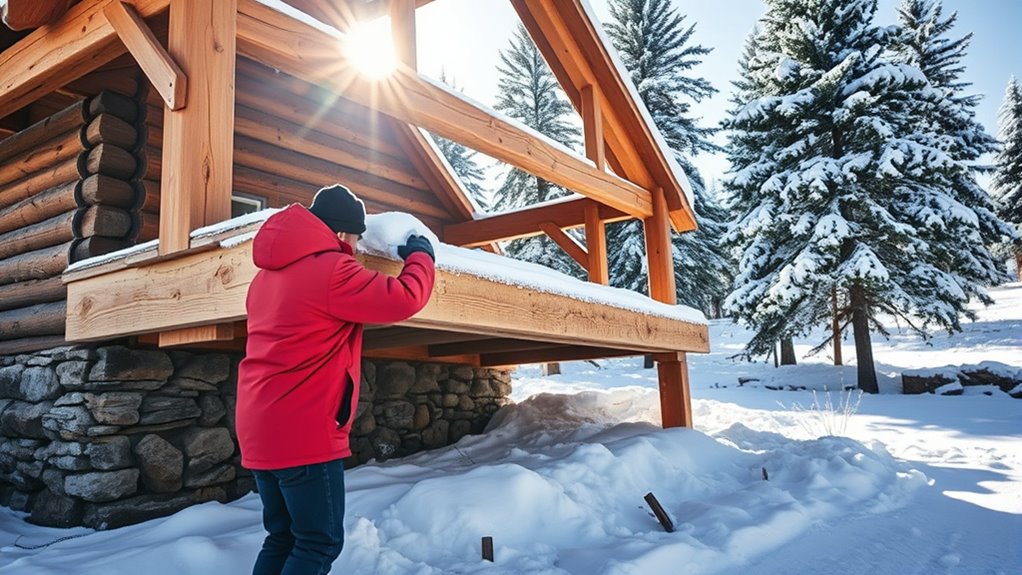
In regions like the Northeast, where heavy snowfall is common, many homeowners face the risk of roof collapse due to accumulated snow. This risk highlights the importance of adding extra support beams to your roof structure. By understanding the signs that indicate your roof needs reinforcement and knowing the types of beams available, you can make informed decisions. But how do you guarantee these supports are installed correctly and effectively?




Understanding the Importance of Roof Support
While you may not think about it regularly, the roof’s structural integrity is crucial, especially during winter months when snow accumulation can greatly increase weight load. A well-considered roof design guarantees effective load distribution across the entire structure, preventing localized stress points that could lead to failure. Understanding how various materials and beam placements contribute to overall stability is essential for maintaining your roof’s durability. By reinforcing support beams during heavy snowfall, you can mitigate risks and enhance your home’s resilience. Prioritizing roof support not only safeguards your property but also empowers you with the freedom to enjoy winter without worry.
Signs Your Roof Needs Extra Support
You should be vigilant for signs that your roof may require additional support, especially during winter. Accumulated snow can impose significant weight, leading to potential structural failure if not addressed. If you notice any sagging or drooping in your roofline, it’s essential to assess the situation promptly to prevent further damage.
Snow Accumulation Concerns
As winter approaches, the potential for significant snow accumulation on your roof increases, raising concerns about structural integrity. Proper winter preparation includes understanding the snow load your roof can handle. Here are some signs that indicate you might need extra support beams:
- Excessive snow accumulation after a storm
- Visible cracks in ceilings or walls
- Frequent ice dam formation
Ignoring these signs can lead to severe damage, risking both your safety and your property. Evaluating your roof’s capacity and reinforcing it now can prevent costly repairs later, ensuring your home remains a safe haven during harsh winter months.
Sagging or Drooping Roof
When a roof exhibits sagging or drooping, it often signals underlying structural issues that need immediate attention. You should schedule a thorough roof inspection to assess the situation. Signs of compromised structural integrity, such as uneven surfaces or visible cracks, indicate that your roof may not withstand winter’s demands. It’s essential to identify the root cause—whether it’s excessive snow load, poor design, or weakened materials. By adding extra support beams, you can reinforce the structure, ensuring it can handle the weight and prevent further damage. Don’t neglect these warning signs; addressing them now can save you from costly repairs later.
Types of Support Beams to Consider
Support beams play an important role in providing structural integrity, especially during the harsh winter months. You’ve got several types to take into account, each with unique benefits:
- Steel Beams: Offer superior strength and durability for heavy loads.
- Wooden Beams: Provide natural aesthetics but may require treatment for moisture resistance.
- Engineered Beams: Combine materials for peak performance, often including laminated beams for added support.
When evaluating options, don’t overlook cantilever beams and load-bearing beams, vital for specific structural needs. Each type has its place, so choose wisely to guarantee your structure stands strong against winter’s challenges.
Choosing the Right Materials for Support Beams
Selecting the right materials for support beams is essential for ensuring the structural integrity of your building, especially in winter conditions. You’ll want to prioritize material durability to withstand heavy snow loads and extreme temperatures. Common choices include steel and laminated wood, each offering unique benefits. Steel is strong but heavier, which may require additional support. Laminated wood, while lighter, still provides impressive strength and resistance to warping. Consider the beam weight in relation to your structure’s design. Balancing durability and weight will help you create a stable, resilient framework that can endure winter’s challenges without compromising your freedom to customize.
How to Install Support Beams Safely
When installing support beams, you must select appropriate materials that can withstand winter conditions. Ensuring structural stability is essential; improper installation can lead to significant safety hazards. Take the time to assess your framework and load requirements before proceeding.
Selecting Appropriate Materials
Choosing the right materials for support beams is essential to guaranteeing structural integrity during winter. You’ll want to take into account various factors like material durability and beam types when making your selection. Here are some key options:
- Steel: Offers high strength and longevity.
- Engineered Wood: Combines strength with lighter weight.
- Concrete: Provides excellent durability and resistance to the elements.
Selecting appropriate materials guarantees that your support beams can withstand harsh conditions, thereby preventing potential structural failures. Prioritize quality and compliance with building standards to maintain safety and performance throughout the winter months.
Ensuring Structural Stability
To guarantee structural stability during installation, it’s crucial to follow specific guidelines that reduce the risk of failure under winter conditions. First, confirm proper load distribution by calculating the total weight your beams will support. This helps prevent overloading and structural compromise. Next, maintain adequate beam spacing; too far apart can lead to sagging, while too close can restrict airflow and moisture escape. Use temporary supports during installation to secure the beams until they’re fully set. Finally, regularly inspect the beams for any signs of wear or damage, confirming they remain robust throughout the winter months. Your structure’s integrity depends on it.
Maintenance Tips for Winter Roof Stability
As winter approaches, ensuring your roof’s stability becomes essential, especially in regions prone to heavy snowfall. Regular roof inspections are vital to identify potential weaknesses before the snow accumulates. Here are some winter precautions you should take:
As winter nears, prioritize your roof’s stability with regular inspections to prevent damage from heavy snowfall.
- Clear gutters and downspouts to prevent ice dams.
- Inspect for loose shingles or tiles and secure them.
- Assess insulation and ventilation to minimize ice formation.
Cost Considerations for Adding Support Beams
Ensuring your roof can handle winter’s demands often involves evaluating whether to add extra support beams, particularly in areas where heavy snowfall is common. When considering this upgrade, effective budget planning is essential. You’ll need to account for material costs, which can vary greatly based on the type of beams chosen—steel, wood, or engineered materials. Factor in labor expenses if you’re not opting for a DIY approach. Additionally, consider potential long-term savings from avoiding structural damage. Balancing these costs against your roof’s stability needs will empower you to make informed decisions that enhance safety without compromising your financial freedom.
When to Hire a Professional Contractor
While evaluating your roof’s structural integrity, knowing when to hire a professional contractor can greatly impact the quality of the work and your safety. Consider bringing in an expert if:
- You lack experience in structural assessments.
- Your project timelines are tight, needing efficient execution.
- You require specialized contractor qualifications for compliance.
Professionals not only guarantee adherence to building codes but also streamline the process, minimizing delays. Your roof’s longevity depends on informed decisions, and hiring a qualified contractor can prevent costly mistakes and provide peace of mind during harsh winter months. Don’t compromise on safety; invest in expertise.
Long-term Benefits of Reinforcing Your Roof
Reinforcing your roof offers significant long-term advantages that extend beyond immediate winter protection. By enhancing structural integrity, you’re not just safeguarding against snow loads; you’re investing in long-term durability. This proactive measure prevents costly repairs and extends your roof’s lifespan, allowing you to enjoy peace of mind. Furthermore, a fortified roof can improve energy efficiency, reducing heating costs during harsh winters. You’ll also minimize the risk of water damage, which can compromise the entire structure. Ultimately, reinforcing your roof empowers you to maintain control over your home’s safety and performance, ensuring it stands resilient against nature’s challenges for years to come.
Frequently Asked Questions
Can I Add Support Beams Myself Without Prior Experience?
You can add support beams yourself, but consider DIY considerations carefully. Without experience, you must prioritize safety precautions, guaranteeing proper measurements and structural integrity. Seek guidance or consult professionals to avoid costly mistakes and guarantee stability.
How Do I Determine the Right Beam Spacing?
To determine the right beam spacing, consider that beams can typically support 20 pounds per square foot. Follow spacing guidelines based on beam load and material type to guarantee stability and safety for your project.
What Is the Best Time to Install Support Beams?
The best time to install support beams is during fall, allowing for winter preparations. This timing guarantees your structure’s integrity, preventing potential damage from heavy snow loads and maintaining safety throughout the colder months.
Will Adding Beams Affect My Home’s Insulation?
Yes, adding beams can impact your home’s insulation. Beam placement might create thermal bridges, reducing efficiency. Guarantee proper insulation around beams to maintain ideal energy performance and prevent heat loss, promoting a comfortable living environment.
How Long Can I Expect the Support Beams to Last?
Support beams typically last 20 to 50 years, depending on material durability. Think of them as the backbone of your home; choosing high-quality materials guarantees longevity and maintains your freedom to enjoy a sturdy, safe environment.