
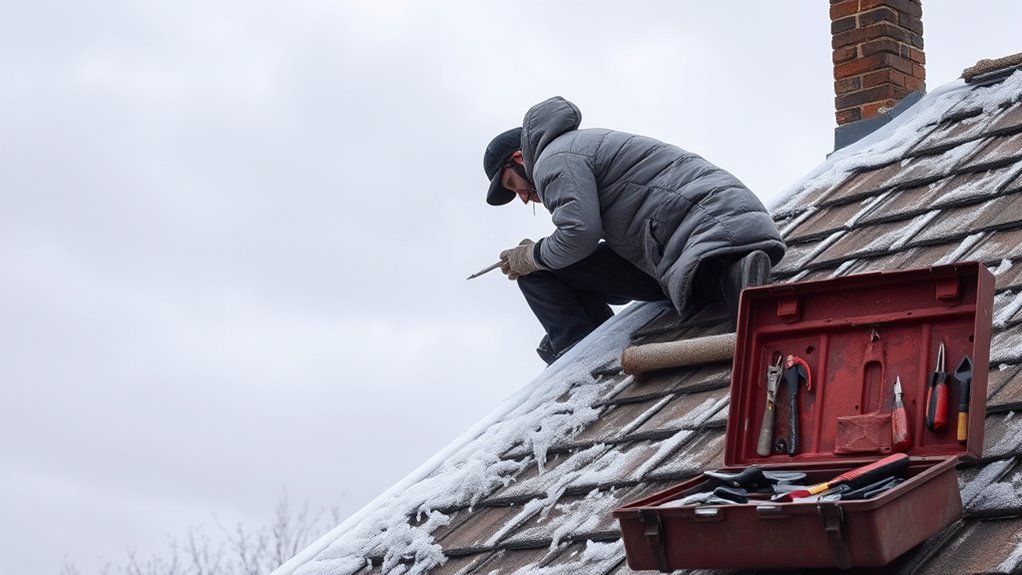
Fixing roof leaks in cold weather can be challenging, but it’s essential to address them promptly to avoid further damage. You’ll need to identify the source of the leak and assess the condition of your roof before making any repairs. Safety is paramount during these cold conditions. Understanding the right temporary and permanent solutions will help you maintain the integrity of your roof. What steps should you take first to guarantee effective repairs?




Understanding the Risks of Winter Roof Leaks
When temperatures drop, the risk of roof leaks increases considerably, as ice dam formation and snow accumulation can exacerbate existing vulnerabilities. Winter moisture can infiltrate poorly insulated roofs, leading to significant damage if left unaddressed. Inadequate roof insulation allows heat to escape, causing snow to melt and refreeze, which contributes to ice dam formation. This creates a cycle of further moisture accumulation, increasing the likelihood of leaks. To maintain your roof’s integrity, guarantee proper insulation and ventilation. By understanding these risks, you can take proactive measures to safeguard your home from potential winter-related roof issues.
Identifying Common Sources of Roof Leaks
To effectively address roof leaks, you need to identify their common sources. Damaged shingles and flashing often create entry points for water, while ice dams and clogs can exacerbate existing issues. Recognizing these problems early can save you time and costly repairs.
Damaged Shingles and Flashing
Although roof leaks can originate from various sources, damaged shingles and flashing are among the most common culprits. Inspect your roof regularly for cracked, missing, or curled shingles, as these can allow water intrusion. If you find any damage, shingle replacement is essential to maintain your roof’s integrity. Additionally, pay attention to flashing around chimneys, vents, and valleys. Deteriorated or improperly installed flashing can lead to significant leaks. Conducting timely flashing repair can prevent further water damage. By addressing these issues promptly, you can protect your home and maintain the freedom that comes with a secure, leak-free roof.
Ice Dams and Clogs
Ice dams and clogs can greatly contribute to roof leaks, especially during cold weather. When snow melts, it can refreeze at your roof’s edge, forming ice dams that block drainage and lead to water pooling. This water can seep under shingles, causing damage. To combat this, prioritize ice dam prevention by ensuring proper insulation and ventilation in your attic. Regular gutter maintenance is also essential; keep gutters clear of debris to allow for proper water flow. By addressing these issues proactively, you can minimize the risk of leaks and protect your home from further winter damage.
Assessing Damage Before Repairs
Before you attempt any repairs, it’s vital to thoroughly assess the damage to your roof. A proper damage assessment will help you establish a realistic repair timeline and guarantee you tackle all issues effectively. Here’s how you can assess the damage:
- Inspect for visible leaks or water stains inside your home.
- Check shingles for cracks, missing pieces, or curling edges.
- Examine flashing around chimneys, vents, and skylights for gaps or rust.
- Look for ice dams or excessive snow accumulation that may indicate structural stress.
This careful evaluation is significant for a successful repair process.
Safety Precautions for Cold Weather Repairs
When you’re preparing to make roof repairs in cold weather, it’s important to prioritize safety to prevent accidents and injuries. Start by wearing proper gear, including insulated gloves and non-slip boots, to guarantee warmth and grip. Check your equipment, confirming your ladder is stable and secure; a safe ladder is vital for accessing the roof without risk. Avoid working on icy surfaces and plan your repairs for times when temperatures are rising. Always have a spotter when climbing, and never work alone. By following these precautions, you can tackle your roof repairs confidently, minimizing the potential for mishaps.
Temporary Solutions for Immediate Leak Control
When you’re facing a roof leak in cold weather, quick patch methods and temporary waterproof solutions are essential for immediate control. These methods can help minimize further damage until permanent repairs can be made. It’s important to act swiftly to protect your home from the elements.
Quick Patch Methods
Quick patch methods are essential for addressing roof leaks during cold weather, as immediate action can prevent further damage. Utilizing quick patch techniques and emergency repair kits, you can effectively manage leaks until a permanent solution is feasible. Here are some quick patch options:
- Roofing Tape: Apply it directly over the leak, ensuring a tight seal.
- Tarps: Secure a heavy-duty tarp over the affected area to divert water.
- Sealants: Use a cold-weather roofing sealant for minor cracks.
- Plastic Sheeting: Cover the leak with plastic and weigh it down to minimize water ingress.
Act quickly to protect your home!
Temporary Waterproof Solutions
Although cold weather complicates roofing repairs, there are effective temporary waterproof solutions you can implement to control leaks immediately. Start with emergency tarping, which involves covering the leak with a durable tarp secured tightly to prevent water infiltration. Verify the tarp extends beyond the leak area to provide adequate protection. Next, use waterproof sealants for smaller cracks and gaps; these products can adhere even in low temperatures and provide a quick barrier against moisture. Apply the sealant generously, and allow it to cure as per manufacturer instructions. These methods will help you maintain a dry interior until permanent repairs can be made.
Choosing the Right Materials for Cold Weather Repairs
Choosing the right materials for cold weather repairs is essential, as improper selections can lead to further damage and costly fixes down the line. Here are some key materials to evaluate:
- Cold Adhesive: Ideal for bonding in low temperatures, ensuring a strong seal.
- Flexible Membranes: These adapt to temperature fluctuations, preventing cracks.
- Self-Adhering Sheets: Easy to install and effective in cold conditions.
- Rubberized Coatings: Provide waterproofing and flexibility, ideal for cold weather.
Step-by-Step Guide to Permanent Repairs
When tackling roof leaks in cold weather, following a systematic approach can guarantee lasting repairs. Start by identifying the leak’s source, examining for damaged shingles or flashing. Use proper repair techniques, like applying cold-applied adhesive or sealants, ensuring they’re suitable for low temperatures. Next, focus on material selection; opt for durable, weather-resistant products designed for cold conditions. Prepare the surface by cleaning it thoroughly, then apply the selected materials according to the manufacturer’s instructions. Finally, inspect your work to confirm the repair’s integrity. This methodical approach will enhance your roof’s longevity and keep your home safe from winter moisture.
Preventive Measures for Future Winter Leaks
To prevent winter leaks from becoming a recurring issue, it’s vital to take proactive measures well before the cold sets in. Focus on these essential steps for effective roof maintenance:
- Inspect your roof regularly for damaged shingles or gaps.
- Clean gutters and downspouts to guarantee proper drainage.
- Consider insulation upgrades to minimize heat loss and ice dam formation.
- Seal any gaps or cracks in flashing and roof joints.
When to Call a Professional for Help
Even with preventive measures in place, some roof issues can escalate beyond DIY repairs, especially during cold weather. You’ll want to know when to hire a professional. Look for signs of urgency, such as significant water leaks, mold growth, or sagging ceilings. If you notice multiple leaks or if your roof is older, it’s wise to consult a roofing expert. Additionally, if ice dams form or if you’re unsure about safety, don’t hesitate to call for help. Addressing these issues promptly can save you from costly repairs and guarantee your home stays safe and dry during the harsh winter months.
Frequently Asked Questions
Can I Repair Roof Leaks if It’s Snowing?
You can’t effectively repair roof leaks while it’s snowing. First, guarantee snow removal for safe access. Then, conduct leak detection to identify issues, but wait for dry conditions to apply proper repairs and materials.
What Temperature Is Too Cold for Roof Repairs?
It’s generally too cold for roof repairs when temperatures drop below 40°F. Cold temperature effects can weaken materials, and roofing material considerations—like asphalt or shingles—can lead to ineffective seals and further leaks if not addressed properly.
How Long Do Cold Weather Repairs Last?
Cold weather repairs can vary in longevity, typically lasting several years if proper winter materials are used. However, factors like temperature fluctuations and installation techniques can greatly affect their durability, so guarantee quality workmanship.
Will Ice Damming Contribute to Roof Leaks?
Yes, ice damming causes water to pool on your roof, leading to leaks. To prevent leaks, guarantee proper insulation and ventilation in your attic, which helps maintain consistent temperatures and reduces ice formation.
Can I Use Regular Materials for Cold Weather Repairs?
You can’t use regular materials for cold weather repairs. Instead, opt for specially designed cold weather materials and effective repair techniques to guarantee your roof stays leak-free, even when temperatures plummet. Stay prepared!