
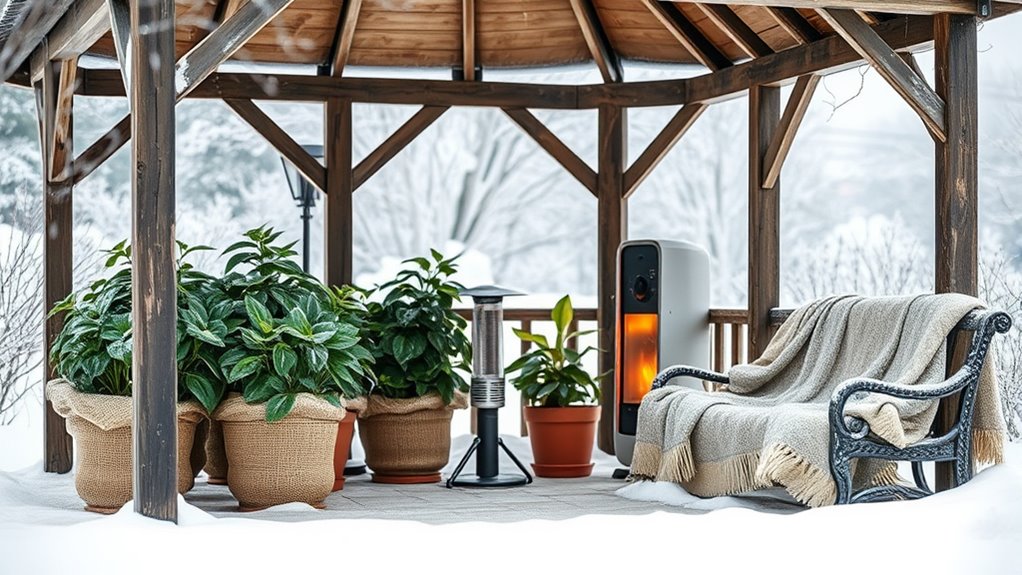
If you want to keep your plants safe from freezing in your gazebo, it’s essential to start by understanding the unique microclimate in that space. Factors like sunlight, wind exposure, and humidity can greatly affect how plants fare in winter. Choosing the right, winter-hardy varieties is vital too. But that’s just the beginning; there are several effective strategies to insulate and protect your plants from the harsh cold. Let’s explore those options further.




Assessing the Microclimate of Your Gazebo
When you’re looking to prevent plant freezing in your gazebo, it’s essential to assess the microclimate that exists in and around this space. Start with a microclimate evaluation by observing sunlight exposure, wind patterns, and nearby structures that could affect temperature variations. Use a thermometer to monitor temperatures throughout the day and night, noting any dramatic shifts. Consider using windbreaks or reflective materials to enhance warmth. You might also want to measure humidity levels, as moisture can influence frost formation. By understanding your gazebo’s unique microclimate, you can take proactive steps to protect your plants from freezing temperatures.
Choosing the Right Plants for Winter Resilience
Although choosing the right plants for winter resilience may seem challenging, it’s essential for ensuring your gazebo remains a vibrant haven during colder months. Start with winter hardy varieties like evergreens, ornamental grasses, and certain perennials that thrive even when temperatures drop. When making your plant selection, consider local climate conditions and the specific microclimate of your gazebo. Plants like hellebores and sedums can add color and texture while resisting frost. Don’t forget to group plants with similar needs to create a harmonious and resilient display. With thoughtful choices, your gazebo can stay lively and inviting all winter long.
Insulating Your Plants Against the Cold
Even with the right plants in place, protecting them from extreme cold is essential for their survival. One effective method is using fleece covers, which provide a breathable layer of insulation. Simply drape these covers over your plants, ensuring they’re secure but not too tight. For added protection, consider wrapping pots in bubble wrap. This not only insulates the roots but also prevents heat loss. Make sure to remove covers during warmer days to prevent overheating. By taking these simple measures, you’ll give your plants the best chance to thrive, even in harsh winter conditions.
Utilizing Heat Sources for Added Protection
To guarantee your plants stay warm during freezing temperatures, incorporating heat sources can make a significant difference. Heat lamps and electric blankets are excellent options to provide that extra warmth. Position heat lamps above your plants, ensuring they’re not too close to avoid burns. Electric blankets can wrap around pots for direct heat.
Here’s a quick comparison:
| Heat Source | Pros | Cons |
|---|---|---|
| Heat Lamps | Targeted warming | Can be expensive |
| Electric Blankets | Versatile & flexible | Requires power source |
| Heat Mats | Even heat distribution | May need insulation |
| Propane Heaters | High heat output | Safety concerns |
| Thermal Blankets | Affordable & simple | Limited heat retention |
Regular Maintenance and Monitoring During Winter
After guaranteeing your plants are protected with heat sources, the next step involves regular maintenance and monitoring during winter. Keep an eye on weather forecasting to anticipate cold snaps. Regularly check soil moisture; winter plant care requires less watering, but don’t let plants dry out completely. Inspect for pests and diseases, as indoor heat can create a favorable environment for them. Adjust heat sources as necessary to maintain ideal temperatures. Confirm proper ventilation to avoid mold. By staying proactive, you’ll empower your plants to thrive even in chilly conditions, allowing you to enjoy their beauty without worry.
Frequently Asked Questions
How Can I Tell if My Plants Are Too Cold?
If your plants’ leaves are wilting, browning, or dropping, they’re likely too cold. Check the plant temperature; most thrive above 50°F. Cold symptoms can indicate stress, so monitor your plants closely for signs of distress.
What Types of Mulch Are Best for Winter Protection?
For winter protection, use wood chips for insulation, straw bales for warmth, pine needles for moisture retention, and shredded leaves for added nutrients. Each option helps keep your plants cozy and thriving during cold months.
Can I Use Plastic Covers to Protect My Plants?
Yes, you can use plant covers made from protective materials like plastic. They’ll shield your plants from cold winds and frost, but make certain they’re ventilated to prevent moisture buildup, which can harm your plants.
Should I Water My Plants Before a Freeze?
Yes, watering your plants before a freeze can help. Pre-freeze watering enhances plant moisture retention, providing insulation against cold. Just make certain the soil’s not overly saturated to avoid root damage during freezing temperatures.
How Do I Safely Store Garden Tools During Winter?
Think of your tools as soldiers ready for battle. For winter storage, clean, dry, and organize them in a shed or garage. Use pegboards or bins; it’ll keep your space tidy and tools protected.