
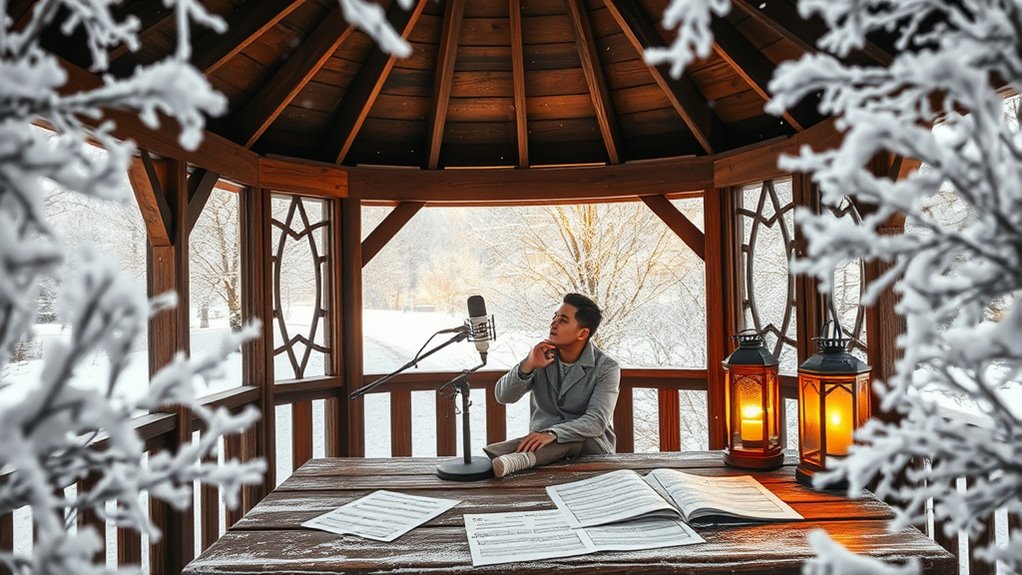
If you’re considering recording music in a winter gazebo, you’re in for a unique experience. The cold can pose challenges, but with the right preparation, you can enhance your sound. Insulation is essential for comfort and acoustics, and the gear you choose matters. Timing plays a role too. But how do you manage background noise and capture the season’s essence? Discover the essentials to make your winter recording session a success.


Preparing Your Gear for Cold Weather
When the temperature drops, ensuring your recording gear is ready for the cold can mean the difference between capturing the perfect sound and facing frustrating technical issues. Start with gear selection: opt for equipment designed to withstand lower temperatures. This includes microphones with built-in heaters and durable cables resistant to cracking. Make necessary cold weather adjustments, like keeping batteries warm in your pockets to maintain their efficiency. Before you record, let your gear acclimate to the outdoor temperature. Proper preparation not only enhances performance but also frees you to focus on creativity, allowing you to capture those magical winter moments effortlessly.
Insulating Your Gazebo for Comfort
As you prepare for winter recording sessions, consider how insulating your gazebo can enhance comfort and sound quality. Start with effective insulation materials like foam boards or spray foam to seal gaps and reduce noise infiltration. For added warmth, layer thermal curtains or blankets over windows. Combine these with efficient heating solutions, such as electric heaters or infrared panels, to maintain a cozy environment. This not only keeps you comfortable but also improves acoustic quality by minimizing sound distortion. With the right insulation and heating, your gazebo can transform into a creative sanctuary, ensuring your music flows freely, regardless of winter’s chill.
Utilizing Natural Acoustics
When you’re recording in your gazebo, pay attention to its unique acoustic properties, as they can elevate your sound. Seasonal changes can also enhance your recordings, from the crispness of fall leaves to the vibrancy of summer birds. By harnessing these natural elements, you can create a rich auditory experience that’s truly one-of-a-kind.
Acoustic Properties of Gazebo
Although gazebos are often appreciated for their aesthetic appeal, their unique acoustic properties can transform them into natural soundscapes perfect for music recording. The structure’s space dimensions play a critical role in sound reflection, creating a resonant environment that enhances your recordings. Experiment with different placements within the gazebo; you’ll discover how sounds bounce and blend, giving you rich and textured audio.
| Element | Effect on Sound |
|---|---|
| Roof Height | Influences reverberation |
| Wall Materials | Affects sound absorption |
| Open vs. Closed | Impacts sound projection |
| Floor Type | Changes sound dampening |
| Surroundings | Adds to ambient sounds |
Seasonal Sound Enhancements
The unique acoustic properties of a gazebo can be further enriched by the changing seasons, each bringing its own distinct sounds and ambiance. In winter, the crisp air enhances your recordings, making those winter melodies resonate beautifully. Embrace the seasonal instruments around you to capture a rich tapestry of sound.
- Use wind chimes for ethereal tones.
- Incorporate the crunch of snow underfoot.
- Experiment with the resonance of icicles.
- Capture bird calls that punctuate the quiet.
Choosing the Right Time of Day
Timing can make or break your recording session, so it’s essential to take into account the interplay of natural light and sound. The morning offers a fresh clarity that can elevate your vocals, while the afternoon’s acoustic properties enhance instrumentals. As evening approaches, take into account how ambient noise and mood shifts might influence your creative flow.
Morning Light Benefits
When you choose to record music in the early morning light, you’re not just benefiting from a serene environment; you’re tapping into a natural energy that can enhance your creativity and focus. The morning melodies that fill the air during this golden hour create an atmosphere ripe for inspiration.
- The soft light minimizes harsh shadows, perfect for capturing visuals.
- Ambient sounds are often quieter, allowing your music to shine.
- Your mind is clearer, promoting innovative ideas and lyrics.
- Nature’s beauty can evoke deep emotions, enriching your recordings.
Embrace the morning for your artistic freedom!
Afternoon Acoustic Clarity
While many artists find inspiration in the early morning, recording in the afternoon offers a unique clarity that can elevate your sound. During this time, the sun’s angle creates ideal acoustic reflections, enhancing your tracks’ richness. The warmth in the air helps with natural sound dampening, minimizing unwanted resonances that can muddy your recordings. Position your microphone strategically to capture the best tonal balance, and experiment with different placements to find the sweet spot. Embrace this freedom to explore your creativity; the afternoon light can transform your sound, making it vibrant and alive, ready to captivate your audience.
Evening Ambiance Considerations
As the day winds down, the evening presents a different set of acoustic opportunities that can greatly influence your recording process. The warm, soft evening lighting creates an inviting atmosphere while enhancing sound reflections, perfect for capturing richer tones. To optimize your recording session, consider these factors:
- Natural Reverb: Utilize the gazebo’s structure for enhanced sound reflections.
- Ambient Noise: Expect reduced traffic and activity, leading to a quieter environment.
- Lighting Effects: Experiment with shadows and highlights for visual inspiration.
- Temperature Changes: Be mindful of how cooler air can affect your instruments’ tuning.
Embrace the evening’s unique ambiance!
Managing Background Noise
Although it might seem impossible to achieve a pristine recording in a noisy environment, effective strategies can help you manage background noise. Start by utilizing soundproof materials, like heavy curtains or acoustic panels, to absorb unwanted sounds. Creating outdoor windbreaks can shield your setup from breezes and traffic noise, enhancing your recording’s clarity. Position your microphone wisely—closer to the sound source minimizes interference. Additionally, consider recording during quieter times of day. With these tactics, you’ll find that the freedom to create in your winter gazebo is more achievable, allowing your music to shine through despite the distractions around you.
Capturing Warmth in Your Sound
Once you’ve tackled background noise, the next step is to focus on capturing warmth in your sound. Use these techniques to infuse your recordings with richness and depth:
- Warm instrument techniques: Miking close to the sound source can enhance warmth.
- Vocal resonance tips: Encourage singers to sing with a relaxed posture for fuller tones.
- Room acoustics: Experiment with soft furnishings to absorb harsh reflections.
- EQ adjustments: Boost lower mid frequencies slightly to add warmth without muddying the mix.
Frequently Asked Questions
What Type of Microphone Is Best for Outdoor Winter Recording?
For outdoor winter recording, dynamic microphones are often better; they handle wind and cold better than condenser microphones. If you want clarity in challenging conditions, though, consider a well-protected condenser mic for warmth and detail.
How Can I Protect My Recording Equipment From Moisture?
To protect your recording equipment from moisture, use moisture barriers and equipment insulation. Consider waterproof covers and silica gel packs to absorb humidity, ensuring your gear stays dry and functional while you capture your creative moments.
Are There Specific Software Recommendations for Winter Recordings?
For winter recordings, consider software like Audacity for its audio editing capabilities and compatibility with various formats. Alternatively, try Reaper for its flexibility, allowing you to customize your workflow and enhance your creative freedom.
How Do I Prevent My Breath From Fogging the Microphone?
Like a skilled archer, you’ll want to control your breath. Position the microphone slightly off-axis, allowing your voice to flow without fogging. Mastering this dance guarantees clarity and keeps your creative spirit free.
Can I Use Battery-Powered Equipment in Freezing Temperatures?
Yes, you can use battery-powered equipment in freezing temperatures, but watch for reduced battery life. Cold can impact performance, so keep extras handy and warm them up before use to guarantee peak functionality and freedom in your recordings.