
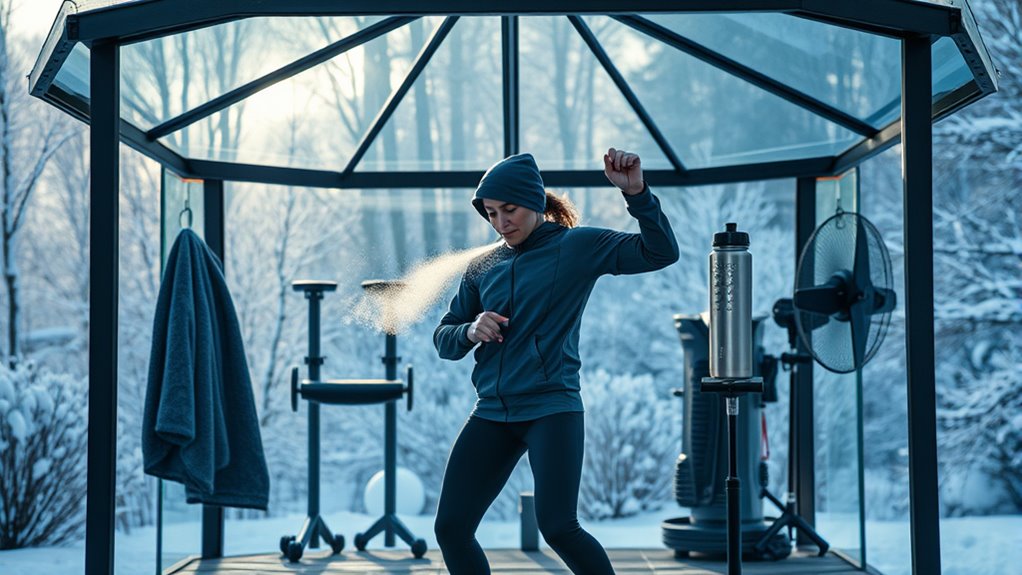
Managing sweat and moisture in a winter workout gazebo can be a challenge, but it’s essential for comfort and performance. You’ll want to focus on the right gear and ventilation strategies to keep things dry. As you layer up for warmth, consider how your clothing choices can impact sweat levels. Plus, there are effective tools and techniques to help control humidity. Let’s explore some practical solutions to enhance your winter workout experience.




Choose the Right Gear for Winter Workouts
When you’re gearing up for winter workouts, choosing the right clothing can make all the difference in your comfort and performance. Opt for insulating fabrics that trap warmth without adding bulk, allowing you to stay cozy while you move. Layering is key, so start with a moisture-wicking base layer to draw sweat away from your skin, keeping you dry and comfy. Look for tops and bottoms designed with this technology to guarantee you don’t feel soggy during your sessions. Add a mid-layer for extra warmth and a windproof outer layer to shield against the elements. With the right gear, you’ll feel free to push your limits, enjoying every moment of your winter workouts without the hassle of discomfort.
Optimize Ventilation in Your Gazebo
To guarantee a comfortable experience in your gazebo during winter workouts, optimizing ventilation is essential. Proper airflow can prevent moisture buildup and keep you feeling fresh. Here are some effective ventilation strategies and airflow techniques to take into account:
- Install adjustable windows: This allows you to control airflow based on your needs.
- Use fans: Position small fans to circulate air, helping to disperse humidity.
- Create cross-ventilation: Open multiple sides to encourage a natural breeze.
- Consider a roof vent: This can help release warm, humid air that rises.
Incorporate Absorbent Materials
While you might think winter workouts mean less sweat, incorporating absorbent materials into your gear can make a significant difference in comfort. Opt for moisture wicking fabrics that pull sweat away from your skin, keeping you dry and warm. Look for base layers, leggings, and shirts designed with this technology, enhancing your freedom of movement. Don’t forget to bring along absorbent towels; they’re perfect for quick wipes between exercises. You can easily toss them in your gym bag or hang them in your gazebo for easy access. By choosing the right materials, you’ll not only stay comfortable but also focus on your workout without the distraction of damp clothing. Embrace the winter chill while staying dry and energized!
Stay Hydrated to Control Sweat
Moisture-wicking gear is just one part of staying comfortable during winter workouts; hydration plays a key role in managing sweat too. Staying hydrated helps maintain your electrolyte balance and can reduce excessive sweating. Here are some effective hydration techniques to keep in mind:
- Drink water regularly: Don’t wait until you’re thirsty; sip water throughout your workout.
- Incorporate electrolytes: Use sports drinks or electrolyte tablets to replenish what you lose through sweat.
- Monitor your urine: A light yellow color indicates good hydration; darker means you need to drink more.
- Eat water-rich foods: Include fruits and veggies in your diet for added hydration.
Use Dehumidifiers or Fans for Moisture Control
Even though winter workouts can be invigorating, they can also lead to excessive moisture buildup, making it uncomfortable to exercise. To combat this, using dehumidifiers or fans can be a game-changer.
Here’s a quick guide to help you choose:
| Dehumidifier Types | Best Use Case | Fan Placement |
|---|---|---|
| Portable | Small spaces | Near workout area |
| Whole-house | Larger setups | High to circulate air |
| Desiccant | Cold environments | On the ground level |
Frequently Asked Questions
What Types of Fabrics Are Best for Winter Workout Clothing?
For winter workouts, opt for moisture-wicking materials like polyester or nylon, combined with thermal insulation fabrics such as fleece or merino wool. They’ll keep you dry, warm, and comfortable, allowing you to move freely.
Can I Use My Gazebo for Indoor Yoga Sessions?
Absolutely, you can use your gazebo for indoor yoga sessions! Just make certain your setup includes proper flooring and ventilation to enhance your practice, creating a serene space that feels both open and cozy for your mind and body.
How Do I Prevent Ice Buildup in My Gazebo During Winter?
To prevent ice buildup in your gazebo, guarantee proper insulation to retain heat, promoting ice melting. Regularly clear snow and ice accumulation, and consider using a heater for added warmth during winter workouts. Enjoy your activities!
Are There Specific Exercises Better Suited for Cold Weather?
Cold weather exercises like brisk walking, jogging, or indoor cycling are great. For winter workout tips, layer your clothing, warm up properly, and stay hydrated to keep your energy up and enjoy your workouts!
How Often Should I Clean My Workout Gazebo?
Think of your gazebo as a canvas; to keep it vibrant, clean it monthly. Regular maintenance not only preserves its beauty but also guarantees a revitalizing workout space, allowing you the freedom to enjoy every session.
