
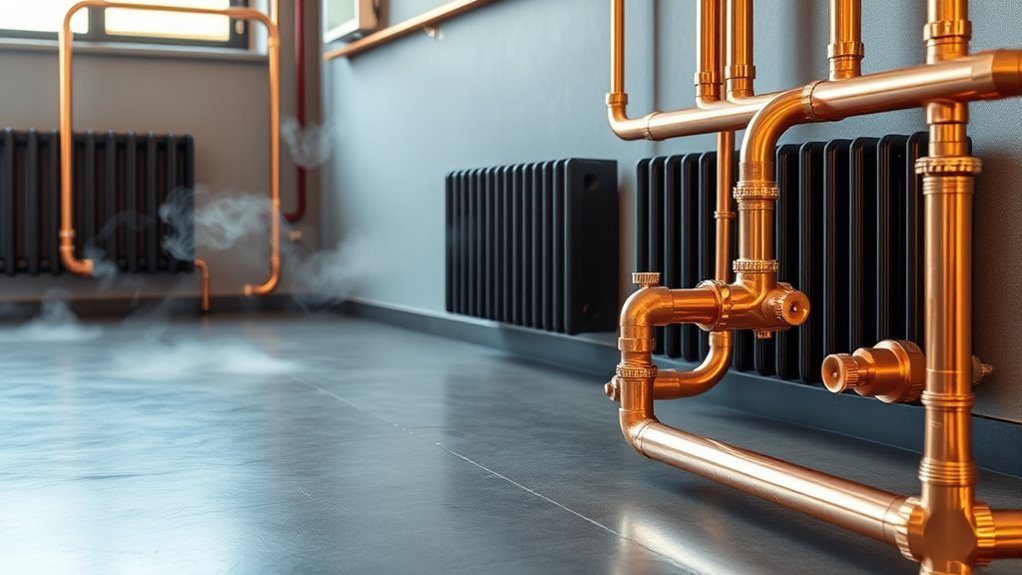
You might think that a heating layout is just about placing a few radiators or vents, but it’s far more complex. Achieving ideal comfort and energy efficiency requires a professional-grade approach, taking into account room size, insulation, and heat source placement. Understanding the nuances of heat distribution can prevent cold spots and enhance system performance. Let’s explore how you can transform your heating strategy for better results.




Understanding Heating Systems
When you’re considering heating systems, it’s essential to recognize that they vary considerably in design and function. Radiant heating, for instance, operates by warming surfaces directly, allowing heat to radiate throughout a space. This method can enhance comfort and efficiency, especially in larger areas. Conversely, convection heating relies on the circulation of air; it heats the air, which then rises and distributes warmth as it cools. While both systems have their merits, your choice depends on specific needs, such as space size and insulation quality. Understanding these differences empowers you to make informed decisions that align with your preferences for energy efficiency and comfort, ultimately granting you the freedom to create your ideal living environment.
Key Components of a Heating Layout
In creating an effective heating layout, you’ll need to take into account various heating system types, each with its own strengths and weaknesses. Layout design factors are essential for optimizing space and ensuring functionality. Additionally, efficient heat distribution is important to achieve uniform warmth throughout the area.
Heating System Types
Heating system types are the backbone of any effective heating layout, each with distinct components and operational mechanisms. Understanding these systems helps you choose what best suits your needs. Two prevalent types are radiant heating and forced air systems, each offering unique benefits.
- Radiant heating provides consistent warmth and comfort beneath your feet, promoting a sense of tranquility.
- Forced air systems deliver swift heating and flexibility in temperature control, empowering you with instant comfort.
- Hybrid systems combine elements of both, offering versatility for various climates and preferences.
Layout Design Considerations
Understanding key components of a heating layout is essential for achieving ideal efficiency and comfort. You’ll want to reflect on layout aesthetics alongside spatial efficiency to create a system that not only functions at its best but also complements the space. Begin by mapping out your heating zones, ensuring that each area receives adequate coverage. The placement of heating units should minimize obstruction while maximizing heat distribution. Pay attention to the arrangement of furniture and fixtures; they can greatly impact airflow and heat retention. Additionally, balance the technical aspects with visual appeal, choosing discreet solutions that enhance the room’s overall look. By prioritizing both aesthetics and efficiency, you’ll create a heating layout that meets your needs without sacrificing style.
Efficient Heat Distribution
While efficient heat distribution is essential for maintaining comfort, it hinges on several key components within your heating layout. To achieve ideal warmth, consider integrating:
- Radiant floor systems that deliver consistent heat from the ground up, enhancing comfort and energy efficiency.
- Ductless systems that allow for targeted heating in specific rooms, offering flexibility and reducing energy waste.
- Strategic zoning to control temperature in different areas, ensuring you feel comfortable wherever you are.
Factors Influencing Heat Distribution
When designing an effective heating layout, you must consider several critical factors that influence heat distribution. Room size, insulation quality, and the placement of heat sources all play pivotal roles in achieving ideal thermal comfort. Understanding how these elements interact will help you create a more efficient and balanced heating system.
Room Size Considerations
As room size directly impacts heat distribution, it’s crucial to take into account dimensions and layout when designing a heating system. Understanding room dimensions helps optimize space utilization and guarantees even heating throughout the area.
Consider these factors:
- Heating Zones: Larger rooms may need multiple zones to maintain consistent temperatures.
- Furniture Placement: The arrangement of furniture can obstruct airflow, leading to hot or cold spots.
- Ceiling Height: Higher ceilings require more energy to heat, affecting overall efficiency.
Insulation Quality Impact
Since insulation quality greatly influences heat distribution, understanding its characteristics is vital for optimizing heating efficiency. The choice of insulation materials directly affects thermal resistance, determining how effectively heat is retained or lost in your space. High-quality insulation minimizes thermal bridging, thereby ensuring a more uniform temperature throughout the room. You’ll want to take into account factors like R-value, which measures thermal resistance, as higher values indicate better insulating capability. Additionally, the installation process plays a significant role; even the best materials can underperform if not properly installed. By prioritizing quality insulation, you enhance your system’s efficiency, ultimately reducing energy consumption and enhancing comfort. Remember, investing in superior insulation materials pays off in long-term heating performance.
Heat Source Placement
Effective heat source placement is essential for optimizing heat distribution within a space, guaranteeing that warmth reaches all areas efficiently. To achieve this, consider the following placement strategies:
- Proximity to Occupied Areas: Position your heat source near frequently used spaces to maximize comfort and reduce energy waste.
- Avoiding Obstructions: Make certain that furniture or fixtures don’t block airflow, as this can lead to uneven heating and cold spots.
- Utilizing Vertical Space: Installing heat sources at different heights can enhance circulation and allow heat to spread more uniformly.
Common Mistakes in Heating Design
When designing a heating system, overlooking critical details can lead to inefficiencies and increased costs. Common oversights, like neglecting proper insulation or failing to account for room dimensions, can result in uneven heating and energy waste. Design pitfalls, such as inadequate placement of heat sources or ignoring airflow patterns, can further exacerbate these issues. You might also underestimate the importance of selecting the right equipment size, which can cause short cycling or insufficient heating. Additionally, not considering the specific heating requirements of different spaces can lead to discomfort. By identifying these mistakes early, you can create a more effective heating layout that maximizes efficiency and minimizes expenses, ultimately granting you the freedom to enjoy a comfortable environment.
Tips for Optimizing Your Heating Layout
To guarantee your heating layout performs at its best, it’s vital to take into account several key factors that directly influence efficiency and comfort. Start with ideal radiant floor positioning to guarantee even heat distribution throughout your space. Next, focus on precise thermostat placement; incorrect positioning can lead to energy wastage and discomfort.
Consider these essential tips:
- Evaluate room dimensions to determine the ideal heat output needed.
- Utilize zoning to control temperatures in different areas, maximizing comfort and efficiency.
- Regularly assess insulation to prevent heat loss, enhancing your system’s overall performance.
Maintenance for Long-term Efficiency
Proper maintenance plays a pivotal role in ensuring your heating system operates efficiently over the long haul. By implementing a regular schedule of preventive maintenance, you can identify potential issues before they escalate, saving both time and money. This includes checking filters, inspecting ductwork, and ensuring all components function effectively.
Consider efficiency upgrades, such as programmable thermostats or high-efficiency boilers, which can enhance your system’s performance. Regularly reviewing your heating layout for airflow obstructions also contributes to long-term efficiency.
Documenting maintenance activities helps track system performance and informs necessary adjustments. Overall, proactive upkeep not only extends the life of your heating system but also enhances your comfort and reduces energy costs, giving you the freedom to enjoy a warm environment without worry.
Frequently Asked Questions
What Are the Best Heating Systems for Large Commercial Spaces?
For large commercial spaces, consider radiant floor heating and advanced HVAC systems. They provide efficient temperature control, enhance comfort, and minimize energy costs, ensuring an ideal environment that meets your operational needs without compromising freedom of design.
How Does Heating Layout Impact Energy Efficiency Ratings?
Heating layout dramatically determines energy efficiency ratings; layout optimization leads to significant energy savings. By strategically placing systems, you’ll enhance performance and reduce waste, ensuring your space remains comfortable while maximizing freedom in energy consumption.
Can I Integrate Smart Technology Into My Heating Layout?
Yes, you can integrate smart technology into your heating layout. Smart thermostats and automated systems enhance control and efficiency, allowing you to optimize energy use and tailor comfort to your lifestyle preferences seamlessly.
What Are the Typical Costs Associated With Professional Heating Layout Design?
Typical costs for heating layout design include fees for design consultation, which can range from $100 to $300 per hour, and cost estimation services, often totaling 5-15% of your project’s overall budget.
How Often Should I Reassess My Heating Layout for Efficiency?
You should reassess your heating layout at least twice a year, making seasonal adjustments as needed. Regular performance monitoring guarantees peak efficiency, allowing you to enjoy a comfortable environment while minimizing energy costs.