
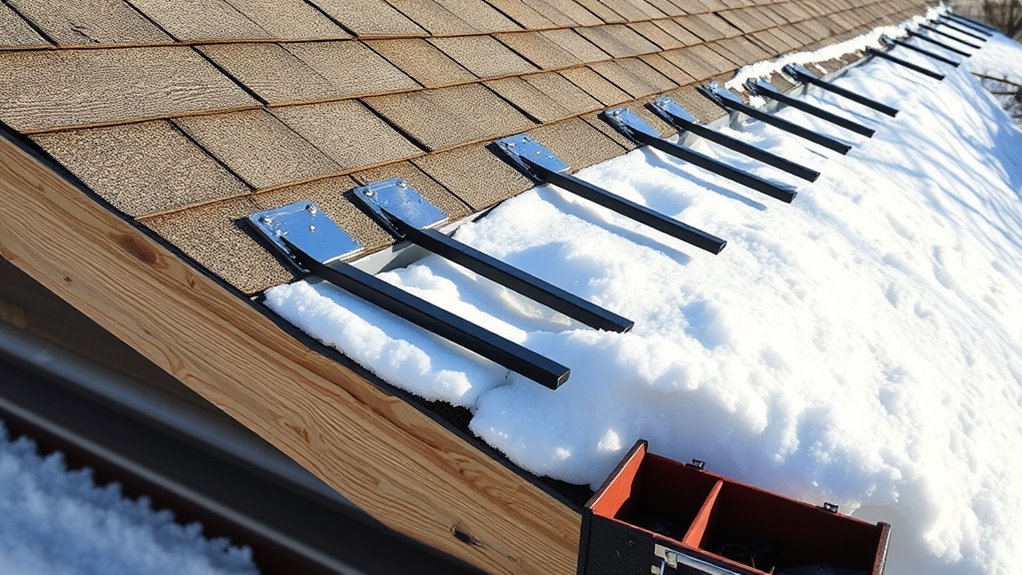
When installing DIY snow guards, it’s vital to understand their role in protecting your roof and preventing snow-related hazards. You’ll need to assess your roof’s structure and snow load requirements to select the right type of guards. Gathering the necessary tools and materials is fundamental for a successful installation. Next, you’ll want to prepare your roof properly, which sets the stage for an effective setup. Let’s explore the steps to guarantee your installation is both safe and efficient.
Understanding the Importance of Snow Guards
When you consider the risks associated with heavy snowfall, you might realize that snow guards play an essential role in protecting your property. These devices prevent excessive snow accumulation on roofs, mitigating the risk of structural damage. By controlling the release of snow and ice, snow guards also enhance safety for individuals near your building. Effective ice prevention reduces the likelihood of icicles forming, which can pose hazards. Installing snow guards not only safeguards your investment but also offers peace of mind. Understanding their importance empowers you to take proactive measures against winter’s challenges, ensuring your property remains secure and accessible.
Choosing the Right Type of Snow Guards
When selecting snow guards, consider the material’s durability to withstand harsh weather conditions. Verify the type you choose is compatible with your specific roof structure to guarantee proper installation. Finally, evaluate the installation environment, as factors like climate and sunlight exposure can affect performance.
Material Durability Considerations
Choosing the right type of snow guards involves careful consideration of material durability, as this directly impacts their performance and longevity. You’ll want to assess material strength and weather resistance to guarantee they withstand harsh conditions. Here’s a quick comparison of common materials:
| Material | Durability Rating |
|---|---|
| Aluminum | High |
| Stainless Steel | Very High |
| Plastic | Moderate |
| Copper | High |
| Fiberglass | Moderate |
Select a material that aligns with your climate and snow load requirements, ensuring your snow guards perform effectively over time.
Roof Type Compatibility
Material durability plays a significant role in determining which type of snow guards will work best for your roofing system. Understanding the compatibility with your roof type is essential.
- Metal roofs require low-profile snow guards that won’t disrupt aesthetics or cause leaks.
- Asphalt shingles benefit from adhesive or mechanical mounts to guarantee secure installation without damage.
- Consider snow load and climate to select the right guard type, promoting ideal performance.
Installation Environment Factors
Although it might seem straightforward, selecting the right type of snow guards for your installation environment requires careful consideration of several factors. Start by evaluating the weather conditions in your area; extreme winds or heavy snowfall can dictate the type of guard needed. Next, consider the temperature impact on materials—some are more susceptible to warping or cracking in fluctuating temperatures. Additionally, think about the roof’s pitch and material, as these can affect how snow accumulates. By understanding these elements, you can choose snow guards that will effectively manage snow loads while ensuring your roof remains protected.
Tools and Materials Needed for Installation
Before starting your snow-guard installation, you’ll need to gather specific tools and materials. This includes an overview of essential tools, a detailed list of required materials, and important safety equipment considerations. Having everything ready will streamline the installation process and guarantee your safety.
Essential Tools Overview
When you’re ready to install snow guards, having the right tools and materials on hand is vital for a successful project. Focus on specific tool types that suit your chosen installation techniques. Here’s what you’ll need:
- Drill: A power drill is essential for creating anchor holes.
- Measuring Tape: Accurate measurements guarantee proper placement.
- Level: This confirms your snow guards are installed evenly.
Gathering these tools will streamline your installation process, allowing you to achieve a secure and efficient setup. Make certain each tool is readily accessible to enhance your overall experience throughout the installation.
Required Materials List
To guarantee a successful snow guard installation, you’ll need a specific set of materials in addition to your tools. First, gather the necessary snow guard materials, including the snow guards themselves, which come in various styles. You’ll also require mounting hardware such as screws, brackets, and anchors. Don’t forget roofing sealant to ensure a watertight fit. Installation supplies like a measuring tape, level, and a drill are essential for precision. Finally, have a ladder handy to reach your roof safely. With these materials and supplies ready, you’ll be well-equipped for a sturdy and effective snow guard installation.
Safety Equipment Considerations
While installing snow guards, prioritizing safety is essential to prevent accidents and injuries. You need to equip yourself with the right safety gear and protective equipment to guarantee a smooth installation process. Here’s what you should have:
- Hard hat for head protection
- Safety goggles to shield your eyes from debris
- Non-slip footwear to maintain traction on the roof
Preparing Your Roof for Installation
Preparing your roof for snow-guard installation is essential to guarantee maximum performance and longevity of the system. Start with a thorough roof inspection, checking for any damage, loose shingles, or debris that could interfere with the installation. Ascertain the roof surface is clean and dry, as moisture can hinder adhesion. Be mindful of current weather conditions; avoid installation during rain, snow, or extreme temperatures, as these can affect the materials used. Having a solid foundation will not only ascertain proper installation but also enhance the effectiveness of your snow guards in preventing dangerous snow and ice slides.
Marking the Placement of Snow Guards
Before you begin the installation process, it’s crucial to accurately mark the placement of snow guards on your roof. Proper snow guard placement guarantees they effectively prevent snow slides and protect your property. Use these marking techniques for best results:
- Measure: Determine spacing based on your roof’s pitch and snow load.
- Level: Confirm markings are straight and aligned for proper installation.
- Identify: Mark key locations, such as valleys or edges, where snow accumulation is likely.
Installing the Snow Guards
Begin the installation of snow guards by securely attaching them to the marked locations on your roof. Use appropriate installation techniques, ensuring the guards are aligned correctly for maximum effectiveness. Choose a durable adhesive or screws designed for your roofing material to enhance stability. When positioned properly, you’ll experience snow guard benefits, including reduced snow accumulation and minimized ice dam risks. Make sure to check manufacturer guidelines for specific recommendations on spacing and spacing requirements. Once installed, you’ll not only protect your property but also enjoy the freedom that comes with knowing your roof is safeguarded against winter hazards.
Securing the Snow Guards Properly
Once the snow guards are installed, securing them properly is essential to assure they function effectively throughout the winter. Focus on achieving proper alignment and applying the right securing techniques. This assures durability and prevents any unwanted movement.
Properly securing snow guards ensures their effective functionality and durability during winter, preventing unwanted movement and misalignment.
- Use high-quality adhesive or screws designed for your roofing material.
- Assure each guard is spaced evenly and securely fastened to withstand heavy snow loads.
- Regularly check the tightness of all fasteners to maintain effectiveness.
Maintenance Tips for Snow Guards
Regular maintenance of your snow guards is essential for guaranteeing their long-term effectiveness and preventing ice dam formation. Conduct seasonal inspections to check for any signs of wear, rust, or damage. Clean the snow guards regularly to remove debris that could impede their function. Confirm mounting hardware is tight and free from corrosion, as loose components can compromise their stability. If you notice any issues during inspections, address them promptly to avoid bigger problems. Keeping your snow guards in prime condition not only enhances performance but also protects your roof and property from potential damage. Stay proactive for best results.
Safety Precautions During Installation
While installing snow guards, it is crucial to prioritize safety to prevent accidents and injuries. Always assess the weather conditions before starting your installation. If the weather is unfavorable, postpone your work to avoid risks.
Here are some personal protective equipment (PPE) essentials you should use:
- Hard hat to protect your head from falling debris
- Non-slip footwear to prevent slipping on roofing surfaces
- Safety harness to secure yourself when working at heights
Frequently Asked Questions
Can Snow Guards Be Installed on All Roof Types?
Snow guards can’t be installed on all roof types. Each roof material requires specific installation techniques. For instance, metal roofs might need different anchors compared to shingles. Always assess compatibility before proceeding with installation.
How Much Do Snow Guards Typically Cost?
Snow guard pricing typically ranges from $2 to $10 per unit, depending on material and design. Installation costs can vary widely, so it’s essential to factor those expenses into your overall project budget for accurate planning.
What Climate Conditions Are Snow Guards Most Effective In?
Snow guards work best in climates like a well-placed umbrella, preventing snow accumulation and controlling ice melting. They’re essential for areas with heavy snowfall, ensuring safety and protecting structures from winter’s harsh elements.
Can I Install Snow Guards in Winter?
Yes, you can install snow guards in winter. However, make certain surfaces are clear of snow and ice. Use appropriate installation tips, considering cold temperatures may affect adhesive performance and safety during the process.
Are There Any Warranties for Snow Guards?
Yes, most snow guards come with warranty coverage, but you’ll need to check specific installation requirements. Think of it as your safety net, ensuring your investment is protected against winter’s unpredictable whims.