
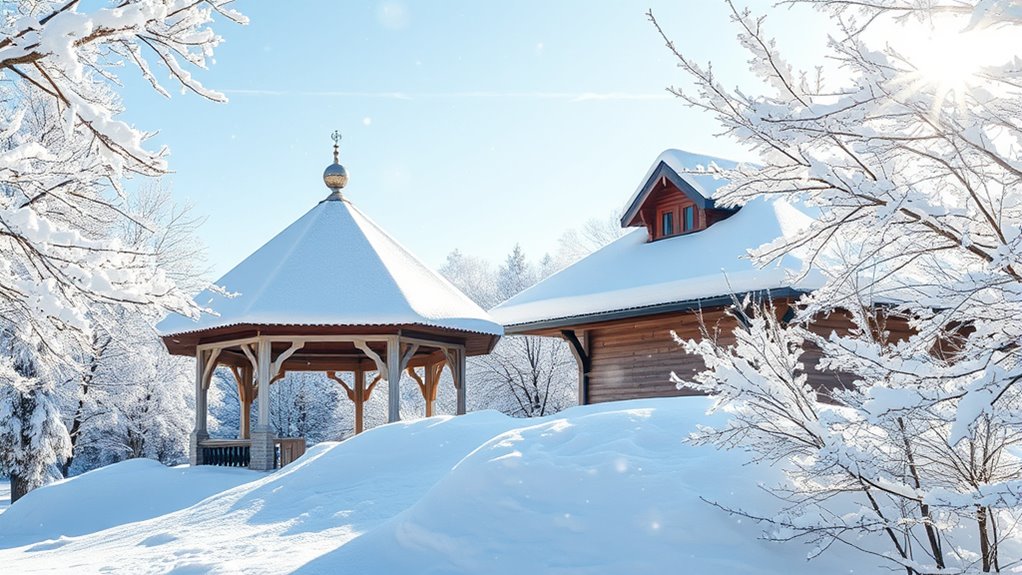
Consider a gazebo with a shallow roof angle that’s struggling under the weight of heavy snowfall. This scenario highlights the critical relationship between roof angle and snow load. A steeper pitch can mitigate snow accumulation, while a flatter roof may lead to structural strain. Understanding these dynamics is essential for ensuring safety and longevity. What factors should you consider when selecting the right roof angle for your gazebo?
Understanding Roof Angle and Its Importance
The roof angle of a gazebo plays a critical role in both its aesthetic appeal and structural integrity. When you consider roof design, you’ll find that the angle considerably influences load distribution. A steeper angle facilitates better drainage and minimizes the risk of water pooling, while a shallower angle can lead to increased stress on the structure under certain conditions. Properly evaluating roof angle guarantees that the gazebo can withstand various environmental factors without compromising its stability or visual allure. By understanding these dynamics, you can make informed decisions that enhance both the functionality and beauty of your outdoor space.
How Roof Pitch Influences Snow Accumulation
While evaluating how roof pitch influences snow accumulation, it is essential to recognize that a steeper pitch typically encourages snow to slide off more easily. This can greatly reduce snow retention on your gazebo. Here are some key pitch effects to take into account:
Evaluating roof pitch is crucial, as steeper angles help snow slide off, reducing retention and enhancing gazebo safety.
- Steeper Angles: Promote sliding, minimizing snow load.
- Shallower Angles: Increase snow retention, risking structural stress.
- Roof Material: Affects friction; smoother surfaces enhance sliding.
- Climate Variability: Local weather patterns influence snow accumulation dynamics.
Understanding these factors can help you design a gazebo that effectively manages snow load, ensuring safety and longevity.
The Impact of Different Roof Angles on Structural Integrity
When considering roof angles, it’s vital to understand their direct impact on a gazebo’s structural integrity. Different roof designs can markedly affect how loads, such as snow, are distributed across the structure. Steeper angles typically promote better drainage, reducing the accumulation of heavy snow that could compromise structural safety. Conversely, flatter roofs are more prone to load-related issues, leading to potential sagging or failure. By carefully selecting the appropriate roof angle, you can enhance the gazebo’s durability and longevity, ensuring it withstands environmental stresses while maintaining aesthetic appeal. Proper analysis of roof design is fundamental for ideal performance.
Recommendations for Optimal Roof Angles for Gazebos
Selecting the ideal roof angle for a gazebo is essential, as it directly influences snow load management and overall structural performance. When considering design considerations, aim for the following best roof angles:
- 15-30 degrees: This pitch effectively sheds snow while maintaining aesthetic appeal.
- 30-45 degrees: Provides excellent snow load management, especially in heavy snowfall areas.
- Over 45 degrees: Ideal for maximizing drainage but may require additional structural support.
- Flat roofs: While less common, make certain proper drainage systems are in place to prevent snow accumulation.
Maintenance Tips for Snow Management on Gazebo Roofs
Maintaining an effective snow management strategy on gazebo roofs is vital to prevent structural damage and confirm longevity. Regular snow removal is imperative, particularly after heavy snowfall. Consider these preventative measures:
| Action | Frequency | Notes |
|---|---|---|
| Inspect Roof | Monthly | Check for cracks or wear |
| Remove Snow | After Heavy Snowfall | Use a roof rake |
| Clear Gutters | Bi-Annually | Prevent ice dams |
| Check Supports | Seasonally | Verify stability |
| Apply Sealant | Every 2 Years | Protect roof materials |
Implementing these tips will enhance your gazebo’s resilience against snow load.
Frequently Asked Questions
Can a Gazebo Roof Angle Affect Heating Costs in Winter?
Yes, a gazebo’s roof angle can impact winter insulation and energy efficiency. A steeper angle promotes better snow shedding, potentially reducing heat loss and lowering heating costs by enhancing the structure’s overall thermal performance.
What Materials Are Best for Snow-Resistant Gazebo Roofs?
For snow-resistant gazebo roofs, consider metal roofing options for durability and insulated roofing materials for energy efficiency. Choosing these materials guarantees your structure withstands harsh winters while maintaining comfort and freedom from excessive maintenance.
How Often Should I Inspect My Gazebo Roof for Snow Damage?
You should inspect your gazebo roof for snow damage at least twice during winter, ensuring effective roof maintenance. Regular checks help prevent structural issues and enhance durability, allowing you to enjoy your outdoor space worry-free.
Are There Local Building Codes Regarding Gazebo Roof Angles?
You’ll find local regulations often dictate specific roof designs for gazebos, ensuring safety and structural integrity. It’s essential to check these codes, as they can greatly impact your gazebo’s overall performance and longevity.
Can I Add Snow Guards to Any Roof Angle?
You can add snow guards to various roof angles, but their effectiveness depends on specific roof angle considerations. Steeper angles may require different guard types to guarantee peak performance against snow accumulation and sliding.