
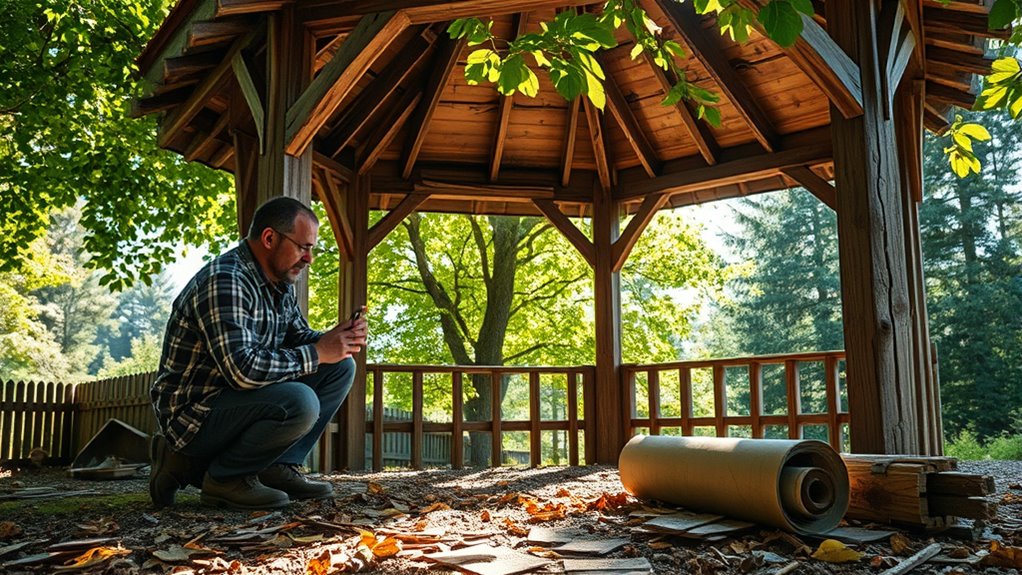
Did you know that nearly 30% of gazebos suffer some form of wind damage during storm season? If your gazebo has taken a hit, it’s essential to assess the extent of the damage before jumping into repairs. Understanding what to look for and how to proceed can make all the difference in restoring its integrity and beauty. So, what are the first steps you should take to guarantee a successful repair?
Assessing the Extent of Wind Damage
When tackling wind damage on your gazebo, the first step is evaluating the extent of the damage. Start by examining the structure for any visible signs, like cracks or bent supports, and note how wind patterns may have affected its stability. Perform a thorough damage assessment by checking the roof, walls, and flooring for weaknesses. Don’t forget to inspect the foundation, as strong winds can shift or weaken it. Document everything you find; this will help guide your repair process. Understanding the severity of the damage allows you to make informed decisions about the necessary repairs and materials needed.
Safety Precautions Before Starting Repairs
Before you start any repairs on your gazebo, it’s important to prioritize safety. Equip yourself with proper safety gear, including gloves, goggles, and a hard hat, to protect against potential hazards. Check the weather conditions; avoid working during strong winds or storms. Confirm your ladder is stable and positioned correctly if you need height access. Have a first aid kit on hand, so you’re prepared for minor injuries. Inform someone about your project, especially if you’re working alone. Taking these precautions will not only safeguard your well-being but also make your repair process smoother and more enjoyable.
Repairing Missing or Damaged Shingles
Repairing missing or damaged shingles is an essential step in restoring your gazebo’s integrity and appearance. Start by identifying the affected areas and gathering the necessary materials for shingle replacement. Use effective roofing techniques to guarantee a secure fit.
Here’s a quick reference table for your repair process:
| Step | Action | Tools Needed |
|---|---|---|
| Inspect | Check for damage | Ladder |
| Remove | Take off damaged shingles | Pry bar |
| Replace | Install new shingles | Hammer, nails |
| Seal | Apply roofing sealant | Caulk gun |
Fixing Bent or Broken Railings
Bent or broken railings can compromise both the safety and aesthetic appeal of your gazebo. To tackle this, start with bent railing solutions, like gently straightening the railing with a mallet or clamp. If the damage is severe, consider replacing the affected section. For broken railings, measure the length and style to guarantee a proper fit before purchasing new materials. Whether you choose wood, metal, or vinyl, make sure it matches the gazebo’s design. Secure the new railing with appropriate fasteners, guaranteeing a sturdy installation. Regular maintenance will keep your gazebo looking great and safe for gatherings.
Addressing Structural Issues
Structural issues in gazebos can often be the most essential to address, as they directly affect the safety and longevity of the structure. Begin by inspecting for any signs of weakness, such as cracks or warping. You may need to implement structural reinforcements, especially in areas vulnerable to wind load. Adding diagonal bracing or additional posts can greatly enhance stability. Verify that your gazebo’s foundation is secure, as this is crucial for overall strength. Remember, taking proactive measures now will save you time and money later, allowing you to enjoy your outdoor space with peace of mind.
Choosing the Right Materials for Repairs
When repairing your gazebo, it’s essential to choose materials that can withstand the elements. Look for options that offer durability and weather resistance to guarantee your repairs last through future storms. Consider factors like rot resistance and UV protection to maintain the structural integrity of your gazebo over time.
Material Durability Considerations
Choosing the right materials for repairing wind-damaged gazebos is essential, as the durability of these materials directly affects the structure’s longevity and resilience against future storms. Consider these factors when selecting:
- Wood Types: Opt for durable species like cedar or redwood, which resist decay.
- Metal Coatings: Use galvanized or powder-coated metal for rust protection.
- Fasteners: Choose stainless steel or coated fasteners to prevent corrosion.
- Sealants: Invest in high-quality, weather-resistant sealants to protect joints.
Weather Resistance Features
Weather resistance features play an essential role in ensuring that your gazebo stands strong against the elements. When choosing materials for repairs, opt for wind resistant materials like fiberglass or reinforced aluminum, as they enhance stability and longevity. Additionally, consider your gazebo design; a lower profile and aerodynamic shape can help deflect wind, reducing damage risk. Using treated wood or composite materials for flooring and framework can also provide protection against moisture and rot. By selecting the right materials, you’re not just repairing your gazebo, but also investing in its resilience, allowing you to enjoy your outdoor space freely and confidently.
Tools Needed for Gazebo Repair
To effectively repair your gazebo after wind damage, you’ll need a solid set of tools. Essential hand tools like hammers, screwdrivers, and wrenches are vital for basic fixes, while power tools such as drills and saws can speed up more complex repairs. Knowing what tools to gather will make your repair process smoother and more efficient.
Essential Hand Tools
When tackling wind damage on your gazebo, having the right hand tools at your disposal can make all the difference in ensuring a successful repair. Focus on proper tool selection and maintenance to keep your repairs smooth. Here’s a list of essential tools you’ll need:
- Hammer: For driving nails and fixing loose boards.
- Screwdriver Set: To tighten or replace screws in various fixtures.
- Tape Measure: For accurate measurements when replacing or adjusting parts.
- Pry Bar: To remove damaged sections without causing further harm.
With these tools in hand, you’ll be well-equipped to restore your gazebo’s charm.
Power Tools Overview
While hand tools are essential for basic repairs, incorporating power tools into your gazebo restoration can greatly speed up the process and enhance the quality of your work. Key power tool types include drills for precise holes, saws for cutting lumber, and sanders for smooth finishes. Always remember to prioritize tool maintenance; keeping blades sharp and batteries charged will guarantee efficiency and longevity. Familiarize yourself with safety practices, too, as these tools can be powerful allies in your repair journey. With the right power tools at your side, you’ll find that restoring your gazebo not only becomes easier but also more enjoyable.
Preventative Measures Against Future Wind Damage
Although strong winds can be unpredictable, there are several effective preventative measures you can take to minimize the risk of damage to your gazebo. Here’s how you can enhance your gazebo’s resilience:
- Install Wind Barriers: Use natural or artificial barriers to deflect wind.
- Regular Gazebo Maintenance: Check for loose fittings and wear, addressing issues promptly.
- Secure the Structure: Anchor your gazebo to the ground with heavy-duty stakes or concrete.
- Choose Durable Materials: Opt for high-quality, weather-resistant materials in your gazebo’s construction.
Hiring a Professional vs. DIY Repairs
Deciding whether to hire a professional or tackle gazebo repairs yourself can be challenging, especially if you’re not sure about the extent of the damage. If you lack experience, hiring a skilled contractor can provide professional expertise, ensuring a thorough and safe repair. Although this option may involve higher repair costs, it often saves time and prevents further issues. On the other hand, if you’re handy and the damage seems manageable, DIY repairs could be a rewarding challenge. Just weigh your skills and the potential risks before diving in, as improper repairs might lead to more significant problems down the line.
Frequently Asked Questions
How Long Does It Take to Repair Wind Damage on a Gazebo?
How long does it take to repair wind damage? Typically, repair duration can range from a few hours to several days, depending on the extent of damage. Regular gazebo maintenance helps minimize these repair times.
Will Insurance Cover Wind Damage Repairs on My Gazebo?
Yes, your insurance policies might cover wind damage repairs on your gazebo, but it depends on your specific coverage limits. Review your policy details to understand what’s included and consult your provider for clarification.
Can I Prevent Wind Damage With Additional Gazebo Features?
You can absolutely turn your gazebo into a fortress against wind! Adding wind barriers and structural reinforcements will drastically enhance its stability, allowing you to enjoy your outdoor space without fearing Mother Nature’s whims.
What Signs Indicate My Gazebo Needs Immediate Repair?
If you notice cracks, sagging, or loose connections, those are repair indications. Check for rust or rot too; they compromise structural integrity. Addressing these issues promptly guarantees your gazebo remains safe and enjoyable for your freedom.
Is It Safe to Repair a Gazebo Alone After Wind Damage?
“Better safe than sorry.” It’s not always wise to repair a gazebo alone after wind damage. Make sure you have safety precautions in place and the right repair tools. Consider asking for help if needed.