
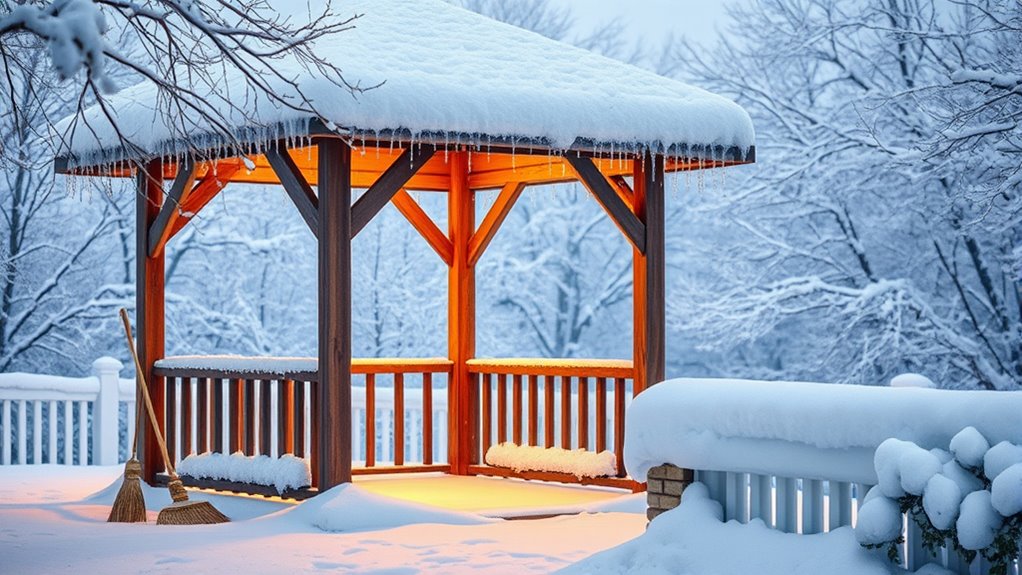
Maintaining your gazebo during snowy months requires a systematic approach to preserve its structure and appearance. Start by evaluating its condition before the winter sets in. You’ll need to clear snow and ice safely, while also checking for any signs of structural integrity issues. Understanding how to protect against moisture damage is vital, as is knowing the best ways to cover your gazebo. Let’s explore these essential steps to guarantee your gazebo withstands the harsh winter.
Assessing Your Gazebo’s Condition Before Winter
Before the first snowflakes fall, it’s crucial to assess your gazebo’s condition to guarantee it withstands the harsh winter months. Start by inspecting the structure for any signs of wear or damage; look for loose boards, rusted nails, or cracks in the wood. Pay special attention to joints and fasteners, as winter weather effects can exacerbate weaknesses. Use gazebo inspection tips like checking for proper drainage to prevent water accumulation. Reinforce any weak areas with weather-resistant sealants and verify the roof is intact. This proactive approach guarantees your gazebo remains a sanctuary, offering freedom and refuge from the winter chill.
Clearing Snow and Ice Safely
When it comes to clearing snow and ice from your gazebo, using a snow shovel is vital for preventing damage to the structure. You’ll want to steer clear of salt chemicals, as they can corrode materials over time. Protecting your gazebo’s integrity guarantees it remains a safe and beautiful retreat throughout the winter months.
Use a Snow Shovel
One effective way to clear snow and ice from your gazebo is by using a snow shovel, a tool designed specifically for this purpose. Employ snow shovel techniques like scooping and pushing rather than lifting heavy loads, which can strain your back. When shoveling, always maintain a stable stance and bend your knees to avoid injury. For shovel safety, verify your path is clear of obstacles and consider wearing slip-resistant footwear. Regularly clearing snow prevents ice buildup, keeping your gazebo safe and accessible. Embrace the freedom of winter maintenance, verifying your outdoor space remains a cozy retreat even in snowy months.
Avoid Salt Chemicals
Although it might be tempting to use salt or chemical de-icers to clear snow and ice from your gazebo, doing so can lead to long-term damage to the structure and surrounding environment. Instead, consider natural alternatives like sand or kitty litter for traction without corrosive effects. For safe de-icing, warm water can be effective in melting ice without harming your gazebo’s materials. You can also use a sturdy snow shovel to gently remove snow build-up. By opting for these eco-friendly methods, you guarantee the longevity of your gazebo while preserving the beauty of your outdoor space.
Protect Gazebo Structure
Using natural alternatives for traction is just the beginning of maintaining your gazebo during snowy months; protecting its structure while clearing snow and ice is equally important. Start by using a roof rake to safely remove heavy snow accumulation, preventing excess weight that could compromise the integrity of the gazebo. For ice, gently use a plastic shovel or broom—metal tools can scratch surfaces. Regularly inspect the structure for any signs of damage, ensuring timely repairs. Embrace these steps for effective gazebo maintenance and winter protection, allowing you to enjoy your outdoor haven without the worry of winter’s harsh elements.
Checking for Structural Integrity
When winter blankets your gazebo in snow, it’s essential to assess its structural integrity to prevent damage. Start with visual inspections, looking for any cracks, warps, or signs of weakness in the frame. Pay close attention to joints and connections, as these are often stress points. If you notice any issues, don’t hesitate to schedule structural repairs promptly. Ignoring these problems can lead to more extensive damage, jeopardizing not just your gazebo but also your freedom to enjoy it. Remember, maintaining structural strength is key to ensuring your outdoor sanctuary stands strong against winter’s harsh elements.
Protecting Against Moisture Damage
As snow accumulates on your gazebo, it’s essential to implement measures that protect against moisture damage, which can lead to rot and deterioration. Start by installing moisture barriers around the base to prevent water seepage. Verify proper winter drainage by clearing snow and ice from pathways and gutters, allowing water to flow away from the structure. Regularly inspect for any leaks or cracks that could trap moisture. Additionally, consider using a waterproof sealant on wooden elements to further shield against dampness. By taking these steps, you’ll preserve your gazebo’s integrity, allowing it to stand strong against winter’s harsh conditions.
Covering Your Gazebo for Winter
To guarantee your gazebo withstands the rigors of winter, covering it properly is essential. Invest in high-quality winter covers designed to repel moisture and block UV rays, ensuring your structure remains intact. When selecting protective tarps, choose those that are durable and weather-resistant, as they’ll shield your gazebo from snow accumulation and ice damage. Secure the covers tightly to prevent wind from displacing them, and consider adding weights to the edges. Remember to regularly check for any wear and tear during the season, allowing you to maintain your gazebo’s integrity and embrace the freedom it provides year-round.
Preparing for Spring Reopening
Spring’s arrival signals the perfect time to awaken your gazebo from its winter slumber. Begin with thorough spring cleaning to remove dust, debris, and any leftover snow remnants. Inspect for damage and make necessary repairs to guarantee it’s ready for use.
Spring is the ideal moment to refresh your gazebo with a deep clean and necessary repairs, preparing it for delightful gatherings.
Consider embracing the new season with vibrant seasonal decorations to create an inviting space.
- Replace old cushions with fresh, weather-resistant fabrics.
- Add potted flowers for a splash of color.
- Hang string lights for a magical evening ambience.
With these steps, your gazebo will transform into a delightful retreat, ready for relaxation and enjoyment.
Frequently Asked Questions
What Materials Are Best for Gazebo Winter Covers?
For winter covers, you’ll want durable vinyl covers or waterproof tarps. They provide excellent protection against snow and moisture, ensuring your gazebo remains safe and intact, allowing you the freedom to enjoy it year-round.
How Often Should I Check My Gazebo During Winter?
You should conduct winter inspections every few weeks, balancing the beauty of snow with the need for gazebo maintenance. Regular checks help prevent damage, ensuring your structure remains a cozy retreat throughout the season’s chill.
Can I Use a Snowblower Around My Gazebo?
You can use a snowblower around your gazebo, but be cautious. Verify snow removal’s gentle to protect the structure’s integrity. Maintain safe distance and avoid direct contact to prevent damage while enjoying winter’s freedom.
What Should I Do if My Gazebo Gets Damaged in Winter?
When winter’s winds blow, it’s wise to know. Start with winter inspections; look for cracks or loose parts. Use repair techniques like sealing or reinforcing to guarantee your gazebo stands strong against the elements.
Is It Safe to Install Heating Elements in My Gazebo?
Yes, it’s generally safe to install heating elements in your gazebo, but guarantee you follow heating safety guidelines. Use proper installation tips, like maintaining clearances and choosing outdoor-rated heaters, to minimize risks and maximize comfort.