
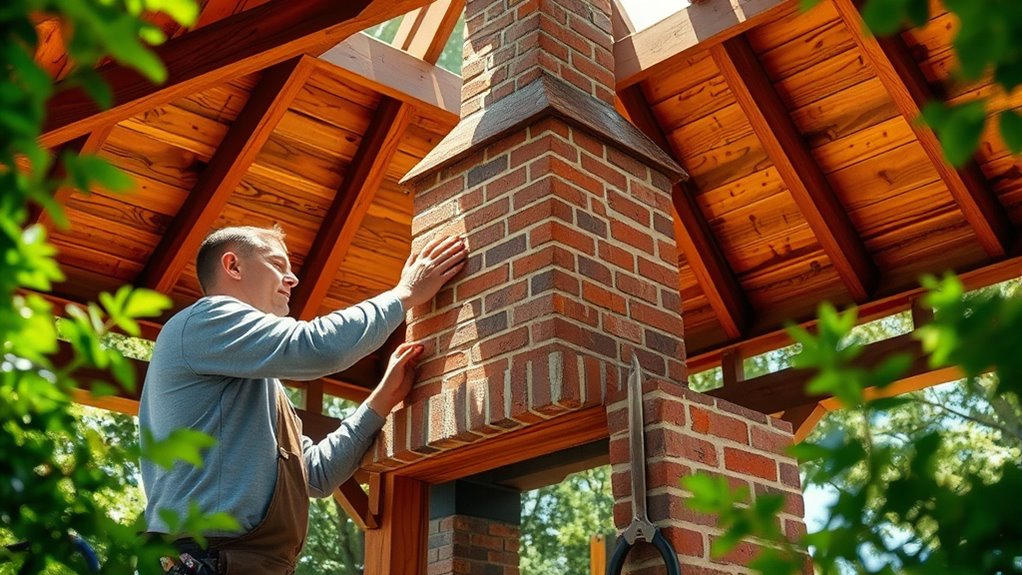
When you’re considering installing a chimney in your gazebo, there are several critical factors to address. You’ll need to choose the right location to guarantee safety and efficiency, while also selecting a design that complements your structure. Additionally, understanding local regulations is essential to avoid any legal issues. But before you proceed, it’s important to explore the specific materials required and the installation process to guarantee ideal performance and safety.
Choosing the Right Location for Your Chimney
When you’re selecting the right location for your chimney in a gazebo, it’s essential to contemplate both functionality and safety. Consider the gazebo layout to guarantee that chimney placement allows for proper ventilation and minimizes fire hazards. Position the chimney away from flammable materials, such as wooden beams or fabric drapes. Additionally, think about wind direction; placing the chimney on the upwind side can help direct smoke away from the seating area. Be mindful of local building codes and regulations, as they often dictate specific clearances and safety measures for chimney installations to enhance your outdoor living experience.
Selecting the Appropriate Chimney Design
Once you’ve determined the ideal location for your chimney, the next step is selecting the appropriate design that complements both the gazebo’s aesthetics and your heating needs. Consider various design styles, such as traditional, modern, or rustic, to match your gazebo’s overall theme. You’ll also want to choose chimney materials carefully; options like stainless steel, brick, or stone can greatly impact durability and appearance. Verify that the design allows for efficient airflow and smoke discharge, enhancing safety and functionality. Ultimately, your selected chimney design should harmonize with your space while providing the warmth and comfort you desire.
Materials Needed for Chimney Installation
To successfully install a chimney in your gazebo, you’ll need a variety of materials that guarantee both structural integrity and safety. Here’s a concise list of essential chimney materials and installation tools:
- Chimney pipe: Choose the appropriate size and insulation type for your design.
- Flashing kit: This helps to prevent water leaks where the chimney meets the roof.
- Masonry tools: Essential for securing the chimney base and ensuring stability.
Gather these materials to facilitate a seamless installation process and enjoy the freedom of a cozy, functional gazebo that complements your outdoor space.
Understanding Local Building Codes and Regulations
Before diving into the installation of your chimney, it’s crucial to familiarize yourself with local building codes and regulations, as these rules can greatly impact your project. You’ll likely need to secure building permits that guarantee your chimney complies with safety standards. Pay close attention to fire codes, which dictate how far the chimney must be from flammable materials and other structures. Non-compliance could lead to fines or even require you to dismantle your work. Always consult your local building authority for specific requirements, and don’t hesitate to seek professional advice if you’re unsure about any regulations.
Preparing Your Gazebo for Installation
As you prepare your gazebo for chimney installation, it’s important to verify that the structure can support the added weight and heat generated by the chimney. Follow this installation checklist for effective gazebo preparation:
- Inspect the Foundation: Verify it’s stable and can bear the extra load.
- Check for Ventilation: Confirm adequate airflow to prevent overheating.
- Assess Surrounding Materials: Identify flammable materials nearby and make necessary adjustments.
Step-by-Step Installation Process
Having guaranteed that your gazebo is ready for the chimney installation, the next step involves a systematic approach to the actual setup. Begin by selecting the appropriate chimney type, ensuring it suits your gazebo’s design and intended use. Gather installation tools like a drill, level, and measuring tape. Start by marking the chimney’s position on the roof and cutting a hole for it. Next, attach the chimney base securely, ensuring it’s well-sealed. Carefully install the flue sections, following the manufacturer’s instructions for alignment. Finally, connect the chimney cap, completing the installation and allowing for efficient ventilation. Enjoy your new setup!
Safety Considerations During Installation
When installing a chimney in your gazebo, prioritizing safety is essential to prevent accidents and guarantee a secure setup. Adhering to fire safety and ventilation requirements is vital. Here are three key considerations:
- Clearance: Confirm adequate distance between the chimney and any combustible materials to reduce fire risk.
- Ventilation: Install proper ventilation to allow smoke and gases to escape, preventing buildup that could lead to hazards.
- Inspection: Regularly check connections and joints during installation for leaks or blockages, confirming a safe and efficient chimney system.
Maintenance Tips for Your Chimney
To guarantee your chimney operates efficiently, establish a regular inspection schedule to identify any potential issues early. You’ll need specific cleaning techniques and tools, such as brushes and vacuums designed for chimneys, to maintain peak airflow and prevent buildup. Staying proactive with maintenance not only enhances safety but also prolongs the lifespan of your chimney.
Regular Inspection Schedule
Regular inspections of your chimney are essential for guaranteeing safety and efficiency, especially in a gazebo setting where the structure may be more susceptible to environmental factors. To maintain ideal performance, follow this inspection frequency:
- Monthly: Check for any visible cracks or wear on the exterior and guarantee the cap is intact.
- Quarterly: Review your inspection checklist, focusing on creosote buildup and any obstructions.
- Annually: Schedule a professional inspection to assess structural integrity and functionality.
Cleaning Techniques and Tools
Cleaning your chimney is essential for ensuring ideal performance and safety in your gazebo. To maintain its efficiency, use specialized cleaning tools like chimney brushes and vacuum attachments designed for creosote buildup. Employ maintenance techniques such as regular brushing, aiming for every six months, especially after heavy use. Inspect the flue for blockages and debris before each cleaning session. For stubborn deposits, consider a chemical cleaner approved for your chimney type. Always wear protective gear, including gloves and masks, to safeguard your health. Following these practices not only enhances safety but also extends the life of your chimney system.
Enhancing Your Gazebo’s Aesthetic With a Chimney
While you might think a chimney is purely functional, it can also serve as a striking design element that enhances the overall aesthetic of your gazebo. By integrating chimney aesthetics, you can elevate your gazebo ambiance in several ways:
A chimney can be a stunning design feature, enhancing your gazebo’s aesthetic while combining functionality and beauty.
- Material Choice: Select stone or brick to complement the natural surroundings, adding rustic charm.
- Design Features: Opt for a tapered or ornate chimney top to create visual interest and a focal point.
- Color Coordination: Match the chimney’s color with your gazebo’s palette, ensuring a cohesive look.
These enhancements can transform your gazebo into a stylish retreat, merging function with beauty.
Troubleshooting Common Chimney Issues
Chimneys, while enhancing the aesthetic appeal of your gazebo, can also present various issues that affect their functionality and safety. If you notice chimney leaks, inspect the flashing and seals around the chimney’s base. Water intrusion can compromise structural integrity. For smoke backdrafts, check your flue size and guarantee it’s unobstructed; inadequate ventilation can lead to dangerous situations. Regularly clean the chimney to prevent soot buildup, which exacerbates these problems. If issues persist, consulting a professional can assure your chimney operates efficiently, allowing you to enjoy your gazebo without concerns about safety and functionality.
Frequently Asked Questions
Can I Install a Chimney in an Existing Gazebo?
Yes, you can install a chimney in an existing gazebo, but you must consider chimney regulations and your gazebo design. Guarantee proper ventilation and safety measures to enjoy your space without worries.
How Much Does a Chimney Installation Cost on Average?
On average, chimney installation costs between $2,500 and $5,000, depending on chimney materials and installation permits. Factors like location, complexity, and local regulations can also influence the final price you’ll pay.
Will a Chimney Increase My Gazebo’s Insurance Premiums?
Yes, a chimney could increase your gazebo’s insurance premiums. Insurance assessments consider gazebo modifications, especially those involving fire features. It’s wise to consult your insurer to understand potential impacts on your coverage and costs.
What Type of Fuel Can I Use With My Chimney?
You can use wood burning or a gas fireplace with your chimney. Confirm it’s designed for the specific fuel type to optimize efficiency and safety. Always check local regulations for compliance and best practices.
How Can I Ensure Proper Ventilation for My Chimney?
To guarantee proper ventilation for your chimney, adhere to ventilation requirements by maintaining adequate chimney height. This promotes efficient airflow, preventing smoke backflow and guaranteeing safety while maximizing your enjoyment of the space.