
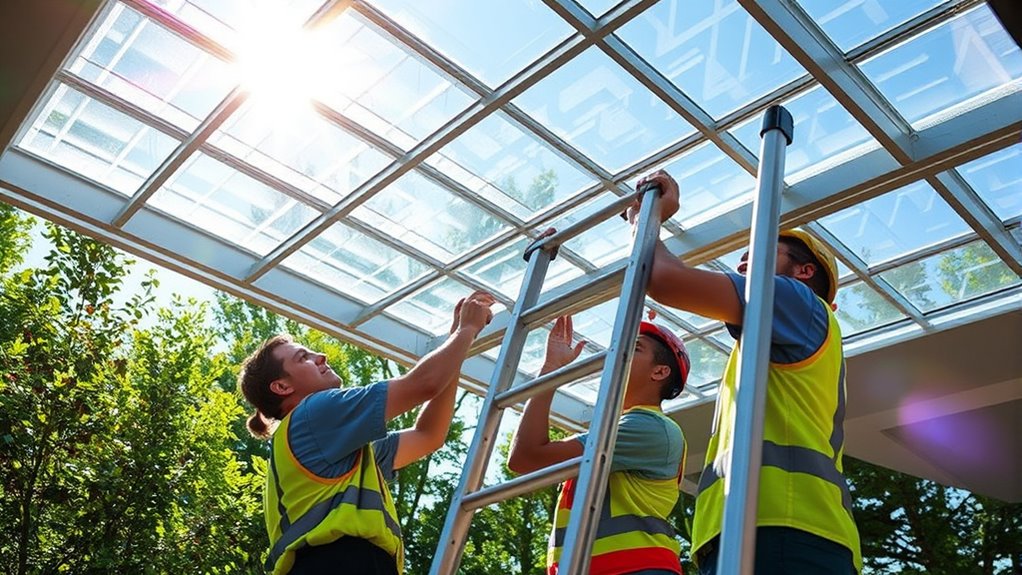
Installing polycarbonate roof panels offers a blend of durability and light transmission that few materials can match. To achieve ideal results, you’ll need to meticulously plan your design and use the right tools. It’s not just about aesthetics; proper installation guarantees longevity and functionality. As you prepare for the process, consider the essential steps that will make your project successful. What do you need to know before you start?
Benefits of Polycarbonate Roof Panels
When considering roofing options, you’ll find that polycarbonate roof panels offer numerous advantages that can enhance both functionality and aesthetics. Their energy efficiency is significant, as they provide excellent insulation, reducing heating and cooling costs. This means you can enjoy a comfortable indoor environment while minimizing your carbon footprint. Additionally, the aesthetic appeal of polycarbonate panels is notable; available in various colors and designs, they can complement any architectural style. Their lightweight nature and durability guarantee long-lasting performance, giving you the freedom to create open, airy spaces without compromising structural integrity. Overall, polycarbonate panels are a smart choice for modern roofing.
Tools and Materials Required
Before you begin installing polycarbonate roof panels, it’s essential to gather the right tools and materials to guarantee a smooth and efficient process. Start with a power drill, screws, a tape measure, and a level. Don’t forget safety goggles and gloves to ensure safety precautions are met. When selecting tools, prioritize quality and functionality; they’ll make installation easier. You’ll also need the polycarbonate panels themselves, along with sealing tape and flashing for waterproofing. Having everything at hand not only streamlines your workflow but also empowers you to complete the project with confidence and freedom from unexpected interruptions.
Planning Your Roof Design
With the right tools and materials gathered, you can now focus on planning your roof design. Start by evaluating the design considerations, such as the roof pitch and drainage capabilities, which greatly influence functionality. Consider how the polycarbonate panels will integrate with existing structures while enhancing roof aesthetics. Think about color, transparency, and how light will filter through the panels. Sketch your design to visualize the layout and verify it meets both practical needs and your personal style. This thoughtful approach will not only optimize performance but also create an inviting space, giving you the freedom to enjoy your outdoor areas.
Preparing the Installation Area
Before you start installing polycarbonate roof panels, verify the work area is clear of debris and obstacles. This not only enhances safety but also allows for efficient movement while working. Additionally, gather all necessary tools, including a measuring tape, screwdriver, and safety gear, to streamline the installation process.
Clear Work Space
To guarantee a smooth installation of polycarbonate roof panels, it’s essential to clear the work space thoroughly. Start by implementing effective workspace organization; take stock of all items present. Remove unnecessary materials and tools that could impede your progress. Use decluttering tips like sorting items into categories: keep, donate, or discard. Ascertain the area is free of debris, which could lead to accidents or damage during installation. If possible, create a designated zone for your panels and tools, allowing for easy access. A clean, organized workspace not only enhances efficiency but also promotes a safe environment for your project.
Gather Necessary Tools
Once the workspace is organized and cleared, gathering the necessary tools is the next step in preparing for the installation of polycarbonate roof panels. You’ll need various tool types and safety equipment to guarantee a smooth process. Here’s a quick overview:
| Tool Type | Purpose | Safety Equipment |
|---|---|---|
| Measuring Tape | Measure panel dimensions | Safety Glasses |
| Power Drill | Secure panels in place | Gloves |
| Utility Knife | Cut panels for fitting | Hard Hat |
Having these tools ready will enhance your efficiency and safety during installation. Get prepared, and you’ll be on your way to a successful project!
Cutting Polycarbonate Panels
When you’re ready to cut polycarbonate panels, ensuring you have the right tools and techniques is essential for achieving clean, precise edges. Depending on the panel thickness, you’ll need to choose appropriate cutting techniques to avoid damage.
- Use a fine-toothed saw for thicker panels.
- A utility knife works well for thinner sheets.
- Always score the surface before snapping for a clean break.
Remember to wear safety gear and work in a well-ventilated area. Taking these steps will help you achieve professional results while maintaining the freedom to customize your project as desired.
Installing the Framework
Begin by assembling a sturdy framework to support your polycarbonate roof panels. Choose from various framework types, such as aluminum or steel, ensuring you prioritize structural integrity. Measure and cut your materials accurately, as precise dimensions are vital for stability. Securely fasten the frame using appropriate connectors, ensuring each joint is tight and reliable. This foundational structure must be level and adequately spaced to handle the weight and potential wind load of the panels. Double-check for any weak points before proceeding, as a robust framework is fundamental for a long-lasting installation; it’ll provide the freedom to enjoy your new roof without worry.
Securing the Polycarbonate Panels
To confirm your polycarbonate roof panels are securely in place, it’s crucial to follow the manufacturer’s guidelines for installation. Employ effective panel alignment techniques and reliable securing methods to guarantee stability and longevity.
- Use appropriate fasteners to prevent movement.
- Check for even spacing between panels for proper alignment.
- Tighten connections without over-compressing, which can lead to cracking.
Sealing and Finishing Touches
Once your polycarbonate panels are secured, it’s vital to apply the proper sealant to guarantee a watertight fit. Check for any gaps or misalignments during the final installation checks to maintain structural integrity. Completing these steps will enhance the durability and effectiveness of your roofing system.
Proper Sealant Application
Applying the right sealant is essential for guaranteeing the longevity and effectiveness of your polycarbonate roof panels. Choosing the appropriate sealant types and mastering application techniques will prevent leaks and enhance durability.
- Use silicone or acrylic sealants for ideal flexibility.
- Verify surfaces are clean and dry before application.
- Apply sealant evenly, using a caulking gun for precision.
Final Installation Checks
Before you complete your polycarbonate roof installation, it’s crucial to perform final checks to guarantee everything is secure and watertight. Start with a thorough installation inspection, checking for any gaps or misalignments. Verify all panels are properly seated and fasteners are tightened to the manufacturer’s specifications. Make any final adjustments needed to achieve a snug fit. Inspect the sealant application, confirming it’s consistent and covers all joints effectively. Finally, verify that drainage channels are clear, allowing water to flow freely. Completing these steps will enhance durability and guarantee the roof performs well, giving you the freedom to enjoy your space worry-free.
Maintenance Tips for Longevity
Although polycarbonate roof panels are known for their durability, regular maintenance is essential to affirm their longevity. To keep your panels in prime condition, follow these maintenance tips:
- Use gentle cleaning techniques to remove debris and dirt, avoiding abrasive materials.
- Inspect for scratches or damage regularly and apply protective coatings as needed.
- Confirm proper drainage to prevent water accumulation, which can lead to deterioration.
Frequently Asked Questions
Can Polycarbonate Panels Be Installed in Winter Conditions?
Yes, you can install polycarbonate panels in winter conditions, but guarantee temperatures are manageable. Cold weather can affect the material’s flexibility and bonding, so follow manufacturer guidelines for winter installation to avoid complications.
Are Polycarbonate Roof Panels Uv-Resistant?
Yes, polycarbonate roof panels offer excellent UV protection, greatly enhancing panel durability. Their ability to resist harmful UV rays guarantees longevity and maintains structural integrity, making them a reliable choice for outdoor applications in various climates.
What Is the Lifespan of Polycarbonate Roof Panels?
Polycarbonate roof panels typically last 10 to 20 years. Their lifespan depends on durability factors like UV exposure and weather conditions. Regular maintenance, such as cleaning and inspection, can greatly enhance their longevity and performance.
Can I Paint Polycarbonate Panels?
You can paint polycarbonate panels, but proper preparation’s essential. Use polycarbonate coatings designed for paint adhesion to guarantee durability. Always test a small area first, as some paints may not adhere well or could damage the surface.
Are There Fire Safety Considerations for Polycarbonate Roofs?
Yes, there’re fire safety considerations for polycarbonate roofs. Notably, some panels can achieve a fire resistance rating of up to Class B. Always check local building codes to guarantee compliance and safety standards are met.