
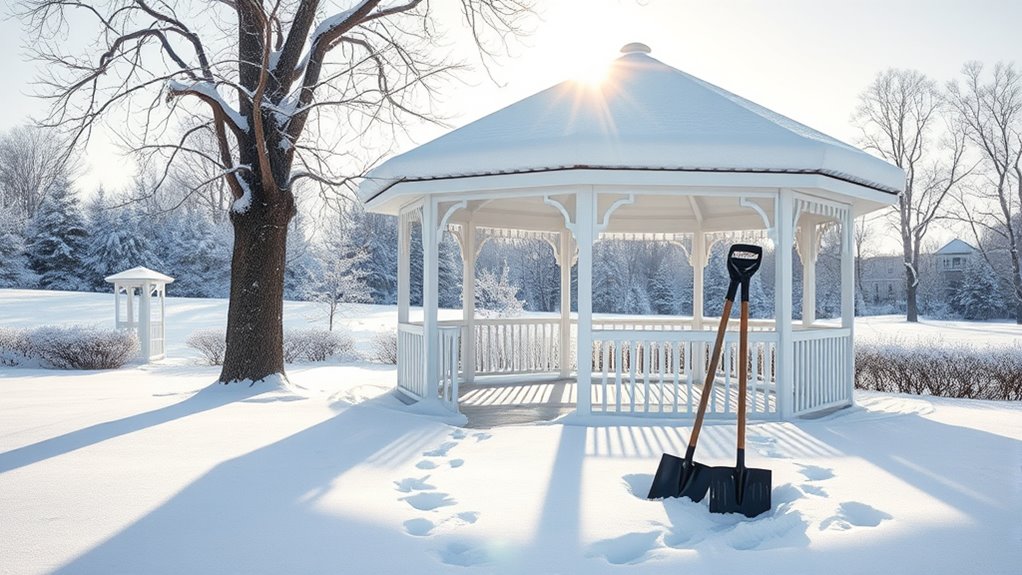
When heavy snow accumulates on your gazebo roof, it can create a dangerous situation if not addressed properly. You’ll need to assess the snow load and choose the right tools for safe removal. Understanding the necessary safety gear and techniques is essential to prevent injury. If the snow load becomes too much, knowing when to call a professional can save you from costly damage. Let’s explore the best practices for effective and safe snow removal.
Assessing the Snow Load on Your Gazebo
How can you guarantee your gazebo withstands the weight of accumulated snow? First, assess the snow load by estimating the snow weight per square foot, which can vary based on moisture content and density. A typical figure is 20 pounds per cubic foot for wet snow. Next, evaluate your gazebo’s structural integrity by examining the materials and design. Ascertain that beams, rafters, and supports are robust enough to handle the load. Regularly monitoring snow accumulation and removing it promptly can prevent structural failure. Taking these steps not only protects your investment but also guarantees your gazebo remains a safe, enjoyable space year-round.
Choosing the Right Tools for Snow Removal
When it comes to effective snow removal, selecting the right tools is essential to guarantee efficiency and safety. For your gazebo roof, consider using a roof rake, which allows you to remove snow from a distance, reducing the risk of injury. Look for a rake with a long handle and a wide blade to cover more area quickly. Additionally, snow shovels can be useful for clearing any remaining snow on the ground or lower roof sections. Choose lightweight materials for ease of handling. Using the right tools not only streamlines the process but also assures you maintain your gazebo’s integrity and safety.
Safety Gear and Precautions to Consider
Proper safety gear is vital for anyone tackling snow removal tasks. Start with personal protective equipment, including a hard hat to guard against falling ice and snow. Wear insulated gloves to prevent frostbite and guarantee a firm grip on tools. Non-slip boots are essential for ice safety, providing traction on slippery surfaces. Additionally, consider goggles to protect your eyes from blowing snow and debris. Always check weather conditions before beginning, and never work alone; having a buddy can enhance safety. Remember, taking these precautions helps you enjoy the freedom of maintaining your gazebo while minimizing risks.
Techniques for Removing Snow Safely
With the right safety gear in place, you can focus on effective snow removal techniques. Use proper snow shoveling techniques, like pushing snow instead of lifting it, to minimize strain. For gazebo roofs, employ roof raking methods to clear snow without risking damage. Stand safely on the ground while raking, ensuring you angle the rake away from your structure. Work from the edges towards the center, allowing gravity to help. Always be aware of potential ice or snow slides, and avoid standing directly beneath the roof’s edge during removal. Prioritize your safety while maintaining your gazebo’s integrity.
When to Call a Professional for Help
How do you know when it’s time to call in a professional for snow removal? If you encounter any of the following situations, don’t hesitate to seek emergency services for a professional assessment:
- Excessive Snow Load: If the snow accumulation exceeds safe limits, it can compromise the gazebo’s structural integrity.
- Icicles or Ice Dams: These can be hazardous and indicate potential roof damage, requiring expert intervention.
- Physical Limitations: If you’re unable to safely access the roof or handle the equipment, a professional’s expertise is essential.
Acting promptly can save you from costly damage or injury.
Preventative Measures to Reduce Snow Accumulation
To effectively reduce snow accumulation, you should conduct regular roof inspections to identify potential weak points. Installing snow guards can help manage the snow load on your roof, preventing dangerous slides and excessive buildup. Taking these preventative measures can greatly enhance safety during winter months.
Regular Roof Inspections
Although many homeowners overlook the importance of regular roof inspections, these assessments are essential in preventing excessive snow accumulation and potential structural damage. You should aim for a consistent inspection frequency based on your roof material. Here are three key points to take into account:
- Schedule inspections biannually, ideally before and after winter.
- Assess roof material integrity, looking for cracks or wear that may trap snow.
- Document any findings to track changes over time, ensuring proactive maintenance.
Install Snow Guards
After guaranteeing your roof is in good condition through regular inspections, consider installing snow guards as a preventative measure against snow accumulation. Snow guard types, like fixed or adjustable, help manage the weight of snow and ice on your gazebo roof. By strategically placing these guards, you can reduce the risk of heavy snow sliding off suddenly, which may damage your structure or pose safety hazards. The installation benefits are significant: they promote even snow distribution and minimize the need for manual removal. Investing in snow guards guarantees your gazebo remains safe and functional during winter’s harsh conditions.
Regular Maintenance Tips for Off-Season Care
While snow removal equipment may sit idle during the off-season, regular maintenance is essential to confirm its readiness for the next winter. Start with proper off-season cleaning to remove dirt and debris. Then, apply protective treatments to prevent rust and corrosion. Follow these steps:
- Inspect: Check for any damage or wear on equipment parts.
- Clean: Thoroughly clean all components and verify they’re free from moisture.
- Store: Store equipment in a dry, sheltered area to protect it from the elements.
Maintaining your equipment now confirms it’s in excellent condition when winter arrives again.
Frequently Asked Questions
What Types of Gazebos Are Most Prone to Snow Damage?
Wooden gazebos, with their structural fragility, are often more prone to snow damage than robust metal gazebos. You’ll want to assess the design and material carefully to guarantee longevity against heavy snow loads.
How Often Should I Inspect My Gazebo After Heavy Snowfall?
You should inspect your gazebo after every heavy snowfall to guarantee structural integrity. Regular snow inspection frequency is essential; adhere to gazebo maintenance tips to prevent damage and prolong its lifespan. Safety and longevity are key.
Can I Use a Heater to Melt Snow on My Gazebo Roof?
“Where there’s a will, there’s a way.” You can use heating methods to melt snow on your gazebo roof, but make certain you follow safety precautions to prevent damage or accidents. Always prioritize safety when using heat sources.
Will Removing Snow Too Quickly Damage My Gazebo Structure?
Yes, removing snow too quickly can damage your gazebo structure. Consider the gazebo material; metal roofs handle snow removal techniques better than wood. Always use gentle methods to prevent stress on the structure and potential damage.
What Are the Signs of Structural Damage From Snow Accumulation?
If your gazebo’s roof starts sagging under snow weight, it’s a red flag. Cracks or splitting in the wood, unusual creaking sounds, or visible bulges indicate potential structural damage you shouldn’t ignore.