
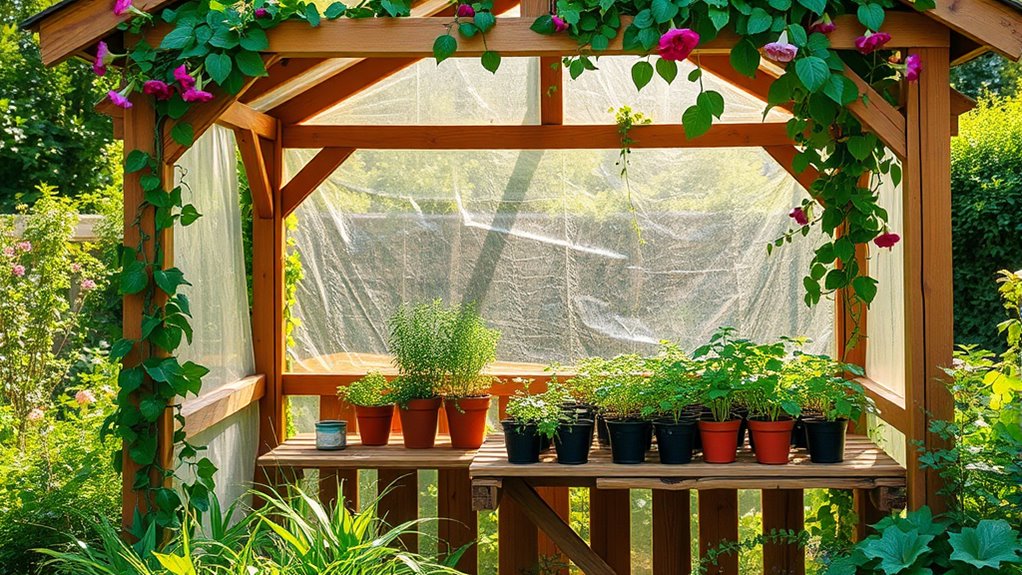
Transforming your gazebo into a small greenhouse can enhance your gardening experience greatly. You’ll need to assess the structure’s stability and choose appropriate materials that provide insulation and light. Additionally, incorporating ventilation systems is essential for maintaining ideal conditions. As you plan your layout and select plants, consider the specific needs of each species. The next steps will guide you through the critical aspects of this project.
Assessing Your Gazebo’s Structure
When transforming your gazebo into a greenhouse, the first step is to carefully assess its structure. Evaluate the gazebo stability by inspecting the foundation, joints, and overall framework. Look for any signs of wear, rot, or damage that could compromise its structural integrity. Verify that the roof can support additional weight from greenhouse materials, like glass or polycarbonate. Reinforce any weak points, and consider adding bracing if needed. This assessment not only guarantees safety but also maximizes your greenhouse’s potential for plant growth. A sturdy base is essential for creating a thriving, sustainable environment within your new greenhouse space.
Choosing the Right Materials
When transforming your gazebo into a greenhouse, selecting the right materials is essential for functionality and durability. You’ll want to choose a sturdy frame that can withstand various weather conditions, with options like aluminum or treated wood being popular choices. For glazing, consider materials such as polycarbonate or tempered glass, as they provide excellent insulation and light transmission for ideal plant growth.
Ideal Frame Materials
Choosing the right frame materials is essential for transforming a gazebo into a functional greenhouse. A wood frame offers natural insulation, aesthetic appeal, and ease of construction, making it a popular choice. However, it requires regular maintenance to prevent rot and pests. On the other hand, a metal frame provides durability and strength, resisting warping and decay. It’s ideal for larger structures but can conduct heat, requiring careful placement. Ultimately, your choice between wood and metal frames should align with your climate, budget, and desired maintenance level, ensuring your greenhouse thrives in a liberated outdoor environment.
Suitable Glazing Options
Selecting the right glazing materials is essential for maximizing light transmission and controlling temperature within your greenhouse. Polycarbonate panels are a popular choice due to their durability and excellent insulation properties, allowing for effective heat retention while diffusing sunlight. They’re lightweight and shatter-resistant, making them safer than traditional glass. If you prefer glass alternatives, consider acrylic or fiberglass; both offer good clarity and UV protection. However, they may not insulate as well as polycarbonate. Evaluate your climate and plant needs to decide which option best suits your vision, ensuring your greenhouse thrives in its environment.
Insulating for Temperature Control
When you’re insulating your gazebo-turned-greenhouse, selecting the right materials is essential for maintaining ideal temperatures. Consider using thermal insulation panels or bubble wrap to reduce heat loss while ensuring proper ventilation to prevent overheating. Balancing these factors will help create a stable environment for your plants year-round.
Material Selection for Insulation
To effectively insulate your gazebo-turned-greenhouse for ideal temperature control, it’s crucial to understand the properties of various materials available. Consider insulation types like rigid foam boards, which offer high R-values and excellent energy efficiency. Fiberglass batts are another option, providing decent insulation at a lower cost. Reflective insulation can help redirect heat during the day while retaining warmth at night. Additionally, using double-layered polycarbonate panels can enhance thermal performance considerably. Choosing the right material will not only help regulate temperatures but also contribute to the overall energy efficiency of your greenhouse, ensuring a more sustainable growing environment.
Ventilation Considerations for Temperature
While insulating your gazebo greenhouse is essential for maintaining ideal temperatures, effective ventilation is equally important to prevent overheating and guarantee a stable growing environment. To achieve optimal heat regulation, consider incorporating vents or windows that promote natural airflow. Install roof vents to allow hot air to escape while cooler air enters through lower openings. You might also use fans to enhance circulation on particularly warm days. By balancing insulation with proper ventilation, you create a thriving ecosystem for your plants, ensuring they receive the right amount of warmth and fresh air without risking damage from excessive heat.
Adding Glazing for Light and Protection
Although a gazebo is primarily designed for outdoor leisure, transforming it into a greenhouse requires careful consideration of glazing options that maximize light and provide necessary protection for your plants. You’ll want to explore various glazing techniques, such as polycarbonate panels or tempered glass, to guarantee durability and efficiency. These materials enhance light diffusion, allowing sunlight to penetrate evenly without scorching your plants. Remember to prioritize UV protection, as it shields delicate foliage from harmful rays. Additionally, consider transparent or semi-transparent options that maintain visibility while optimizing growing conditions, ultimately creating a thriving environment for your botanical endeavors.
Installing Ventilation Systems
Since maintaining an ideal temperature and humidity level is crucial for plant health, installing an effective ventilation system in your transformed gazebo greenhouse is necessary. Begin by maximizing natural airflow; open windows and install vents to encourage cross-ventilation. This method allows fresh air to circulate, reducing humidity and preventing heat buildup. For more control, consider mechanical ventilation systems like exhaust fans or intake fans, which can be programmed to activate based on temperature and humidity sensors. By combining both natural and mechanical ventilation, you’ll guarantee a balanced environment, promoting healthy growth and maximizing the potential of your greenhouse.
Designing the Interior Layout
With ventilation in place, the next step is to focus on the interior layout of your gazebo greenhouse. Start by establishing interior zoning; designate areas for different plant types based on light and moisture needs. For ideal plant arrangement, consider using shelves and vertical gardening solutions to maximize space. Position taller plants at the back or sides, allowing shorter ones to receive adequate light. Verify pathways are clear for easy access to all zones. Remember to group plants with similar care requirements together, simplifying maintenance and fostering a harmonious growing environment. This thoughtful layout enhances growth and makes your greenhouse more functional.
Selecting Suitable Plants
Selecting suitable plants for your gazebo greenhouse is essential to creating a thriving environment. Focus on herb varieties and flower selection that harmonize with your space’s sunlight and humidity levels. Consider these options:
- Basil and parsley for culinary uses and aromatic benefits.
- Tomatoes and peppers for vibrant color and easy growth.
- Petunias and marigolds for cheerful blooms and pest deterrence.
- Succulents for low-maintenance greenery and unique shapes.
Maintenance Tips for Your Greenhouse Gazebo
To guarantee your greenhouse gazebo remains a productive space, regular maintenance is essential for optimizing plant health and growth. Start with regular cleaning; wipe down surfaces and glass to secure maximum sunlight penetration. Inspect plants weekly for any signs of pests, implementing pest management strategies like introducing beneficial insects or using organic pesticides. Maintain humidity levels by checking water drainage and guaranteeing proper ventilation. Regularly prune dead or diseased foliage to encourage air circulation and prevent disease spread. By staying proactive with these maintenance tasks, you’ll create a thriving environment that allows your plants to flourish freely.
Frequently Asked Questions
Can I Use My Gazebo Year-Round for Growing Plants?
You can use your gazebo year-round for growing plants, but you’ll face seasonal challenges. Selecting hardy plants suited for varying temperatures is essential to guarantee they thrive despite potential weather fluctuations and limited sunlight.
How Much Sunlight Should My Greenhouse Gazebo Receive Daily?
Your greenhouse gazebo should receive at least six to eight hours of sunlight exposure daily for ideal plant growth. This guarantees sufficient light energy for photosynthesis, promoting healthy development and vibrant blooms throughout the seasons.
What Are the Best Plants for a Small Greenhouse Gazebo?
For your small greenhouse gazebo, consider herb varieties like basil and parsley, and vegetable options such as lettuce or radishes. They thrive in confined spaces, ensuring you maximize your gardening potential while enjoying your green retreat.
How Do I Prevent Pests in My Greenhouse Gazebo?
To prevent pests in your greenhouse gazebo, use natural pest control methods like introducing beneficial insects and applying organic repellents. These methods help maintain a balanced ecosystem, promoting healthy plants without harmful chemicals.
Can I Heat My Gazebo Greenhouse During Winter?
Yes, you can heat your gazebo greenhouse during winter. Consider insulation options like bubble wrap or thermal curtains, and explore heating systems such as electric heaters or propane units to maintain a comfortable environment for your plants.