
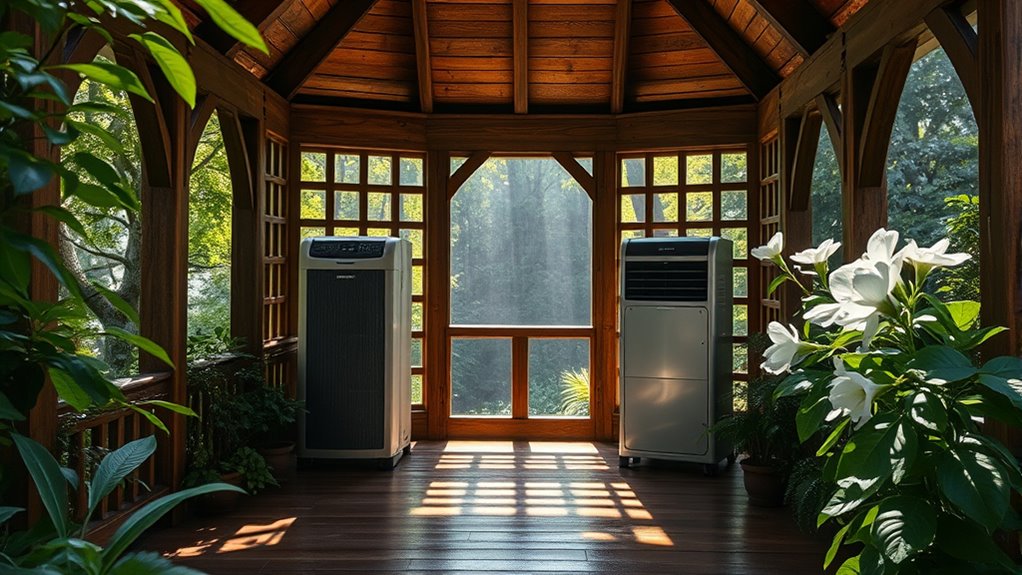
Did you know that maintaining ideal humidity levels can reduce the risk of mold and mildew by up to 50%? If you’re looking to enjoy your gazebo year-round, using a dehumidifier could be a game changer. By understanding how to choose and set up the right unit, you can transform your outdoor space into a healthier environment. Let’s explore the benefits and practical tips to make the most of your gazebo.
Benefits of Using a Dehumidifier in Your Gazebo
When it comes to enjoying your gazebo, humidity can be a pesky foe. Using a dehumidifier helps combat this issue by reducing moisture levels, which is essential for mold prevention. With less humidity, you’ll notice improved air quality, making your time in the gazebo more pleasant and inviting. You can breathe easier, knowing that the risk of mold and mildew is minimized. Plus, maintaining a comfortable environment means you’ll spend more time relaxing and enjoying your outdoor space. So, if you value freedom and a healthy space, investing in a dehumidifier is a smart choice for your gazebo.
Choosing the Right Dehumidifier for Your Space
When selecting a dehumidifier for your gazebo, it’s important to take into account the size of your space and the current humidity levels. You’ll also want to check the energy efficiency rating to keep your electricity costs manageable. Making these assessments will help you find the perfect unit that meets your needs.
Size of the Space
Choosing the right dehumidifier for your gazebo largely depends on the size of the space, as an improperly sized unit can lead to inefficiencies and inadequate moisture control. Start by measuring your gazebo’s space dimensions, considering the height and width. Different gazebo materials, like wood or vinyl, may also affect humidity levels. For smaller areas, a compact dehumidifier may suffice, while larger spaces might require a more powerful unit. Always check the manufacturer’s recommendations based on your gazebo’s specific dimensions and materials to guarantee peak performance. With the right dehumidifier, you’ll enjoy a comfortable, moisture-free environment.
Humidity Level Assessment
Understanding the humidity levels in your gazebo is key to selecting the right dehumidifier. Start by investing in humidity sensors to accurately measure moisture levels. These sensors can help you gauge when humidity rises, allowing for effective moisture control. If your gazebo tends to trap humidity, you’ll want a dehumidifier that can handle the specific conditions of your space. Look for units with adjustable settings, so you can customize the dehumidification process based on real-time readings. This way, you’ll guarantee a comfortable atmosphere while enjoying the freedom of your outdoor retreat without the worry of excess moisture.
Energy Efficiency Rating
Although many dehumidifiers are available, selecting one with a high energy efficiency rating is essential for maintaining your gazebo without breaking the bank. Look for models that boast low energy consumption while effectively removing moisture. Efficiency ratings help you gauge how much electricity the unit uses relative to its performance. Opting for a dehumidifier with a higher rating not only saves you money on utility bills but also contributes to a greener environment. You’ll enjoy your gazebo in comfort, knowing you’ve made a smart choice that balances functionality and energy savings. Freedom from excess humidity starts with the right dehumidifier!
Setting Up Your Dehumidifier Properly
When setting up your dehumidifier, it’s essential to take into account the ideal placement location to guarantee maximum efficiency. You’ll also want to prioritize electrical safety measures to avoid any hazards while keeping an eye on optimal humidity levels for comfort. Getting these details right will help you create a pleasant environment in your gazebo.
Ideal Placement Location
To effectively reduce humidity levels in your gazebo, it is crucial to take into account the ideal placement of your dehumidifier. Consider these placement strategies and ventilation considerations to optimize performance:
| Placement Strategy | Advantages | Ventilation Considerations |
|---|---|---|
| Center of the gazebo | Even air circulation | Guarantee open windows |
| Near damp areas | Targets moisture directly | Use fans for airflow |
| Elevated position | Avoids ground moisture | Check for airflow blockages |
| Away from walls | Reduces condensation risk | Maintain open spaces |
Electrical Safety Measures
Ensuring electrical safety is essential for a smooth and worry-free experience when setting up your dehumidifier in the gazebo. Always use weatherproof outlets to protect against moisture and prevent electrical hazards. Check that your dehumidifier is plugged into a circuit with proper circuit protection to avoid overloads. If possible, use a GFCI outlet for extra security. Avoid running extension cords outside, as they can become damaged by the elements. Finally, regularly inspect your dehumidifier’s power cord for signs of wear or damage. By taking these precautions, you’ll enjoy a safe and comfortable environment in your gazebo.
Optimal Humidity Levels
Although it might seem straightforward, setting the perfect humidity level on your dehumidifier is crucial for maintaining a comfortable environment in your gazebo. Aim for a humidity control setting between 40-60%. This range helps with moisture reduction, preventing mold and mildew while keeping the space inviting. If you notice condensation or a musty smell, adjust the settings accordingly. Regularly monitor the humidity levels to guarantee ideal comfort. Remember, finding the right balance not only enhances your gazebo experience but also protects your furniture and decor. Enjoy your time in the gazebo without the worries of excess moisture!
Maintaining Optimal Humidity Levels
Maintaining ideal humidity levels in your gazebo is essential for creating a comfortable and enjoyable space. To achieve this, you can explore various humidity control methods like using dehumidifiers, adjusting ventilation, and incorporating absorbent materials. Remember that seasonal considerations play a significant role; during humid summer months, you might need more intense humidity control, while winter may require less. Regularly monitoring humidity levels helps you stay ahead of any moisture-related issues. By taking proactive steps, you can guarantee your gazebo remains a relaxing retreat, free from excess moisture and the discomfort it brings. Enjoy your space to the fullest!
Tips for Using a Dehumidifier Effectively
When you’re looking to use a dehumidifier effectively in your gazebo, it’s crucial to take into account its placement and settings. Consider these tips for ideal moisture control:
- Positioning: Place your dehumidifier in the center for even airflow.
- Settings: Use the auto mode feature to maintain consistent humidity levels without constant adjustments.
- Maintenance: Regularly clean the filters to guarantee your dehumidifier features work efficiently, maximizing performance.
Embrace these strategies, and you’ll create a comfortable, dry environment in your gazebo, allowing you to enjoy your space freely without the concern of excess moisture.
Additional Ways to Manage Humidity in Your Gazebo
While using a dehumidifier is a great start to managing humidity in your gazebo, there are several other effective strategies you can implement to keep moisture levels in check. First, explore various ventilation options, like windows or vents, to promote air circulation. This simple step can greatly reduce humidity buildup. Next, consider installing moisture barriers on the ground or walls to prevent dampness from seeping in. Finally, keep your gazebo clutter-free, as excess items can trap moisture. By combining these methods with your dehumidifier, you’ll create a comfortable, dry space perfect for relaxation and enjoyment.
Frequently Asked Questions
Can a Dehumidifier Prevent Mold Growth in My Gazebo?
Yes, a dehumidifier can prevent mold growth by managing humidity levels effectively. By ensuring consistent humidity control, you’re creating an environment that discourages mold, allowing you to enjoy your gazebo without worries about mold prevention.
How Often Should I Run My Dehumidifier?
You should run your dehumidifier daily, adjusting the settings based on humidity levels. Aim for a comfortable range, typically between 30-50%. This keeps your space fresh and helps prevent mold growth effectively.
Will Using a Dehumidifier Increase My Electricity Bill?
Yes, using a dehumidifier can increase your electricity bill, but the benefits of improved air quality and energy efficiency often outweigh the costs. Choosing an energy-efficient model can help minimize the impact on your bill.
Can I Use a Dehumidifier Outdoors in My Gazebo?
You can’t use a standard dehumidifier outdoors, but an outdoor dehumidifier can work in your gazebo, especially with good ventilation. Just verify it’s weather-resistant to maximize your comfort and freedom from excess humidity.
What Size Dehumidifier Do I Need for My Gazebo?
To determine the right dehumidifier capacity for your gazebo, consider its size and ventilation. Generally, a unit with 30-50 pints capacity suits most small to medium gazebos, ensuring you maintain a comfortable, moisture-free environment.