
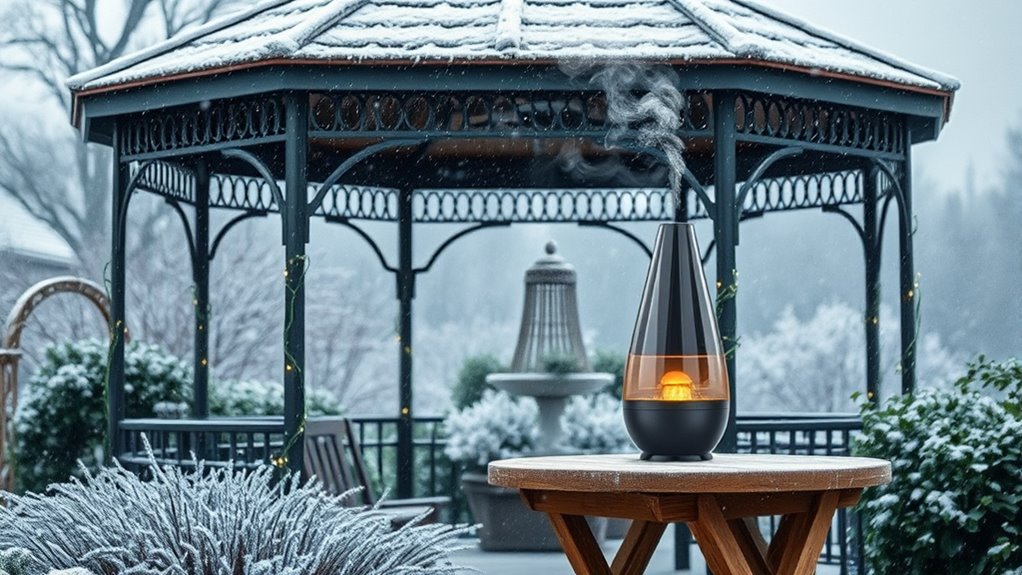
When winter sets in, maintaining proper humidity in your garden gazebo becomes essential for plant health. Dry air can lead to stress and hinder growth, making humidifiers a valuable tool for this environment. These devices work by releasing moisture, ensuring that your plants can effectively transpire and absorb nutrients. However, selecting the right humidifier and managing humidity levels requires careful consideration. Let’s explore how to create the ideal atmosphere for your winter oasis.
Understanding the Importance of Humidity in Winter Gardens
When you think about maintaining a healthy winter garden, understanding humidity’s role is vital. Winter plants thrive in specific humidity levels, which help prevent stress and disease. Low humidity can lead to issues like leaf drop and stunted growth, while ideal levels promote healthy transpiration and nutrient uptake. It’s important to monitor your garden’s microclimate, as fluctuations can drastically affect your plants’ well-being. By ensuring adequate humidity, you create a favorable environment that supports vibrant growth, even in the colder months. Pay attention to your winter plants’ needs, and you’ll enjoy a flourishing garden throughout the winter season.
How Humidifiers Work: A Simple Explanation
Maintaining ideal humidity levels in your winter garden requires the right tools, and humidifiers play a significant role in this process. These devices work by adding moisture to the air, countering the dry winter atmosphere. Depending on the humidifier types, you can choose from options like evaporative, ultrasonic, or steam vaporizers, each with unique mechanisms. The humidity effects on plants are profound, promoting growth and preventing diseases.
| Humidifier Type | Mechanism |
|---|---|
| Evaporative | Uses a fan to blow air through wet wick filters. |
| Ultrasonic | Produces a fine mist using high-frequency vibrations. |
| Steam Vaporizer | Heats water to create steam, cooling it before release. |
| Impeller | Utilizes a rotating disk to fling water into a mist. |
| Central | Installed in HVAC systems for whole-home humidity control. |
Types of Humidifiers Suitable for Outdoor Use
While choosing a humidifier for your outdoor winter garden gazebo, it’s important to take into account the specific conditions and requirements of your space. Look for portable models designed for outdoor durability, as they’re capable of withstanding varying weather conditions. Evaporative humidifiers are a great option, using a fan to circulate moisture effectively. Ultrasonic models, which produce a fine mist, are also suitable, provided they’re rated for outdoor use. Make certain to check the humidifier’s coverage area to guarantee it meets your gazebo’s size needs. Ultimately, selecting the right type will help create a comfortable environment for your plants and guests.
Benefits of Using Humidifiers in Your Gazebo
Humidifiers in your gazebo can greatly enhance both the plant health and comfort of your space. By maintaining ideal humidity levels, you create an ideal environment for your plants to thrive, reducing stress and promoting growth. Proper humidity helps prevent issues like leaf drop and browning, ensuring vibrant foliage year-round. Additionally, it can improve air quality, making your gazebo a more pleasant place to relax. With increased moisture, you’ll also find that your skin feels less dry, enhancing your overall comfort. Embracing this technology allows you to enjoy a flourishing indoor garden while maximizing your outdoor experience.
Choosing the Right Humidifier for Your Space
When selecting a humidifier for your gazebo, it’s essential to contemplate factors like size, type, and capacity to guarantee peak performance. First, assess your space considerations—how large is your gazebo? This will determine the humidifier’s capacity. Next, consider humidifier features, including mist output and energy efficiency. Evaporative models are great for larger spaces, while ultrasonic units work well in smaller areas. You’ll also want to think about maintenance requirements, as some models may need regular cleaning. Ultimately, choosing the right humidifier guarantees ideal humidity levels, promoting a healthy environment for your winter garden oasis.
Placement Tips for Maximum Humidity Distribution
To achieve ideal humidity levels in your winter garden gazebo, consider the placement of your humidifier carefully. Position it in a central location to maximize airflow and guarantee even distribution, while keeping it elevated to enhance moisture dispersion. Additionally, take into account the surrounding plants, as larger foliage can absorb humidity and affect the overall effectiveness of your humidifier.
Optimal Humidifier Locations
Finding the right places for your humidifiers can greatly enhance humidity distribution throughout your winter garden gazebo. For ideal placement, position your humidifiers near the center of the space to create balanced humidity zones. Avoid corners and enclosed areas where moisture can stagnate. Consider placing them on elevated surfaces to maximize airflow, ensuring even humidity dispersal. If your gazebo has multiple sections, use several humidifiers to maintain consistent moisture levels across all zones. Additionally, keep them away from direct sunlight to improve efficiency, preventing rapid evaporation and ensuring your plants thrive even in the coldest winter months.
Elevation and Airflow
Although elevated placement of humidifiers might seem like a minor detail, it greatly impacts airflow and, consequently, humidity distribution in your winter garden gazebo. Effective airflow management is essential for ensuring that moisture reaches all corners of the space. By making elevation adjustments, you facilitate better dispersion of humid air. Position your humidifier on shelves or stands, allowing warm moisture to rise and circulate efficiently. Avoid placing it too close to walls or obstructions, as this can hinder airflow. Ideal placement promotes an even humidity level, creating a more favorable environment for your plants throughout the winter months.
Surrounding Plant Considerations
Effective humidity management in your winter garden gazebo isn’t just about the humidifier’s placement; the surrounding plants also play a significant role. Choosing the right plant companions can enhance humidity retention and create a thriving microclimate. Consider these tips for ideal placement:
- Cluster plants with similar humidity needs together to promote moisture sharing.
- Place taller plants near the humidifier to help distribute humidity through airflow.
- Adjust seasonal plant selections based on humidity levels, opting for moisture-loving varieties in winter.
Maintaining Optimal Humidity Levels
Maintaining ideal humidity levels in your winter garden gazebo is essential for the health of your plants and the overall ambiance of the space. To achieve this, implement humidity monitoring tools like hygrometers; they’ll help you track moisture levels accurately. Aim for a range between 40-60% relative humidity for most plants. When levels drop, use your humidifier for humidity control, ensuring it operates efficiently without over-saturating the air. Regularly check the water reservoir and clean the unit to prevent mold. By staying proactive in monitoring and managing humidity, you can create a thriving environment that fosters plant growth and well-being.
Additional Winter Care Tips for Your Gazebo
Once you’ve established a suitable humidity level in your winter garden gazebo, there are several other care tips to keep in mind for the colder months.
- Gazebo Insulation: Make certain your gazebo is well-insulated to retain warmth and reduce heating costs.
- Winter Lighting: Incorporate energy-efficient, warm lighting to create a cozy atmosphere while minimizing energy expenditure.
- Regular Maintenance: Check for any drafts or leaks; sealing them will enhance both comfort and efficiency.
These strategies not only protect your plants but also enhance your enjoyment of the space during winter’s chill.
Common Mistakes to Avoid With Humidifiers
Humidifiers can be a game-changer for your winter garden gazebo, but there are common pitfalls to navigate. One mistake is ignoring humidity levels; you should aim for 40-60% for ideal plant health. Over-humidifying can lead to mold growth, while under-humidifying stresses plants. Another common misuse is neglecting regular maintenance—dirty filters and tanks can spread bacteria. Don’t position your humidifier too close to plants, as concentrated moisture can harm them. Finally, be cautious with temperature fluctuations; sudden changes can shock your plants. Avoiding these missteps will guarantee your gazebo thrives throughout the winter months.
Enhancing Your Gazebo Experience Beyond Humidification
To truly enhance your gazebo experience, consider creating a cozy ambiance that complements the humidification process. Incorporating warm lighting and comfortable seating can foster a welcoming atmosphere, making your space more inviting. Additionally, understanding specific plant care needs during winter can help maintain your garden’s health and vibrancy, ensuring a lush environment year-round.
Cozy Ambiance Creation
While a humidifier can greatly enhance the comfort level of your winter garden gazebo, creating a truly cozy ambiance involves more than just regulating moisture levels. To elevate your experience, consider these three elements:
- Cozy Seating: Choose plush cushions and throws to invite relaxation and warmth.
- Warm Lighting: Utilize soft, ambient lights, like string LEDs or lanterns, to create a welcoming glow.
- Personal Touches: Incorporate decorative items that reflect your style, such as seasonal accents or artwork.
Together, these elements transform your gazebo into a sanctuary, allowing you to fully enjoy the serene winter atmosphere.
Plant Care Tips
Although maintaining humidity is crucial for plant health, proper care extends beyond just moisture control. Consider plant selection, choosing species that thrive in your environment. Seasonal pruning is essential; it promotes healthy growth and airflow, preventing mold.
| Care Aspect | Importance | Frequency |
|---|---|---|
| Humidity Levels | Prevents leaf drop | Daily |
| Light Exposure | Supports photosynthesis | Adjust seasonally |
| Soil Quality | Guarantees nutrient absorption | Every few weeks |
Frequently Asked Questions
Can Humidifiers Damage My Gazebo or Its Furnishings?
Humidifiers won’t ruin your gazebo if you maintain them well. Just like a gardener tending to blooms, you must guarantee your humidifier’s mist doesn’t over-saturate materials, preserving the beauty and integrity of your furnishings.
How Often Should I Refill the Humidifier’s Water Tank?
You should refill the humidifier’s water tank regularly, preferably every 24 hours, to maintain ideal humidity levels. Regular water tank maintenance prevents bacteria growth and guarantees your space remains comfortable and healthy throughout the winter.
Are There Energy-Efficient Humidifiers for Outdoor Use?
Yes, there are energy-efficient humidifiers for outdoor use. Look for solar powered options that utilize compact designs, minimizing energy consumption while effectively maintaining humidity levels. These features promote sustainability, enhancing your outdoor experience without excessive energy use.
Can I Use Essential Oils in My Humidifier?
You shouldn’t use essential oils in your humidifier, as they can damage the device and affect its performance. For proper humidifier maintenance, stick to water and guarantee essential oil safety in other applications.
What Are the Signs of Too Much Humidity in My Gazebo?
You’ll notice signs like mold growth, condensation, and drooping leaves when humidity measurement exceeds ideal levels. Maintaining proper humidity is essential for garden plant health, so keep an eye on those environmental conditions.