
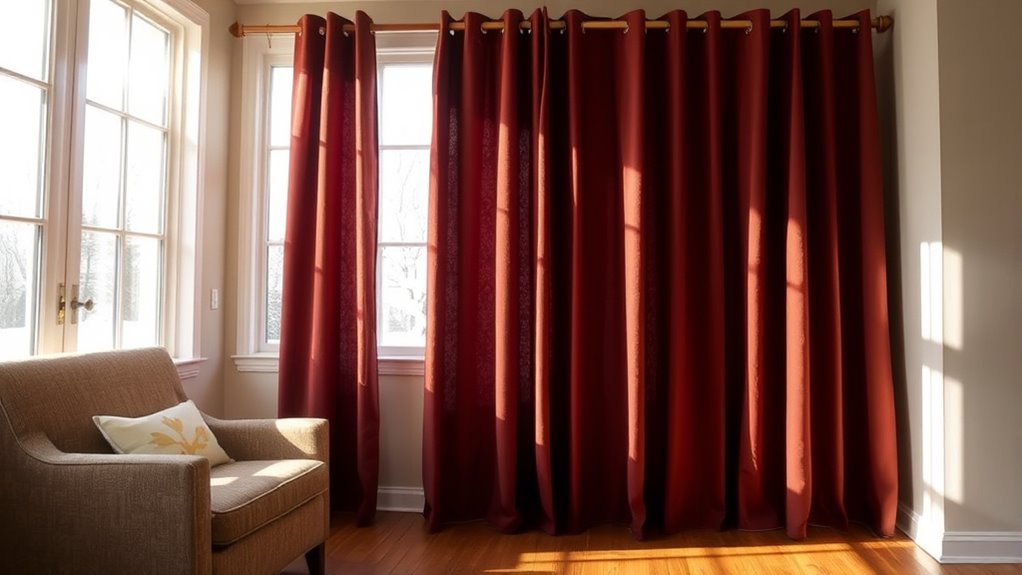
Imagine a family that lowers their heating bills by nearly 30% simply by installing thermal drapes. These window treatments not only enhance comfort but also greatly reduce energy costs throughout the year. By creating a barrier against outside temperatures, thermal drapes can transform your home’s energy efficiency. But how do you choose the right ones, and what specific benefits can you expect? Understanding these factors can lead to smarter energy-saving decisions.
What Are Thermal Drapes?
When you’re looking to enhance your home’s energy efficiency, understanding what thermal drapes are can be a game changer. These specialized window treatments are designed to insulate your living spaces, providing a barrier against heat loss in winter and heat gain in summer. There are various thermal drape types, including blackout curtains, insulated panels, and even sheer options with thermal lining. The materials used in thermal drapes—ranging from heavy polyester blends to natural fabrics—play a significant role in their effectiveness. By choosing the right combination of drape types and materials, you can create a comfortable environment while reducing your energy bills. Embracing thermal drapes isn’t just about aesthetics; it’s a smart, eco-friendly choice that gives you more control over your home’s climate.
How Thermal Drapes Improve Energy Efficiency
While many homeowners focus on insulation and energy-efficient appliances, they often overlook the impact of window treatments like thermal drapes. These versatile thermal drape styles not only enhance your decor but also greatly improve energy efficiency. By creating a barrier against outside temperatures, thermal drapes help retain heat during winter and block solar heat in summer. This can lead to noticeable savings on your energy bills. To maximize their effectiveness, consider layering them with blinds or utilizing reflective materials. Incorporating these energy efficiency tips into your home can empower you to take control of your energy consumption, ultimately achieving a more comfortable living environment. Embrace the freedom that comes from making informed choices about your energy use.
Benefits of Using Thermal Drapes Year-Round
Using thermal drapes year-round offers significant advantages beyond just energy savings. Their insulation properties help maintain a consistent indoor temperature, reducing your heating and cooling costs. Plus, their seasonal versatility means you can enjoy comfort and efficiency, regardless of the weather outside.
Insulation Properties Explained
Although many people think of thermal drapes as merely a seasonal accessory, their insulation properties make them beneficial year-round. These drapes effectively reduce thermal conductivity, preventing unwanted heat loss in winter and keeping your space cool in summer. Made from advanced insulation materials, they create a barrier that minimizes energy transfer, allowing you to maintain a comfortable environment with less reliance on heating and cooling systems. By choosing thermal drapes, you’re not just enhancing your decor; you’re also investing in your freedom from fluctuating temperatures and high energy bills. The year-round advantages of these drapes can empower you to enjoy your home more fully, knowing you’re making a sustainable choice for both comfort and the environment.
Energy Cost Reduction
Thermal drapes not only enhance your home’s aesthetic but also substantially cut energy costs. By utilizing energy saving technologies, these drapes create a barrier against heat loss in winter and heat gain in summer. You’ll notice a difference in your energy bills, as thermal drapes act as a cost effective solution to maintain comfortable indoor temperatures without relying heavily on your heating or cooling systems. Additionally, they minimize the need for excessive energy consumption, allowing you to embrace a more sustainable lifestyle. The savings can add up over time, freeing up your resources for other pursuits. Investing in thermal drapes isn’t just a choice; it’s a step toward financial freedom and greater energy efficiency.
Seasonal Versatility Benefits
While many homeowners may overlook the impact of drapery, the seasonal versatility of thermal drapes makes them a smart investment year-round. Their seasonal adaptability allows you to enjoy comfortable living spaces, regardless of the weather outside. In winter, thermal drapes provide excellent insulation, keeping warmth in and reducing heating costs. Conversely, in the summer, they block out excessive heat, aiding in temperature regulation and keeping your home cool without cranking up the air conditioning.
Choosing the Right Material for Thermal Drapes
When selecting the right material for your thermal drapes, it’s essential to reflect on not just aesthetics but also how effectively they can insulate your space. Various fabric types, such as polyester or velvet, offer different levels of thermal efficiency, so you’ll want to choose wisely. Fabrics with a tight weave can provide superior insulation, keeping your home warm in winter and cool in summer. Additionally, consider color choices that complement your decor while enhancing energy savings. Darker shades absorb heat, while lighter colors reflect it, offering you control over your environment. By prioritizing both functionality and style, you empower yourself to create a comfortable living space that showcases your freedom to choose the perfect thermal drapes.
Measuring Your Windows for Perfect Fit
Getting the measurements right for your windows is essential to guaranteeing your thermal drapes fit perfectly and perform effectively. Accurate measurements are key to maximizing energy savings. Start by measuring the width and height of your window frame, noting any obstructions.
Here’s a quick reference table to help:
| Measurement Type | Measurement Location | Ideal Outcome |
|---|---|---|
| Width | Top, middle, bottom | Use the widest measurement |
| Height | Left, center, right | Use the tallest measurement |
| Depth | Inside frame | Confirm drapes hang correctly |
| Overlap | Side of window frame | Aim for at least 4 inches |
Installation Tips for Maximum Insulation
To maximize the insulation benefits of your thermal drapes, you’ll need to focus on a few key installation techniques. Proper measurement guarantees a snug fit, while mounting height can influence how effectively they block drafts. Additionally, sealing any gaps will enhance their energy-saving potential, making your home more comfortable year-round.
Proper Measurement Techniques
While accurate measurements may seem like a small detail, they play an essential role in maximizing the insulating capabilities of thermal drapes. Start by gathering the right measuring tools, such as a tape measure and a level. Different window types require specific approaches; for instance, double-hung windows need measurements from the top of the frame to the bottom, while casement windows may require width and height from the edges. Be certain to measure both width and height multiple times to guarantee precision. Don’t forget to account for any obstructions like handles or locks. Proper measurements guarantee your drapes fit snugly, creating a barrier against drafts and heat loss, ultimately empowering you to save energy and enhance your comfort.
Mounting Height Considerations
After ensuring your thermal drapes are measured accurately, the next step is determining the ideal mounting height. The mounting height of your window treatment greatly impacts its insulation effectiveness. For best results, install the drapes as close to the ceiling as possible. This technique not only enhances the aesthetic appeal but also minimizes heat loss. If you mount them too low, you risk leaving gaps that allow cold air to seep in. Aim to extend the drapes several inches beyond the window frame on either side, which maximizes coverage and creates a seal against drafts. By carefully considering the mounting height, you’re investing in both comfort and energy savings, giving you the freedom to enjoy your space without excessive heating costs.
Sealing Gaps Effectively
Sealing gaps around your thermal drapes is essential for maximizing insulation and improving energy efficiency. When you guarantee proper gap sealing, you create a barrier against drafts, bolstering your window insulation. Here are some effective tips to enhance your installation:
- Use weatherstripping to fill small gaps between drapes and windows.
- Install a curtain rod that allows for a snug fit against the wall.
- Consider using a thermal curtain liner for additional insulation.
- Regularly inspect and maintain your drapes to address any wear or gaps.
Maintenance and Care for Thermal Drapes
To guarantee your thermal drapes perform at their best and last for years, regular maintenance and care are essential. Start by using appropriate cleaning techniques; check the care label for washing instructions. Most thermal drapes can be machine-washed on a gentle cycle, but some may require hand washing or dry cleaning. Avoid harsh detergents, as they can damage the fabric. For routine care, simply vacuum them to remove dust and allergens. When it comes to fabric care, be mindful of exposure to direct sunlight, which can fade colors and weaken materials. Regularly inspect for any signs of wear, ensuring you address repairs promptly. By investing a little time in maintenance, you’ll enjoy the energy-saving benefits of your drapes for years to come.
Additional Energy-Saving Tips for Homeowners
Maintaining your thermal drapes is just one way to enhance your home’s energy efficiency. To further reduce energy consumption and costs, consider these additional tips:
- Invest in energy efficient appliances to lower your utility bills.
- Install smart thermostats that adapt to your lifestyle, ensuring peak heating and cooling.
- Seal drafts around windows and doors to prevent heat loss.
- Use LED bulbs instead of incandescent lights, as they consume less energy.
Frequently Asked Questions
Can Thermal Drapes Reduce Outside Noise as Well?
Yes, thermal drapes can markedly aid in noise reduction and provide sound insulation. By blocking external sounds, they help create a peaceful environment, allowing you to enjoy your space without unwanted disturbances from the outside world.
Are Thermal Drapes Suitable for All Window Types?
Thermal drapes are suitable for various window types, including standard and specialty shapes. With diverse material options available, you can choose drapes that not only fit your windows but also enhance your space’s comfort and aesthetic appeal.
How Much Can I Save on Energy Bills With Thermal Drapes?
You could save considerably on energy bills with thermal drapes. With enhanced thermal efficiency, you’ll notice reduced heating and cooling costs, leading to energy savings that provide you more freedom to spend elsewhere in your budget.
Do Thermal Drapes Come in Different Styles and Colors?
Yes, thermal drapes come in various style options and color choices, allowing you to personalize your space. This flexibility means you can enhance your decor while optimizing energy efficiency, giving you both comfort and freedom in design.
Can I Use Thermal Drapes With Existing Curtains or Blinds?
Absolutely, you can layer thermal drapes with your existing curtains or blinds! Isn’t it a great way to enhance window aesthetics while optimizing energy efficiency? This layering technique offers both style and comfort, giving you freedom in design.