
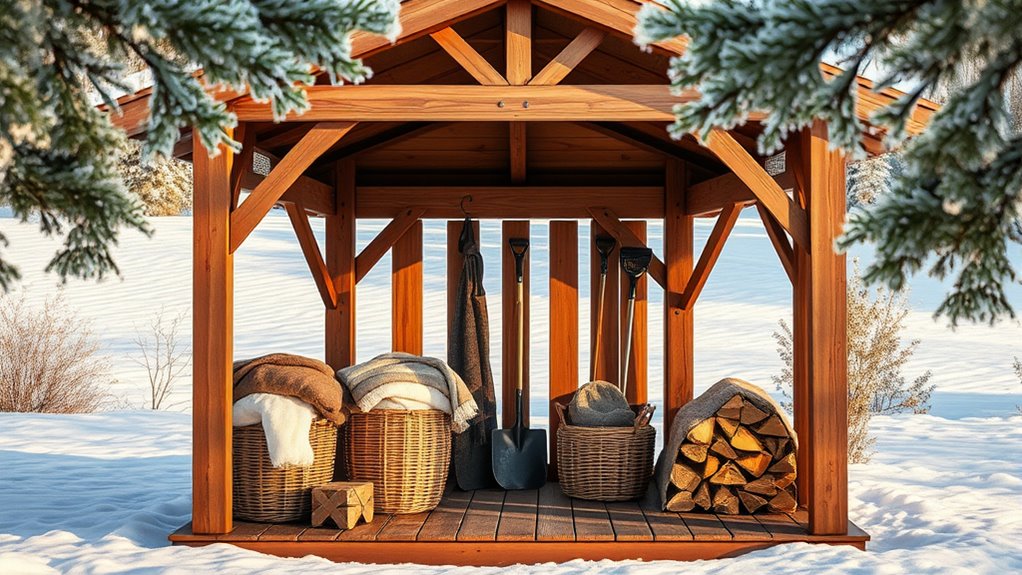
Did you know that properly storing your gazebo can extend its lifespan by up to 30%? As winter approaches, it’s essential to think about how to protect your outdoor investments from harsh conditions. From disassembling the structure to selecting the best storage location, each step is important. Let’s explore practical strategies to guarantee your gazebo remains in excellent shape for those sunny days ahead.




Assessing Your Gazebo for Winter Storage
Before you plunge into winterizing your gazebo, it’s essential to evaluate its condition to guarantee a smooth storage process. Start by inspecting for any signs of damage like rust or rot, as these can worsen under harsh winter weather. Check the joints and fasteners for stability; loose components can lead to bigger issues. Don’t forget about the roof – it should be free of debris and leaks. Proper gazebo maintenance throughout the year makes this assessment easier. By ensuring everything’s in top shape now, you’ll enjoy a hassle-free experience when it’s time to set up again in spring.
Disassembling Your Gazebo Safely
Before you start taking your gazebo apart, make certain you’ve got all the necessary tools on hand, like wrenches and screwdrivers. It’s also a good idea to follow the assembly instructions closely to guarantee you don’t miss any essential steps. This way, you can disassemble your gazebo safely and efficiently, setting it up for easy storage.
Gather Necessary Tools
To safely disassemble your gazebo, you’ll need a few essential tools that make the process easier and more efficient. Start by gathering tools like a wrench, screwdrivers, and a hammer. Don’t forget gloves for protection! Before diving in, verify your tools are in good condition through proper tool maintenance. This’ll save you time and prevent accidents. Having everything organized will give you the freedom to work without interruptions, allowing for a smoother disassembly. Once you’ve gathered your tools, you’ll be ready to tackle the task and prepare your gazebo for winter storage without any hassle.
Follow Assembly Instructions
While it might seem tempting to jump straight into disassembling your gazebo, following the original assembly instructions is essential for a safe and efficient process. This guarantees accuracy and helps prevent damage. Referencing the guidelines can also make reassembly come spring a breeze.
| Step | Action to Take | Tools Needed |
|---|---|---|
| Step 1 | Remove the roof panels | Screwdriver |
| Step 2 | Detach side panels | Wrench |
| Step 3 | Dismantle the frame | Hammer |
Cleaning and Preparing for Storage
As winter approaches, getting your gazebo ready for storage is essential to guarantee it remains in great condition. Start with effective cleaning techniques; use mild soap and water to scrub surfaces, removing dirt and debris. Don’t forget to check for mold or mildew, as these can damage your gazebo over time. After cleaning, dry all components thoroughly to prevent rust or rot. Consider using breathable covers as storage solutions to protect your gazebo from dust and moisture. Finally, disassemble any removable parts, ensuring they’re stored in a safe, organized manner, so you can enjoy your gazebo again come spring!
Choosing the Right Storage Location
After getting your gazebo cleaned and prepared for storage, the next step is to choose the right location for it. Think about your options: indoor storage provides protection from the elements, while outdoor storage may be more convenient if space is limited. If you opt for outdoor storage, pick a spot that’s dry and well-drained to prevent moisture damage. If you have the space indoors, consider a garage or shed where it’s safe from harsh winter conditions. Ultimately, your choice should balance accessibility and protection, ensuring your gazebo stays in great shape for the next warm season.
Using Protective Covers Effectively
To protect your gazebo during the winter months, using protective covers effectively is vital. Choose covers made from durable, high-quality protective materials that offer excellent weather resistance. When putting on the cover, verify it fits snugly to prevent moisture and debris from accumulating. Secure it with straps or ties to withstand strong winds. Regularly check your gazebo beneath the cover for any signs of wear or damage. Remember, a well-covered gazebo not only prolongs its life but also allows you to enjoy it freely when spring arrives. Investing a little time now pays off later in keeping your outdoor retreat pristine.
Organizing Other Outdoor Accessories
While you’re prepping your gazebo for winter, it’s also a great time to organize other outdoor accessories. Keeping things tidy not only enhances your space but also makes spring set-up a breeze. Here are three essential tips:
As winter approaches, take the opportunity to tidy up your outdoor space for a smoother spring setup.
- Store Outdoor Furniture: Clean and cover your furniture or stack it in a sheltered area to protect it from the elements.
- Sort Seasonal Decor: Group your holiday decorations and seasonal items in labeled bins for quick access.
- Organize Tools: Keep gardening tools and maintenance supplies in a designated storage box to avoid clutter.
Embrace winter’s calm and enjoy a well-organized outdoor space!
Tips for Easy Reassembly in Spring
As spring approaches, getting your gazebo back up can be a breeze with a little preparation. Labeling parts clearly, using storage containers, and documenting assembly steps will save you time and frustration when you’re ready to enjoy your outdoor space again. Let’s explore these tips to make reassembly as smooth as possible.
Label Parts Clearly
One of the best ways to guarantee a smooth reassembly of your gazebo come spring is by clearly labeling each part during disassembly. Using effective labeling materials can save you time and frustration. Here are three practical tips:
- Use waterproof labels that can withstand winter conditions, ensuring they remain legible.
- Color-code parts based on their sections for quick identification when it’s time to reassemble.
- Create a parts list that corresponds with your labels, making it easier to track what’s stored and where.
Use Storage Containers
After taking the time to label parts clearly, the next step is to use storage containers effectively. Choose appropriate storage container types—like plastic bins or canvas bags—that protect your gazebo components from moisture and pests. Stackable containers maximize your space, while clear options let you see what’s inside. For outdoor storage options, consider weather-resistant sheds or benches that double as storage. Organizing your gazebo parts in these containers not only simplifies spring reassembly but also guarantees everything’s in great condition. With the right containers, you’ll be ready to enjoy your gazebo without hassle when warmer days arrive.
Document Assembly Steps
Documenting your assembly steps can make reassembling your gazebo in the spring a breeze. By prioritizing document preservation, you’ll save time and frustration. Follow these simple assembly techniques:
- Take Photos: Capture each step of assembly, ensuring you have visual references for tricky parts.
- Label Parts: Use stickers or tags to mark components, helping you identify what goes where.
- Create a Guide: Write down your assembly process, detailing any specific tips or tricks that made it easier.
With these strategies, you’ll enjoy a seamless reassembly, letting you focus on the joys of your outdoor space.
Frequently Asked Questions
Can I Leave My Gazebo up During Winter?
You can leave your gazebo up during winter, but it needs proper maintenance. To prevent damage, prepare it for the season by ensuring it’s secure and free from snow accumulation. Freedom’s best enjoyed in a well-kept space!
What Materials Are Best for Gazebo Covers?
Vinyl covers are durable and waterproof, while breathable fabrics prevent moisture buildup. Choose a combination of both to protect your gazebo effectively, ensuring it remains in great shape for those carefree summer gatherings you love.
How Can I Prevent Mold in Storage?
To prevent mold in storage, use ventilation strategies like fans or dehumidifiers, and prioritize moisture control by sealing items in breathable bags. This’ll keep your space fresh and free, ensuring everything stays in great condition.
Is It Necessary to Remove the Roof?
No, you don’t need to remove the roof, but proper roof maintenance is essential. Make certain it’s secure and clear of debris during winter preparation to prevent damage, allowing you to enjoy your space worry-free.
What Pests Should I Watch for During Storage?
You’ll want to keep an eye out for sneaky critters like mice and insects during storage. Regular storage inspections and pest prevention measures can help guarantee your space remains a peaceful retreat, free from unwanted guests.
