
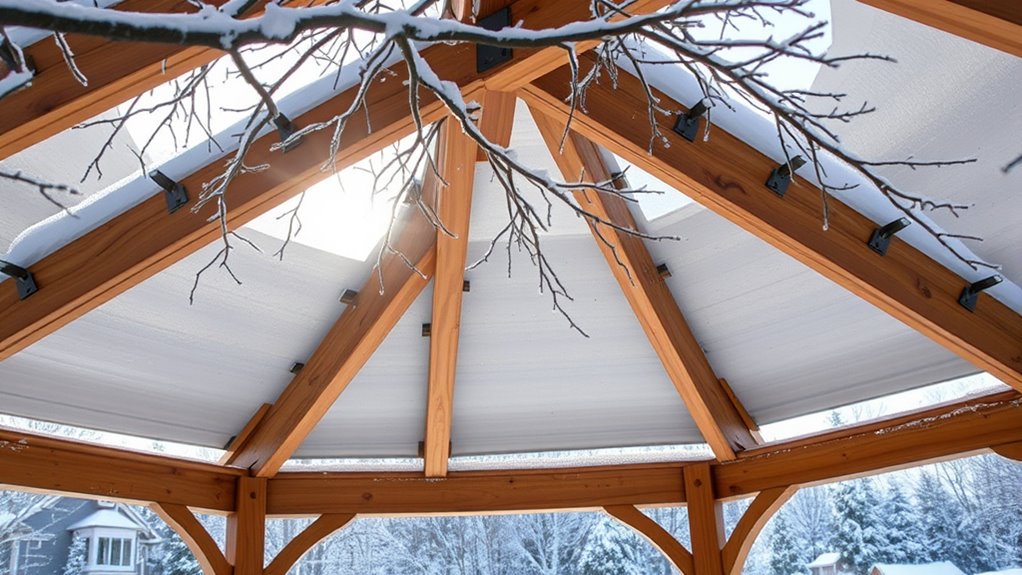
When winter approaches, your gazebo’s roof can become vulnerable to heavy snow and ice loads. It’s vital to assess its current condition for any signs of wear or structural weaknesses. By selecting the right reinforcement materials and techniques, you can greatly enhance its stability. However, knowing where to begin and which solutions are most effective can be challenging. Understanding these factors is essential for ensuring your gazebo withstands the harsh winter conditions ahead.


Assessing Your Gazebo’s Current Condition
Before you begin the DIY project of winterizing your gazebo roof, it’s essential to assess its current condition to identify any potential issues. Use a gazebo inspection checklist to evaluate structural integrity, focusing on the roof, support beams, and joints. Check for signs of wear, such as cracks, rust, or rot, which can be exacerbated by winter weather effects. Make sure that drainage systems are clear to prevent snow accumulation, which can lead to leaks or collapses. Document any findings meticulously; addressing these concerns now will provide a solid foundation for your winterization efforts and enhance your gazebo’s longevity.
Selecting the Right Materials for Reinforcement
While evaluating your gazebo’s needs, selecting the right materials for reinforcement is essential to confirm its durability through the winter months. You’ll want to take into account various material types, such as treated wood, metal brackets, or composite materials, each offering unique benefits. Pay attention to weight considerations; heavier materials can provide stability but may require additional support. Conversely, lighter options can ease installation yet might compromise strength. Ascertain the materials you choose align with your gazebo’s design and local weather conditions. Ultimately, the right combination will enhance your structure’s resilience, allowing you to enjoy your outdoor space year-round.
Strengthening the Roof Structure
To guarantee your gazebo can withstand harsh winter conditions, strengthening the roof structure is essential. You need to focus on enhancing its structural integrity with appropriate techniques. Consider the following:
Strengthening your gazebo’s roof is crucial for enduring winter’s harsh conditions; focus on structural integrity and durability.
- Choose durable roof materials that resist snow and ice accumulation.
- Inspect existing connections for wear and tighten any loose fasteners.
- Reinforce joints with brackets or additional screws to prevent shifting.
- Consider weight distribution by ensuring even load across the roof to reduce stress on specific areas.
Adding Support Beams and Braces
As you enhance your gazebo’s roof structure, adding support beams and braces plays a critical role in bolstering its resilience against winter weather. Start by determining ideal beam placement; beams should be positioned at strategic intervals to evenly distribute weight and stress. Consider using diagonal braces to reinforce corners, as they effectively counteract lateral forces. Various brace types, such as X-braces or strut braces, offer different advantages based on your gazebo’s design. By implementing these enhancements, you’ll not only strengthen the roof but also guarantee longevity and stability, allowing you to enjoy your outdoor space without worry during harsh winters.
Installing a Snow Load Distribution System
When heavy snowfall occurs, it’s crucial to have a snow load distribution system in place to protect your gazebo’s roof from potential collapse. Start by considering snow load calculations based on your region’s average snowfall. Next, review roof design considerations to enhance stability. Implement the following:
- Use Trusses: Distribute weight evenly across the roof.
- Install Purlins: Reinforce support between rafters for added strength.
- Add Snow Guards: Prevent snow accumulation in critical areas.
- Inspect Regularly: Verify all components are secure and functioning.
Securing the Gazebo Against Wind Damage
While a snow load distribution system is crucial for managing heavy snowfall, securing your gazebo against wind damage is equally important for its structural integrity. Implementing effective wind barrier solutions can considerably reduce aerodynamic forces acting on your gazebo. Consider using privacy screens or windbreaks to shield it from gusts. Additionally, employing robust gazebo anchoring techniques, such as concrete footings or ground anchors, guarantees stability during severe weather. Regularly inspect and tighten all connections to maintain structural integrity. By proactively addressing wind resistance, you can protect your investment and enjoy your gazebo for years to come, regardless of the winter’s fury.
Regular Maintenance Tips for Winter
Five key maintenance tasks can help guarantee your gazebo remains in top condition throughout winter. By following a consistent maintenance schedule, you’ll mitigate potential damage from harsh winter weather.
- Inspect the roof for any signs of leaks or damage.
- Clear snow and ice regularly to prevent excessive weight accumulation.
- Check for loose fittings and tighten any bolts or screws.
- Apply a protective sealant to wooden structures to resist moisture penetration.
Preparing for Spring: Post-Winter Check-Up
As winter ends, it’s essential to conduct a thorough post-winter check-up on your gazebo. Start by inspecting for any structural damage, as well as clearing away debris and snow that may have accumulated. Finally, confirm that all fasteners and joints are secure to maintain the integrity of your structure.
Inspect for Structural Damage
Before the warmer months arrive, it’s essential to thoroughly inspect your gazebo for any structural damage that may have occurred over the winter. A thorough roof inspection guarantees your gazebo’s structural integrity remains intact. Focus on the following areas:
- Roof Panels: Check for cracks or missing sections.
- Support Beams: Look for warping or rot.
- Fasteners: Confirm screws and bolts are tight and rust-free.
- Foundation: Examine for settling or shifting that could compromise stability.
Taking these steps will help you identify potential issues early, allowing for timely repairs and making sure your gazebo remains a safe haven during spring and summer.
Clear Debris and Snow
Clearing debris and snow from your gazebo roof is essential for maintaining its structural integrity and functionality. Snow accumulation can increase weight stress, risking damage. Begin your snow removal with a roof rake, ensuring you’re standing safely on the ground. Avoid climbing onto the roof without proper safety precautions, like harnesses and helmets. Remove all debris, including leaves and branches, as they can trap moisture, leading to rot. Regularly inspect the roof after heavy snowfall or storms, ensuring it remains clear. This proactive maintenance will extend the life of your gazebo and safeguard your investment for future enjoyment.
Check Fasteners and Joints
A thorough inspection of fasteners and joints is essential for guaranteeing your gazebo’s stability and durability after winter. Pay attention to fastener types and joint integrity to prevent future issues. Follow this checklist:
- Examine Bolts and Screws: Confirm they’re tight and free from rust.
- Inspect Nails: Check for any that have loosened or broken.
- Evaluate Joints: Look for signs of wear or misalignment.
- Replace Damaged Fasteners: Use appropriate fastener types for your gazebo’s material.
Frequently Asked Questions
How Do I Know if My Gazebo Needs Reinforcement?
If your gazebo’s sagging under snow’s weight or creaking in the wind, it likely needs reinforcement. Regular gazebo maintenance and thorough winter preparation can prevent costly damage, ensuring your outdoor haven stays sturdy and inviting.
What Tools Are Essential for Strengthening My Gazebo Roof?
You’ll need a sturdy ladder, drill, screws, and roofing materials for reinforcement. Maintenance tips include regularly inspecting joints and seals to guarantee stability and prevent leaks, enhancing your gazebo’s durability against winter elements.
Can I Use Recycled Materials for Roof Reinforcement?
Absolutely, you can use recycled materials for roof reinforcement. They symbolize sustainability, offering both eco-friendliness and potential roof stability. Just ascertain they’re structurally sound and suitable for weather resistance to maintain your gazebo’s integrity.
How Do I Remove Snow From My Gazebo Safely?
To safely remove snow from your gazebo, use a roof rake, maintaining safety precautions like wearing a harness and avoiding standing directly beneath the snow. Regularly check for buildup to prevent structural damage.
What Are Signs of Structural Damage After Winter?
After winter weather, check for sagging, cracks, or water damage. These indicate compromised structural integrity. If you notice uneven surfaces or loose connections, it’s essential to assess your gazebo’s stability and address any issues promptly.