
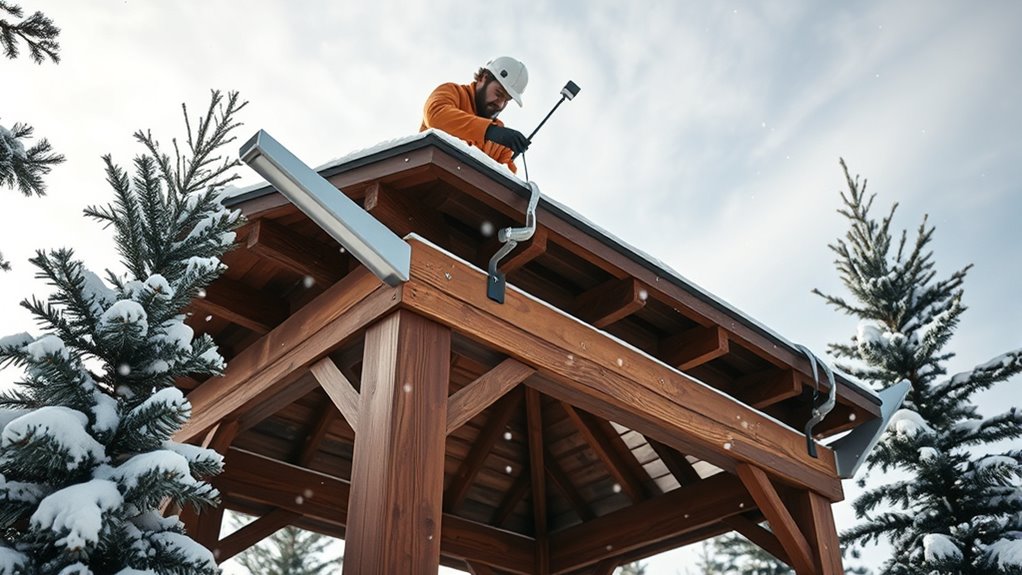
While a gazebo provides an inviting outdoor space, it can pose risks during heavy snowfall without proper precautions. Installing snow guards is a critical step to prevent dangerous snow accumulation from damaging your structure or causing avalanches. Understanding the specifics of your gazebo’s roof and selecting suitable materials for installation will guarantee peak performance. As you consider these factors, it’s essential to explore the various types of snow guards available and how they can be tailored to your needs.



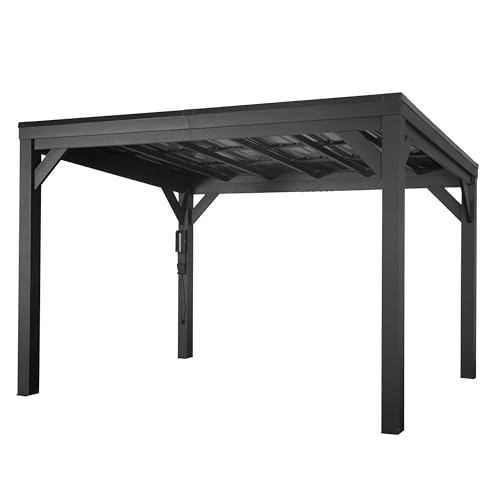
Understanding the Importance of Snow Guards
Although many homeowners may overlook them, snow guards play an essential role in preventing snow and ice from sliding off a gazebo’s roof in large, uncontrolled masses. Without these significant devices, accumulated snow load can lead to dangerous ice accumulation, posing risks to people nearby and potentially damaging property. Snow guards work by holding snow in place, allowing it to melt gradually and safely. This controlled melting process minimizes the risk of sudden avalanches of snow and ice, which can be hazardous. As a result, understanding the importance of snow guards is imperative for maintaining safety and protecting your gazebo investment.
Types of Snow Guards Available
When choosing snow guards for your gazebo, it’s essential to understand the various types available, as each design serves a specific purpose and application. There are several snow guard types, including low-profile, raised, and mesh styles, each tailored for different roof slopes and conditions. Material options range from durable metals like aluminum and stainless steel to robust plastics designed for longevity. Selecting the right combination guarantees ideal snow retention while preventing damage to your gazebo. Consider factors like aesthetic preferences and environmental resistance when making your choice, as these will enhance both functionality and the overall appearance of your structure.
Assessing Your Gazebo’s Roof Structure
Properly evaluating your gazebo’s roof structure is vital for effective snow guard installation. Start by examining the roof angle; a steeper slope may require a different snow guard configuration than a flatter one. Verify the roof’s structural integrity is intact—check for any signs of damage, rot, or wear. This is essential, as compromised structures can’t support additional loads from snow accumulation. Assess the materials used in construction, as they influence the choice and placement of snow guards. Remember, a well-supported roof not only enhances safety but also maintains the gazebo’s aesthetic appeal and functionality throughout the winter months.
Measuring for Snow Guards
Accurately measuring for snow guards is essential to confirm their effectiveness and proper installation. Start by conducting a snow load calculation based on your area’s climate. This will help you determine the necessary number of snow guards. Additionally, consider roof pitch; steeper roofs may require more guards to manage snow retention effectively.
| Measurement Type | Notes |
|---|---|
| Snow Load Calculation | Calculate based on local data |
| Roof Pitch Considerations | Measure angle for ideal placement |
| Guard Spacing | Adjust based on load and pitch |
These factors confirm your gazebo remains safe and functional during winter.
Selecting the Right Snow Guards for Your Gazebo
Once you’ve measured for snow guards and assessed your gazebo’s specific needs, selecting the right type becomes essential for peak performance. Consider snow guard materials like metal, plastic, or composite options, each offering varying durability and aesthetic appeal. Your choice should align with your gazebo design considerations, such as roof pitch and style. For instance, a steeper pitch might necessitate stronger guards to prevent snow accumulation effectively. Evaluate the environmental conditions in your area, ensuring the selected materials can withstand local weather. By making informed decisions, you’ll enhance both the safety and longevity of your gazebo in snowy conditions.
Tools and Materials Needed for Installation
Before you begin the installation of snow guards on your gazebo, it’s vital to gather the right tools and materials. You’ll need a thorough checklist that includes essential tools, required materials, and appropriate safety gear. Ensuring you have everything prepared will streamline the installation process and enhance your safety.
Essential Tools Overview
While installing snow guards on a gazebo might seem straightforward, having the right tools and materials is vital for a successful project. You’ll need various tool types to guarantee proper installation techniques. A power drill is critical for securing the guards, while a measuring tape assures accurate placement. A level helps maintain alignment, and a hammer is useful for any adjustments. Don’t forget safety gear like gloves and goggles. Consider using a caulking gun for weatherproofing, assuring longevity. By gathering these vital tools, you’re setting yourself up for a smooth installation process that enhances your gazebo’s functionality and durability.
Required Materials Checklist
Having gathered the necessary tools, it’s time to focus on the materials required for installing snow guards on your gazebo. You’ll need durable snow guard materials, such as metal or heavy-duty plastic, which can withstand harsh winter conditions. Additionally, make certain you have appropriate gazebo roof materials, including screws and mounting brackets, to securely attach the snow guards. Depending on your gazebo’s roofing type, you may also require sealant or underlayment to prevent leaks. It’s essential to choose high-quality items to guarantee the longevity and effectiveness of your snow guard installation, protecting your gazebo from potential snow load-related damage.
Safety Gear Importance
When installing snow guards on your gazebo, prioritizing safety gear is vital to confirm your well-being during the process. Always wear a hard hat to protect your head from falling debris, and use safety goggles to shield your eyes from dust and particles. Non-slip work gloves are essential for a secure grip on tools and materials. Additionally, consider wearing a harness if you’re working at heights. Steel-toed boots will protect your feet from heavy items. By equipping yourself with the right protective equipment, you guarantee both safety and efficiency, allowing you to focus on the installation without unnecessary worry.
Step-by-Step Installation Process
When installing snow guards on your gazebo, start by selecting the appropriate guards based on your roof’s material and slope. You’ll need specific installation tools to guarantee a secure fit, which we’ll outline in detail. Finally, remember that proper maintenance after installation will extend the life of your snow guards and enhance their effectiveness.
Choosing the Right Guards
Choosing the right snow guards for your gazebo is essential to guarantee effective snow management and prevent potential damage. You’ll need to assess both snow guard materials and snow guard styles to promote peak performance. Here’s a quick reference table to help you decide:
| Snow Guard Style | Material |
|---|---|
| Traditional | Metal |
| Modern | Plastic |
| Adjustable | Aluminum |
| Decorative | Copper |
| Low-Profile | PVC |
Evaluate these options based on your gazebo’s design and location. The right choice will enhance functionality and maintain your gazebo’s aesthetic appeal.
Installation Tools Needed
Having selected the appropriate snow guards for your gazebo, the next step involves gathering the necessary tools for installation. You’ll need a power drill, screws, a measuring tape, and a level. It’s also advisable to have safety goggles and a ladder on hand. For effective installation techniques, consider using a caulking gun for sealants to guarantee watertight integrity. Tool recommendations include a magnetic screw holder to simplify the process and a socket set for tightening. By preparing these tools, you’ll assure a smooth installation that will stand up to the elements and protect your gazebo from snow accumulation.
Maintenance Tips After Installation
To guarantee your snow guards continue to function effectively after installation, regular maintenance is essential. Schedule seasonal inspections to assess the integrity of your guards, checking for any damage or loose components. Clean the snow guards to remove debris and ice, ensuring they remain unobstructed. Inspect the mounting system for rust or corrosion, as these factors can compromise snow guard longevity. If you notice any issues, address them promptly to prevent further damage. Finally, consider applying a protective coating to enhance durability against the elements. By adhering to these maintenance tips, you’ll maximize the effectiveness of your snow guards.
Tips for Proper Maintenance of Snow Guards
While snow guards serve an essential function in protecting your gazebo from potential snow loads and ice dams, regular maintenance is crucial to guarantee their long-term effectiveness. To enhance snow guard longevity, inspect them after each winter season, checking for corrosion or damage from winter weather effects. Clean any debris that may accumulate, as this can impede their performance. Ascertain that all fasteners remain tight and secure, as loose components can compromise functionality. If you notice any wear, replace the guards promptly to prevent further damage. By following these tips, you’ll maintain the integrity of your gazebo through harsh winters.
Benefits of Installing Snow Guards
Snow guards are invaluable for protecting your gazebo from the damaging effects of snow and ice accumulation. By installing these devices, you’ll greatly reduce the risk of heavy snow sliding off suddenly, which can lead to injuries or property damage. They provide effective roof protection, ensuring that snow remains evenly distributed and melts gradually, preventing potential structural stress. Additionally, snow guards help maintain the aesthetic appeal of your gazebo by minimizing the risk of unsightly icicles and snow drifts. Ultimately, investing in snow guards enhances safety, prolongs your gazebo’s lifespan, and allows you to enjoy your outdoor space worry-free during winter months.
Preparing Your Gazebo for Winter Weather
As winter approaches, ensuring your gazebo is prepared for harsh weather conditions is essential for its longevity and functionality. Implementing proper winter weather preparation and gazebo insulation techniques will protect your structure.
| Task | Details |
|---|---|
| Clean Gutters | Remove debris to prevent ice. |
| Insulate Walls | Use foam boards or blankets. |
| Secure Roof Panels | Check for loose or damaged areas. |
Frequently Asked Questions
Can Snow Guards Damage My Gazebo’s Roof?
Snow guards typically won’t damage your gazebo’s roof if installed correctly. Using appropriate snow guard materials guarantees roof protection, preventing potential snow accumulation issues while maintaining structural integrity. Just make certain they’re compatible with your roof type.
How Long Do Snow Guards Typically Last?
Snow guards can last over 20 years, depending on materials and maintenance. Regularly inspect for damage, clean debris, and guarantee proper installation to maximize longevity, allowing you to enjoy your gazebo without worry.
Are Snow Guards Suitable for All Gazebo Designs?
Snow guards aren’t universally suitable; design compatibility depends on your gazebo’s roof materials. Make certain your chosen guards align with the specific aesthetics and structural requirements of your gazebo to maintain both functionality and visual appeal.
Do Snow Guards Require Professional Installation?
Snow guards don’t necessarily require professional installation; many homeowners successfully opt for DIY installation. However, if you’re unsure about your skills or the complexity of your gazebo’s design, professional installation might guarantee peak performance and safety.
Can I Install Snow Guards During Winter?
Absolutely, you can install snow guards during winter! The benefits of winter installation include preventing dangerous snow avalanches. Just guarantee proper materials and techniques are used for peak performance—your freedom from snow hazards awaits!
