
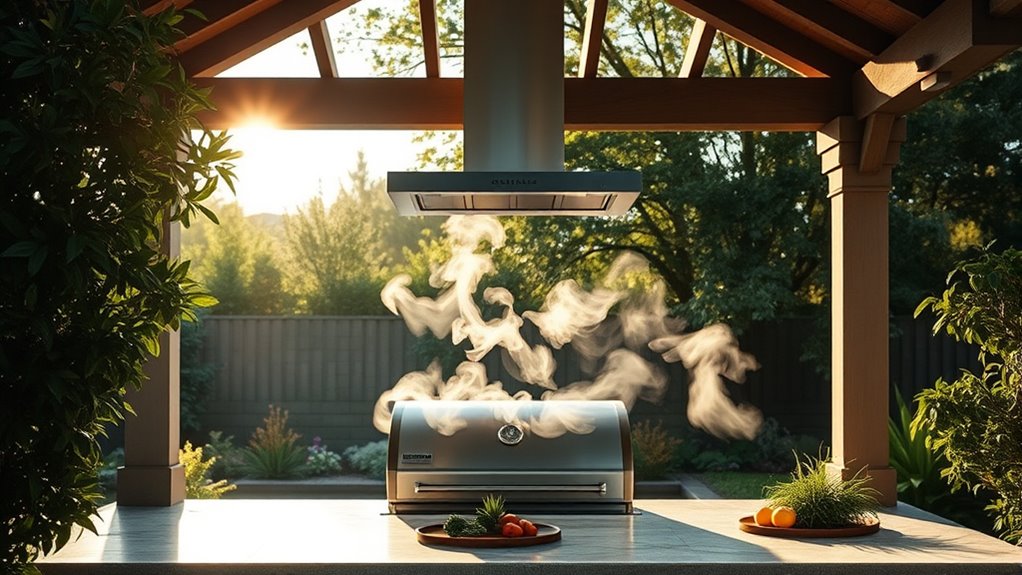
A well-placed vent is like a lighthouse guiding smoke away from your cooking area. When planning your cooking gazebo, it’s essential to understand how smoke behaves and the importance of proper ventilation. By strategically designing your space, you can enhance airflow and guarantee safety. But what specific strategies can you employ to optimize smoke management and create a more enjoyable outdoor cooking experience?




Understanding Smoke Ventilation Needs
While you might enjoy cooking in your gazebo, understanding smoke ventilation needs is essential for both safety and comfort. Effective smoke dispersion relies on proper airflow patterns that help direct smoke away from your cooking area. To achieve this, consider the gazebo’s design, including openings or vents that facilitate natural airflow. Positioning your cooking equipment strategically can enhance smoke movement, minimizing discomfort and hazards. Additionally, using fans can greatly improve ventilation, ensuring a pleasant experience. By prioritizing smoke ventilation, you’re not just enhancing your cooking environment; you’re embracing the freedom to enjoy outdoor culinary adventures without the burden of smoke buildup.
Choosing the Right Location for Your Gazebo
When selecting the right location for your gazebo, it’s crucial to take into account factors that influence both functionality and safety. Consider the gazebo orientation to maximize sunlight and minimize smoke accumulation. Pay attention to surrounding structures that could hinder airflow or obstruct views.
Choosing the ideal gazebo location is essential for enhancing functionality and ensuring safety while optimizing sunlight and airflow.
- A spacious, open area encourages better ventilation.
- Positioning away from trees prevents smoke from getting trapped.
- Ensuring distance from fences enhances safety and accessibility.
Designing Effective Ventilation Systems
To create an effective ventilation system for your cooking gazebo, it is essential to prioritize airflow management right from the design phase. Start by evaluating your space and identifying areas where smoke may accumulate. A thoughtful ventilation design should include strategically placed vents and exhaust fans to facilitate airflow optimization. Consider using adjustable louvers to fine-tune air direction based on prevailing winds. Incorporating natural ventilation methods, like open windows or roof vents, can further enhance performance. Remember, an efficient system not only improves air quality but also contributes to a more enjoyable cooking experience, allowing you the freedom to savor your outdoor culinary adventures.
Selecting Materials for Smoke Management
When selecting materials for smoke management in your cooking gazebo, you’ll want to prioritize durability and heat resistance to withstand high temperatures. Additionally, consider how easily you can access these materials for maintenance to guarantee ideal performance over time. Making informed choices now can greatly enhance the efficiency and longevity of your smoke ventilation system.
Durable Ventilation Materials
Selecting durable ventilation materials is essential for effective smoke management in cooking gazebos. You want to guarantee that your choices not only withstand the elements but also maintain ventilation durability over time. Consider these materials for peak performance:
- Stainless steel: Resistant to corrosion and heat, promoting longevity.
- High-density polyethylene (HDPE): Lightweight yet strong, ideal for outdoor conditions.
- Fiberglass mesh: Allows airflow while preventing debris entry, enhancing efficiency.
Heat-Resistant Construction Options
Effective smoke management hinges on utilizing heat-resistant construction options that can withstand high temperatures generated during cooking. When selecting materials, consider heat resistance materials like stainless steel or aluminum for surfaces exposed to direct heat. These metals not only endure extreme temperatures but also resist corrosion. Additionally, incorporating fireproof insulation into your gazebo will enhance safety and efficiency, preventing heat transfer to adjacent structures. Ascertain proper installation of these materials to maximize their effectiveness. By prioritizing heat-resistant options, you’ll create a safer, more functional cooking environment that allows for enjoyable outdoor gatherings without the worry of smoke hazards.
Accessibility for Maintenance
In addition to choosing heat-resistant materials, considering accessibility for maintenance is essential for effective smoke management in cooking gazebos. Establishing clear access points guarantees you can easily reach ventilation systems and chimneys, allowing for timely upkeep. A well-planned maintenance schedule will keep your gazebo functioning efficiently and prolong its lifespan.
- Wide access doors for easy entry
- Removable panels for simple inspections
- Elevated structures for better under-gazebo access
Utilizing Natural Airflow
While cooking in a gazebo, harnessing natural airflow can greatly enhance smoke ventilation and improve your overall experience. Pay attention to natural breezes and their airflow direction. Position your cooking area where the prevailing winds can effectively carry smoke away from you and your guests. Open windows or vents in your gazebo to allow for cross-ventilation, which can further promote airflow. Additionally, consider the layout of your furniture; guarantee it doesn’t block the path of fresh air. By aligning your cooking space with nature’s currents, you’ll create a more enjoyable environment free from smoke build-up.
Installing Exhaust Fans
When installing exhaust fans in your cooking gazebo, it’s essential to select the right model that suits your specific needs. Proper installation techniques will guarantee peak performance, while regular maintenance and cleaning can extend the life of the fan. Understanding these factors will help you achieve effective smoke ventilation and enhance your cooking experience.
Selecting the Right Fan
Choosing the right exhaust fan is essential for effective smoke ventilation in cooking gazebos. You’ll want to assess various fan types and their efficiency to guarantee peak performance.
- Inline fans: Compact and powerful, great for hidden installations.
- Wall-mounted fans: Easy to install, ideal for direct ventilation.
- Ceiling fans: Aesthetic and functional, perfect for dispersing heat.
Evaluate the airflow capacity, noise level, and energy consumption of each option. A well-chosen fan can drastically reduce smoke build-up, enhancing your cooking experience and maintaining a comfortable environment. Prioritize efficiency to keep your gazebo enjoyable and smoke-free.
Proper Installation Techniques
After selecting the right exhaust fan for your cooking gazebo, proper installation techniques become essential to guarantee peak performance. You should follow specific installation methods, ensuring the fan is positioned at the ideal height and angle to maximize airflow. Adhere to ventilation guidelines, which recommend placing the fan near cooking sources to effectively capture smoke and odors. Secure all connections tightly to avoid leaks that could diminish efficiency. Additionally, consider using ducting that minimizes bends, promoting smoother airflow. By meticulously following these steps, you’ll enhance your gazebo’s ventilation system, allowing you to cook freely and comfortably.
Maintenance and Cleaning Tips
Regular maintenance and cleaning of your exhaust fan is essential for its longevity and peak performance. Establish a routine that includes regular inspections and follows specific cleaning schedules to guarantee maximum functionality.
- Remove grease and debris to prevent fires.
- Check and replace filters to maintain airflow efficiency.
- Inspect electrical connections to avoid malfunctions.
Maintaining Your Cooking Area
While cooking in a gazebo can enhance your outdoor experience, maintaining your cooking area is essential for both safety and efficiency. Regularly inspect your cooking equipment to guarantee it’s functioning properly, as faulty gear can disrupt your cooking techniques. Emphasize smoke management by keeping your ventilation systems clear and unobstructed. Additionally, clean surfaces to prevent grease buildup, which can attract pests and create fire hazards. Organize your tools and ingredients to streamline your cooking process. By maintaining your cooking area, you’ll not only enjoy a safer environment but also enhance your culinary adventures in the great outdoors.
Safety Considerations for Smoke Ventilation
Since proper smoke ventilation is essential for both safety and comfort, it’s important to take into account several factors when cooking in a gazebo. Here are key safety considerations:
Proper smoke ventilation is crucial for safety and comfort when cooking in a gazebo; consider essential factors for a safe experience.
- Install smoke detectors to alert you of any smoke buildup.
- Guarantee your ventilation system effectively directs smoke away from your cooking area.
- Regularly inspect for potential fire hazards, like flammable materials nearby.
Frequently Asked Questions
Can I Use a Portable Grill in My Gazebo?
Yes, you can use a portable grill in your gazebo, but prioritize safety. Just like a bird needs open air to soar, proper ventilation is essential. Follow gazebo cooking tips to guarantee a safe and enjoyable experience.
What Plants Should I Avoid Near a Cooking Gazebo?
You should avoid toxic plants like oleander and foxglove near your cooking gazebo. Additionally, smoke absorbing plants, such as pine and eucalyptus, can help manage odors, enhancing your outdoor experience while ensuring safety and enjoyment.
How Often Should I Clean My Ventilation System?
Like a well-tuned engine, your ventilation system needs regular attention. For ideal performance, aim for cleaning every three to six months. This frequency guarantees proper ventilation maintenance, preventing buildup and keeping your cooking space fresh and efficient.
Are There Any Local Regulations for Gazebo Smoke Ventilation?
Yes, there are local building codes and smoke evacuation guidelines you should check. They can vary by area, so it’s essential to review these regulations to guarantee your gazebo meets safety and ventilation requirements.
Can I Use a Wood-Burning Stove in My Gazebo?
Yes, you can use a wood-burning stove in your gazebo, but make certain it’s designed for safety. Proper ventilation and gazebo design are essential to prevent smoke buildup and maintain a safe, enjoyable atmosphere.