
While traditional heating systems rely heavily on electricity, non-electric heated flooring offers a sustainable alternative that efficiently warms your home. You can achieve this by utilizing hydronic systems, which circulate hot water through pipes beneath your floor. It’s a practical approach that can enhance comfort and reduce energy costs. But how do you get started with the installation process and guarantee it lasts? Let’s explore the essential steps and benefits.




Understanding Radiant Floor Heating Options
When you’re considering heated flooring, it’s essential to understand the various radiant floor heating options available to you. One popular choice is hydronic systems, which circulate hot water through pipes embedded in your flooring. This method effectively utilizes thermal mass, allowing your floors to retain and radiate heat steadily. It’s efficient and can considerably lower energy costs. Another option is electric radiant heating, though you’re focusing on non-electric solutions. Ultimately, both systems offer unique advantages, so knowing how hydronic systems work and their integration with thermal mass can help you make an informed decision tailored to your needs.
Benefits of Non-Electric Heated Flooring
Although many homeowners are drawn to electric heating systems for their convenience, non-electric heated flooring, particularly hydronic systems, offers distinct advantages that can enhance your living space. These systems provide sustainable heating by utilizing water heated through energy-efficient methods like solar or geothermal sources. You’ll enjoy consistent warmth without the reliance on electricity, reducing your environmental footprint. Additionally, hydronic systems often have lower operating costs over time due to their energy efficiency, allowing you to save money while staying comfortable. Embracing this method means investing in a healthier, more sustainable home without sacrificing warmth or freedom from energy bills.
Different Materials for Heated Floors
Choosing the right material for your heated floors can greatly impact both comfort and efficiency. Ceramic tiles are a popular choice due to their excellent heat retention and durability. They provide a sleek, modern look while effectively distributing warmth across the surface. On the other hand, cork flooring offers a softer, more cushioned feel underfoot, making it ideal for living spaces where comfort is key. It’s also eco-friendly and naturally insulating, which can help maintain warmth. By weighing these options, you’ll find the perfect material that aligns with your lifestyle and enhances your home’s comfort without relying on electricity.
Step-by-Step Installation Guide
When installing heated flooring, you’ll need to gather specific materials and properly prepare your flooring surface. This guide will walk you through the essential steps of the installation process to guarantee a successful setup. Let’s get started on making your space warm and cozy!
Materials Needed for Installation
Before diving into the installation of heated flooring, it’s essential to gather all necessary materials to guarantee a smooth process. You’ll need quality insulation materials to maximize heat retention, such as foam boards or reflective barriers. Choose your flooring types wisely; options like tile, laminate, or engineered wood work well with heated systems. Don’t forget to grab a moisture barrier, adhesive, and a leveling compound if needed. Additionally, having tools like a utility knife, trowel, and measuring tape on hand will make the job easier. With everything ready, you can enjoy your cozy, energy-efficient space in no time!
Preparation of Flooring Surface
With all your materials at hand, the next step is to prepare the flooring surface to guarantee peak performance of your heated flooring system. Start with surface cleaning to remove dust and debris. Next, assess the floor leveling; any unevenness can lead to hot spots. Use a leveling compound if needed.
Here’s a quick checklist:
| Step | Action | Notes |
|---|---|---|
| Surface Cleaning | Sweep and vacuum | Make sure no dust remains |
| Floor Assessment | Check for unevenness | Look for bumps and dips |
| Leveling Compound | Apply as needed | Follow manufacturer’s guide |
| Drying Time | Allow to cure | Check recommended time |
| Final Inspection | Verify smoothness | Make certain it’s even |
Installation Process Steps
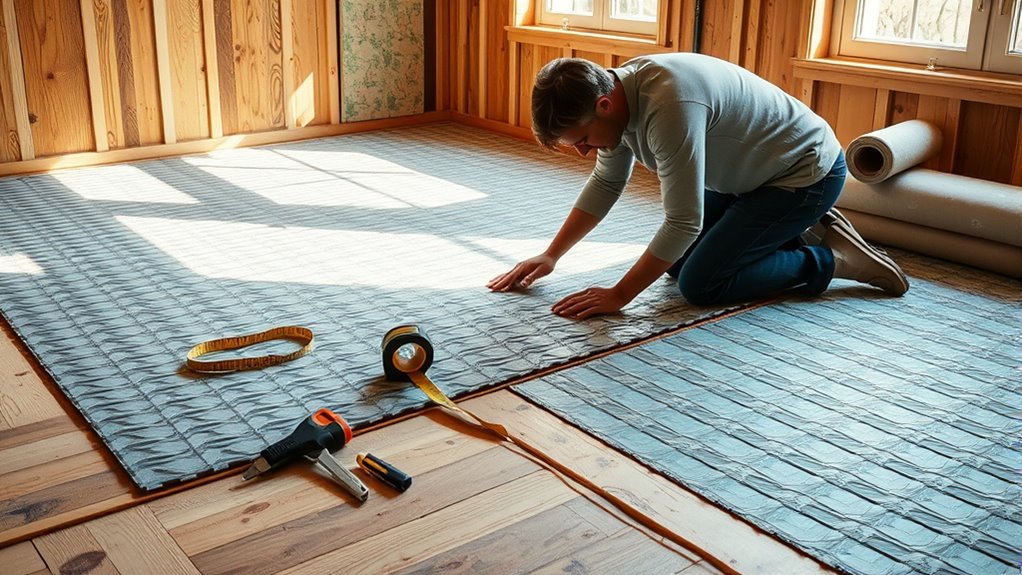
Now that your flooring surface is prepped and ready, you can plunge into the installation process of your heated flooring system. First, lay down an insulation layer to minimize heat loss. Next, position your heating alternatives, guaranteeing even spacing to tackle installation challenges. Secure them with adhesive as needed. Then, add a layer of thermal mass material, such as lightweight concrete or tile, to retain heat. Finally, install your chosen flooring on top, making sure everything is level. Always double-check connections and test the system before full use to verify peak performance and comfort in your space.
Maintenance Tips for Long-Lasting Warmth
To keep your heated flooring performing at its best, regular inspections and cleaning are essential. Make certain to protect the surface properly and follow seasonal maintenance guidelines to avoid any issues. Staying proactive will guarantee you enjoy long-lasting warmth for years to come.
Regular Inspections and Cleaning
Although heated flooring systems are designed for durability and efficiency, regular inspections and cleaning are essential to confirm they continue to provide consistent warmth. Aim for inspection every six months to check for any signs of wear or damage. During these inspections, look for loose tiles or cracks that might affect performance. As for cleaning techniques, use a gentle, non-abrasive cleaner and a soft mop to avoid scratching surfaces. Be careful not to saturate the floor, as excess moisture can cause issues. By staying proactive with maintenance, you’ll confirm your heated flooring remains a reliable source of comfort for years to come.
Proper Surface Protection
Regular inspections and cleaning set the foundation for maintaining your heated flooring, but proper surface protection can remarkably extend its lifespan and efficiency. To guarantee surface durability, consider applying protective coatings that shield against wear and tear. These coatings not only enhance aesthetics but also provide a barrier against spills and scratches. Choose products specifically designed for your flooring type, as they’ll adhere better and offer ideal protection. Regularly buff and reapply coatings as needed, and avoid harsh chemicals that can damage the surface. With these steps, you’ll enjoy the warmth of your heated flooring for years to come.
Seasonal Maintenance Guidelines
As the seasons change, it’s essential to adapt your maintenance routine for heated flooring to guarantee it continues to operate efficiently. Start with seasonal checks—inspect for any wear or damage, especially in colder months when usage peaks. Keep the surface clean and free from obstructions that could hinder warmth. Create a maintenance schedule that includes regular inspections and necessary repairs. Don’t forget to check for moisture buildup, as it can affect performance. By staying proactive, you’ll enjoy the comfort of your heated flooring for years to come, allowing you the freedom to embrace warmth without worry.
Cost Comparison: Electric vs. Non-Electric Heating
When considering heated flooring options, it’s essential to weigh the costs of electric versus non-electric heating systems. Electric costs can add up over time, especially in larger spaces, while non-electric systems often require a higher initial investment but excel in long-term efficiency. You’ll find that non-electric options, like hydronic systems, provide consistent warmth without the ongoing energy expenses associated with electric heaters. Additionally, the installation costs can vary greatly, so it’s wise to calculate potential savings based on your home’s layout and heating needs. Ultimately, choosing the right system can enhance your comfort and financial freedom.
Frequently Asked Questions
Can Heated Flooring Be Installed Over Existing Floors?
Yes, you can install heated flooring over existing floors using various installation methods. Just make certain your flooring materials are compatible. Proper preparation and insulation are key for effective heat distribution and ideal performance.
How Long Does It Take to Feel Warmth From Heated Floors?
You’ll typically feel warmth from heated floors within 30 minutes to a few hours, depending on heat retention and installation time. Proper insulation and floor materials can enhance their efficiency, ensuring a cozy experience sooner.
Are There Any Safety Concerns With Heated Flooring?
Heated flooring’s generally safe, but about 25% of installations encounter issues. Always follow installation guidelines and safety precautions, ensuring proper insulation and temperature controls to prevent overheating and maintain comfort without compromising your freedom at home.
Can Heated Floors Be Used in Bathrooms?
Yes, heated floors can be used in bathrooms. They offer heated floor benefits, like warmth and comfort underfoot, enhancing your space. Just guarantee proper bathroom installation to prevent moisture-related issues and maximize efficiency.
What Is the Lifespan of Non-Electric Heated Flooring Systems?
Non-electric heated flooring systems can last up to 50 years when properly installed. Using durable non-electric materials, they offer impressive heating efficiency, giving you cozy comfort without the hassle of electricity. Enjoy warmth for decades!