
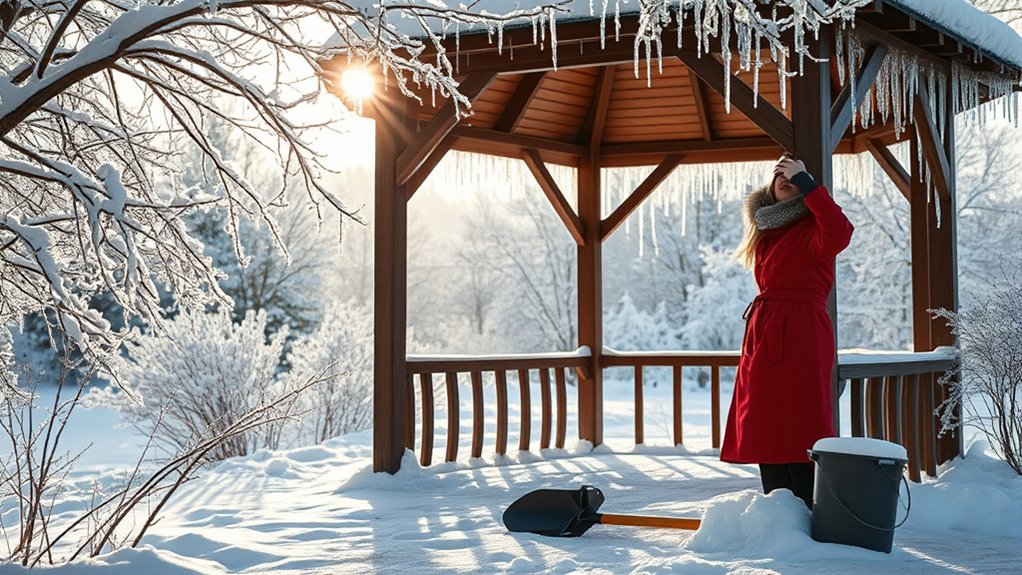
As the frost settles in, think of the gazebo as a ship docked for winter. Before you set sail into the colder months, it’s essential to perform a thorough safety inspection. You’ll want to guarantee its structural integrity, clear away snow and debris, and check for any rust or corrosion. Each step is critical for a safe experience. Let’s explore what you need to inspect to enjoy your gazebo without worry this winter.




Inspect the Structural Integrity
When winter settles in, the structural integrity of your gazebo becomes vital. You need to conduct a thorough structural inspection to guarantee it can withstand harsh conditions. Start by examining the framework for any signs of damage, such as cracks or warping. Pay special attention to joints and connections; they’re essential for stability. An integrity assessment of the roof is also important, as snow accumulation can lead to collapse. Look for rust or rot in metal or wood components. By prioritizing these checks, you’ll make sure your gazebo remains a safe haven during the cold months ahead.
Clear Snow and Debris
To guarantee your gazebo remains safe throughout winter, it’s essential to clear any snow and debris accumulation. Excessive snow can pose risks to its structural integrity, so you’ll need effective techniques for removal. Regularly checking for debris and maintaining a clear space will help prevent damage and prolong the life of your gazebo.
Snow Accumulation Risks
As snow accumulates on your gazebo, the weight can pose significant risks to its structural integrity. Excessive snow load can lead to structural failure, causing your gazebo to sag or collapse. Regularly check the roof for built-up snow, especially after heavy storms. It’s crucial to clear any accumulation promptly to prevent undue stress on the framework. Be mindful of the gazebo’s design and materials, as some structures can handle more weight than others. Checking for signs of damage is essential for maintaining safety. Protect your investment and guarantee you can enjoy your gazebo safely throughout the winter months.
Debris Removal Techniques
Five effective techniques can help you clear snow and debris from your gazebo efficiently. First, use a sturdy snow shovel as one of your essential debris removal tools; it’ll enable you to lift heavy snow easily. Second, a broom can sweep away lighter snow and leaves. Third, a leaf blower works wonders for smaller debris, making cleanup quick. Fourth, consider a rake for stubborn ice or snow buildup on the roof. Finally, guarantee proper debris disposal methods by bagging and discarding waste responsibly. By following these techniques, you’ll maintain a safe and inviting space in your gazebo throughout winter.
Structural Integrity Check
Inspecting the structural integrity of your gazebo after winter’s harsh conditions is essential for ensuring its safety and longevity. Start by clearing snow and debris, as this can compromise load bearing capacity. Pay close attention to joint connections; they’re vital for stability.
| Checkpoint | Action Required |
|---|---|
| Snow Accumulation | Remove excess snow |
| Debris Presence | Clear branches and leaves |
| Joint Connections | Inspect for rust or damage |
| Load Bearing Capacity | Test for sagging or weakness |
Check for Rust and Corrosion
Rust and corrosion are silent threats that can compromise the structural integrity of your gazebo during winter months. Start by inspecting metal components for any signs of rust. If you spot any, remove it using a wire brush or sandpaper. After cleaning, apply a rust prevention product to shield against future damage. Don’t overlook joints and fasteners, as they’re often the first to corrode. For severe cases, consider corrosion treatment products to restore affected areas. Regular checks and maintenance will guarantee your gazebo remains a safe retreat, allowing you the freedom to enjoy your outdoor space all winter long.
Examine the Roof for Damage
The roof of your gazebo plays an important role in protecting it from winter elements, so it is essential to check for any damage. Look for cracks, missing shingles, or loose panels that could expose your structure to harsh winter weather. Regular roof maintenance can prevent costly repairs later.
| Issue | What to Look For | Action Required |
|---|---|---|
| Cracks | Visible fractures | Seal or replace |
| Missing Shingles | Gaps in roofing | Replace shingles |
| Loose Panels | Movement or flapping | Secure or replace |
Taking these steps can guarantee your gazebo remains a safe retreat.
Ensure Proper Drainage
Proper drainage is essential for maintaining the integrity of your gazebo during the winter months. To prevent damage from winter runoff, check that drainage solutions, like gutters and downspouts, are clear and functioning. Snow and ice can accumulate, leading to water pooling around the structure, which can weaken the foundation. If necessary, consider adding additional drainage options to redirect water away from your gazebo. Regularly inspect the ground around the gazebo to guarantee it slopes away, promoting effective drainage. Taking these steps will help protect your investment and keep your outdoor space ready for enjoyment, even in the cold season.
Test Electrical Fixtures and Heating
When winter approaches, guaranteeing the safety of electrical fixtures and heating systems in your gazebo becomes essential. To maintain electrical safety and maximize heating efficiency, follow these steps:
- Inspect Wiring: Check for frayed or exposed wires that could pose a hazard.
- Test Outlets: Use a multi-meter to guarantee all outlets are functioning properly and grounded.
- Evaluate Heaters: Make sure your heating units are clean, unobstructed, and in good working order.
Secure Loose Components
Check for any loose components in your gazebo, as winter weather can exacerbate structural weaknesses. Start by inspecting for loose bolts; these can compromise stability if left unaddressed. Tighten any that you find, ensuring they’re secure but not overtightened. Next, examine connectors for damage; damaged connectors can lead to more significant issues down the line. If you spot any that are cracked or corroded, replace them promptly. Taking these steps not only enhances your gazebo’s safety but also allows you to enjoy winter gatherings without worry. A solid structure means more freedom to explore outdoor experiences, even in chilly weather.
Review Safety Equipment and Accessories
Now that you’ve secured loose components, it’s vital to review the safety equipment and accessories for your gazebo this winter. Start by checking essential winter accessories, like snow guards or heaters, to make certain they’re in good condition. Next, inspect all safety gear, guaranteeing everything functions properly to keep your structure safe amid winter conditions.
Essential Winter Accessories
As winter approaches, ensuring your gazebo is equipped with the right accessories can greatly enhance its safety and functionality. Consider adding these essential winter accessories:
- Winter Blankets: Keep cozy by draping thick winter blankets over seating areas, providing warmth and comfort for you and your guests.
- Heating Mats: Place heating mats underneath furniture to create a warm surface, preventing cold feet and ensuring a pleasant experience.
- Windbreaks: Install windbreaks around the gazebo to shield against harsh winds, maintaining a more stable temperature inside.
These accessories will help you enjoy your gazebo, even in the chill of winter.
Inspection of Safety Gear
It’s essential to evaluate your safety gear before winter fully sets in, guaranteeing your gazebo remains a secure refuge. Start by checking your inspection checklist for items like sturdy tarps, durable ropes, and appropriate weights. Look for any signs of wear or damage, as compromised gear can lead to accidents. Verify that your heating equipment is functioning properly and that fire extinguishers are accessible. Don’t forget to inspect lighting fixtures for functionality, too. By taking the time to thoroughly review your safety gear, you’ll be better prepared to enjoy your gazebo with peace of mind all winter long.
Frequently Asked Questions
How Often Should I Inspect My Gazebo During Winter Months?
You should inspect your gazebo at least once a week during winter months. Regular winter maintenance guarantees gazebo safety, preventing structural issues and making certain it remains a cozy retreat for you when the weather permits.
What Tools Are Necessary for a Gazebo Winter Inspection?
Think of your gazebo as a ship needing a captain’s check. For a thorough inspection checklist, you’ll need essential tools like a ladder, flashlight, moisture meter, and basic repair supplies to make certain everything’s shipshape.
Can I Use My Gazebo in Heavy Snowfall?
You shouldn’t use your gazebo in heavy snowfall. The snow load can compromise its structural integrity, risking damage or collapse. It’s best to clear snow regularly and avoid using it until conditions improve.
What Are Signs of Wear That Require Immediate Attention?
You should check for rusted joints and broken shingles. If you notice either, it’s essential to address them immediately. These issues can compromise your gazebo’s safety and stability, affecting your enjoyment and freedom outdoors.
Should I Cover My Gazebo During Winter?
You should definitely cover your gazebo during winter. Gazebo covers provide essential winter protection, preventing snow and ice damage. Think of the peace of mind you’ll gain, knowing your structure’s safe and sound beneath that protective layer.