
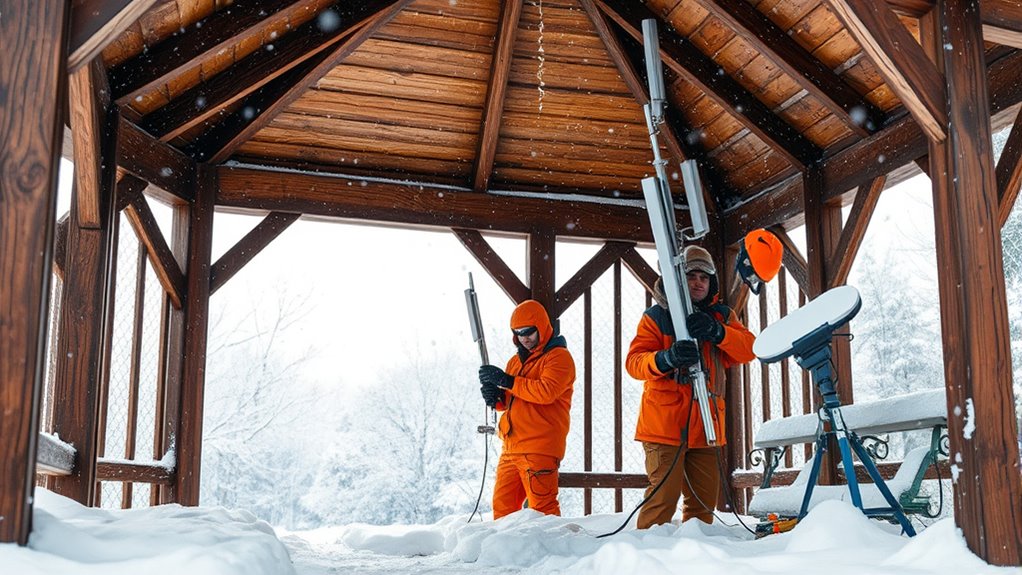
If you’re considering installing signal boosters in your winter gazebo, it’s vital to understand the challenges posed by harsh weather and construction materials. Weak signals can hinder communication when you need it most. By properly evaluating your current signal strength and selecting the right booster, you can guarantee reliable connectivity. The installation process, while straightforward, requires careful attention to detail to maximize performance. Let’s explore the essential steps to enhance your winter gazebo’s signal strength.



Understanding Signal Boosters and Their Importance
Signal boosters, also known as repeaters, play an essential role in enhancing cellular reception in areas with weak signals. They work by amplifying various signal types, including 2G, 3G, 4G, and even 5G, ensuring you stay connected. The benefits of using a signal booster are significant; improved call quality, faster data speeds, and extended coverage can all enhance your mobile experience. In environments like a winter gazebo, where external interference might hinder connectivity, a booster can provide the freedom to communicate without interruption. By investing in a signal booster, you’re empowering yourself to maintain reliable communication, no matter where you are.
Assessing Your Current Signal Strength
To effectively assess your current signal strength, you’ll need to measure signal quality throughout your space. Begin by identifying weak areas where the signal drops considerably, which can inform your booster placement. This evaluation is essential for optimizing the performance of your signal booster.
Measuring Signal Quality
Evaluating your current signal strength is essential for optimizing mobile communication. To accurately measure signal quality, utilize effective signal measurement techniques. Start by using reliable signal testing tools like apps or dedicated devices that can quantify your signal in decibels (dBm). These tools help you assess not only strength but also quality indicators such as noise levels and signal-to-noise ratios. Take measurements in various locations within your gazebo to find the best reception points. This data will empower you to make informed decisions on signal booster placement, ensuring you maximize your connection and enjoy seamless communication in your winter retreat.
Identifying Weak Areas
Where are the weak areas in your mobile reception? Identifying these spots is essential for effective signal boosting. Start by evaluating outdoor location factors, like trees or buildings, that might block signals. Next, examine potential signal interference sources, such as electronic devices or nearby metal structures. Use the table below to help categorize your findings.
| Area | Signal Strength | Interference Sources |
|---|---|---|
| Gazebo Interior | Weak | Electronics, Walls |
| Surrounding Areas | Moderate | Trees, Buildings |
| Open Outdoor Space | Strong | None |
Choosing the Right Signal Booster for Your Gazebo
When choosing a signal booster for your gazebo, you need to evaluate the types available and their specific coverage areas. Different boosters are designed for varying distances and signal strengths, so matching one to your gazebo’s size is essential. Additionally, reflect on any potential obstacles that could affect signal propagation within that space.
Types of Signal Boosters
Choosing the right signal booster for your gazebo can greatly enhance your mobile connectivity, especially if you’re in a remote area. There are two primary types: outdoor signal types and indoor signal types. Outdoor signal boosters are designed to capture weak signals from cell towers and amplify them for use inside your gazebo. Meanwhile, indoor signal types improve coverage within the gazebo itself, distributing the enhanced signal effectively. When selecting, consider your specific needs, such as the distance from the nearest tower and the materials of your gazebo, to guarantee peak performance and connectivity freedom.
Coverage Area Considerations
To guarantee peak performance of your signal booster, understanding the coverage area is essential. Assess the coverage boundaries of your gazebo and consider the size and materials used in its construction. Signal propagation can be affected by walls, windows, and even the roof, which may limit the effective range of your booster. Choose a signal booster with the capacity to cover the entire area, ensuring no dead zones exist. Additionally, be mindful of the distance between the outdoor antenna and indoor amplifier, as this can influence performance. With the right setup, you’ll enjoy seamless connectivity throughout your winter retreat.
Necessary Tools and Equipment for Installation
Before starting the installation of a signal booster, you’ll need to gather several essential tools and pieces of equipment to guarantee a smooth process. An accurate equipment checklist will assure you’re prepared to enhance your signal strength effectively. Here’s what you’ll need:
| Tool/Equipment | Purpose | Quantity |
|---|---|---|
| Drill | For mounting the antenna | 1 |
| Cable connectors | To connect cables securely | Varies |
| Signal booster unit | To amplify the signal | 1 |
| Ladder | For outdoor installation access | 1 |
| Coaxial cable | For connecting components | As needed |
Step-by-Step Installation Process
The installation of a signal booster involves several key steps that guarantee peak performance and coverage. First, confirm installation safety by wearing appropriate gear. Next, assess your winter considerations—opt for weather-resistant materials and secure all cables to prevent ice damage. Begin by mounting the outdoor antenna in a location with clear signal access. Connect the indoor unit to the antenna using the coaxial cable, confirming it’s sealed against moisture. Finally, power up the system and verify signal strength. Regularly check for any winter-related issues, such as snow accumulation, to maintain ideal functionality throughout the season.
Tips for Optimizing Signal Performance
After guaranteeing a proper installation, maximizing signal performance becomes the next priority. To enhance your signal in the winter gazebo, consider these tips:
- Minimize Signal Interference: Keep electronic devices and metal objects away from the booster and antennas to reduce interference.
- Use Appropriate Outdoor Materials: Confirm all materials used in the setup can withstand harsh weather without degrading signal quality.
- Position Antennas Strategically: Elevate and orient antennas toward the nearest cell tower for peak reception.
Maintaining Your Signal Booster for Long-Term Use
Although signal boosters are designed for durability, regular maintenance is essential to assure peak performance and longevity. Start by inspecting the cables for wear and tear, as frayed wires can affect signal transmission. Clean the antenna and booster unit periodically to prevent dust build-up, which can impede functionality. Ascertain connections are tight and secure to avoid signal loss. Monitor performance regularly; if you notice a decrease in signal strength, troubleshoot promptly. Following these signal maintenance practices will enhance booster longevity, allowing you to enjoy reliable connectivity in your winter gazebo for years to come.
Frequently Asked Questions
Can I Install a Signal Booster Myself, or Hire a Professional?
You can absolutely handle a DIY installation if you’re comfortable with technical tasks. However, hiring professional services guarantees peak performance, especially for complex setups. Weigh your skills against potential benefits before deciding what’s best for you.
Will Extreme Cold Weather Affect My Signal Booster’s Performance?
Could extreme cold weather impact your signal booster’s performance? Yes, cold weather effects can lead to signal strength fluctuations, potentially reducing efficiency. It’s essential to verify your device is rated for low temperatures to maintain peak functionality.
Are There Any Legal Restrictions on Using Signal Boosters?
Yes, there are legal regulations regarding signal boosters. You must verify your device complies with FCC rules, which promote fair use and prevent interference. Always check local laws to assure your booster’s legality and compliance.
How Long Does the Installation Process Typically Take?
Typically, installation time ranges from one to three hours. However, installation challenges like poor signal strength or complex layouts can extend this. It’s essential to plan ahead to guarantee a smooth, efficient setup and maximize your freedom.
Can I Use Multiple Boosters for Better Coverage?
Yes, you can use multiple boosters for better coverage. Different signal booster types cater to various coverage areas, allowing you to enhance connectivity across larger spaces. Just make certain they’re properly configured to avoid interference.