
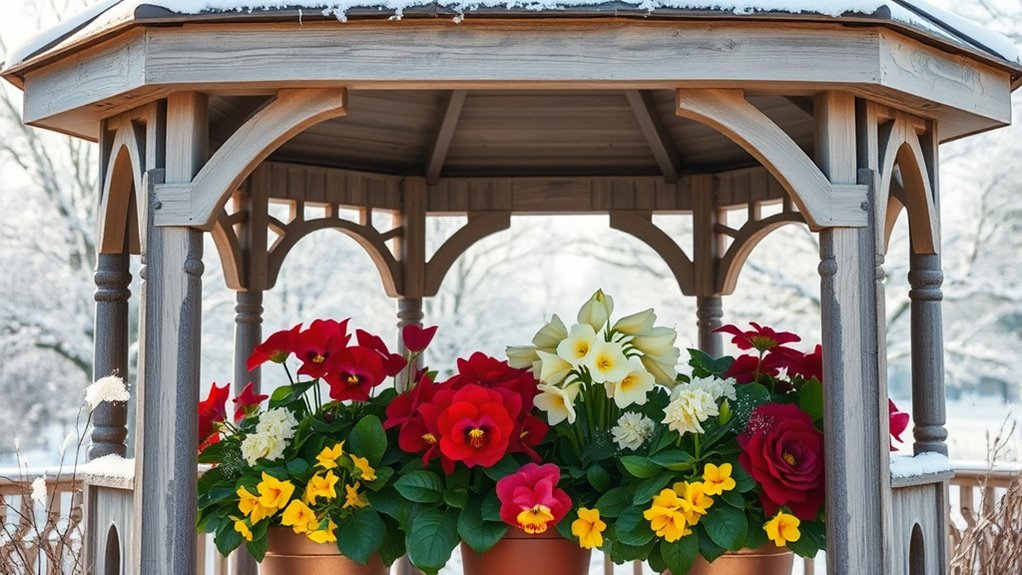
When it comes to enhancing your gazebo during the winter months, choosing the right flowers is essential. Hardy varieties can withstand cooler temperatures while providing vibrant colors and charm. For instance, pansies offer a spectrum of hues, while Cyclamen adds a unique touch with its heart-shaped leaves. Understanding the specific needs of these plants, such as soil type and light conditions, will guarantee your gazebo remains inviting throughout the season. Let’s explore these options further.



Selecting the Right Flowers for Your Gazebo
When selecting flowers for your gazebo, it’s essential to contemplate the specific conditions of the space, as well as the aesthetic you want to achieve. Start with flower selection tips that consider sunlight, humidity, and temperature. For a vibrant look, choose flowers that complement your gazebo design aesthetics, like cheerful cyclamen or elegant amaryllis. Ascertain you select varieties that thrive indoors during winter, adding color and life. Consider the height and spread of your chosen flowers to maintain balance. Finally, group flowers in clusters for visual impact, creating an inviting atmosphere that enhances your gazebo’s charm and your personal enjoyment.
Pansies: The Colorful Winter Bloom
Although winter may seem an unlikely time for vibrant blooms, pansies prove otherwise with their striking colors and resilience. These hardy flowers thrive in cooler temperatures, making them ideal for your gazebo. To guarantee peak growth, pay attention to pansy care, including well-drained soil and consistent moisture.
| Pansy Colors | Characteristics |
|---|---|
| Purple | Deep, rich hue |
| Yellow | Bright and cheerful |
| White | Classic and elegant |
| Red | Bold and vibrant |
| Blue | Soft and calming |
With proper care, these colorful blooms will brighten your winter space.
Cyclamen: A Unique and Charming Choice
Cyclamen stands out as a unique and charming choice for winter gardening in your gazebo, thanks to its distinctive heart-shaped leaves and exquisite, upswept flowers. For ideal cyclamen care, place them in a cool environment with bright, indirect light. Water when the top inch of soil feels dry, avoiding excess moisture that can lead to rot. You’ll find various cyclamen varieties, such as Cyclamen persicum, known for its vibrant blooms, and Cyclamen hederifolium, which has attractive foliage. Embrace the beauty of cyclamen in your indoor space, allowing their elegance to transform your winter garden experience.
Winter Jasmine: Fragrant and Beautiful
Winter Jasmine, with its delicate yellow blooms, offers a fragrant and beautiful addition to your gazebo during the colder months. This hardy plant thrives in various conditions, making it a favorite among fragrant varieties. To guarantee ideal growth, provide winter care by placing it in a sunny spot, ideally with well-draining soil. Water sparingly, allowing the soil to dry between watering sessions. Pruning after flowering promotes bushy growth. Regularly check for pests, as these can affect its vibrancy. With the right attention, Winter Jasmine will not only enhance your gazebo’s aesthetic but also fill it with delightful fragrance throughout winter.
Primroses: Early Blooms to Brighten Your Space
When you’re looking to add a splash of color to your gazebo during the winter months, Primroses stand out as an excellent choice. These hardy flowers come in various primrose varieties, offering vibrant hues that can brighten any space. For ideal primrose care, make sure they receive bright, indirect light and maintain a consistent moisture level without waterlogging. Fertilizing every few weeks with a balanced fertilizer can encourage blooming. Additionally, keep them in a cool environment to prolong their flowering period. With minimal effort, you can enjoy these cheerful blooms, transforming your gazebo into a delightful winter retreat.
Indoor Herbs: Adding Greenery and Flavor
Indoor herbs are a fantastic way to enhance both the aesthetics and flavor of your gazebo space during winter. To successfully grow herbs like basil, thyme, and rosemary, you’ll need to provide specific growing conditions such as adequate light, humidity, and temperature control. Understanding their culinary uses can also inspire you to incorporate fresh flavors into your cooking, making your indoor garden both functional and beautiful.
Best Indoor Herbs
Herbs can transform your cooking and elevate the ambiance of your indoor space. Embracing indoor propagation through herb gardening not only provides fresh flavors but also enhances your surroundings. Here are some of the best indoor herbs to contemplate:
- Basil: A fragrant favorite, perfect for Italian dishes.
- Parsley: Versatile and easy to grow, it adds brightness to meals.
- Mint: Invigorating and aromatic, great for teas and desserts.
- Chives: Mild onion flavor, excellent for garnishing.
These herbs thrive indoors, allowing you to enjoy the benefits of gardening while enhancing your culinary creations.
Growing Conditions Needed
To successfully cultivate herbs indoors, understanding their specific growing conditions is essential. Each herb has distinct needs regarding lighting requirements and temperature considerations. Ensuring you meet these conditions will maximize growth and flavor.
| Herb | Lighting Requirements |
|---|---|
| Basil | 12-16 hours of bright light |
| Mint | 10-12 hours of indirect light |
| Thyme | 10-12 hours of bright light |
| Parsley | 8-10 hours of moderate light |
Keep your indoor temperature between 65-75°F, as most herbs thrive in this range. Monitoring these factors will help you enjoy a vibrant indoor herb garden.
Culinary Uses Explained
While you might think of herbs solely as garnishes, they play an essential role in elevating the flavor profiles of various dishes. Indoor herbs offer numerous culinary benefits, allowing you to enhance your meals right from your gazebo. Here are some ways they can transform your cooking:
- Basil: Adds a fresh, aromatic touch to pesto and salads.
- Thyme: Elevates roasted meats and vegetables with its earthy flavor.
- Parsley: Brightens dishes with a rejuvenating finish.
- Chives: Provides a mild onion flavor, perfect for soups and dips.
Incorporating these herbs into your cooking not only improves taste but also boosts your culinary creativity.
Frequently Asked Questions
How Much Sunlight Do Winter Flowers Need Inside a Gazebo?
Winter flowers generally need 6-8 hours of indirect light daily. Position your gazebo to maximize sunlight exposure, ensuring that the plants receive adequate light. Adjust placement as needed to meet specific light requirements for ideal growth.
Can I Grow Winter Flowers in Pots or Containers?
Yes, you can grow winter flowers in pots or containers. Using proper potting techniques and selecting suitable container choices guarantees drainage and warmth, allowing your blooms to thrive even in chilly conditions while offering you flexibility.
What Is the Ideal Temperature for Winter Flowers Indoors?
For winter flowers indoors, maintain temperatures between 65°F to 75°F. Different winter flower types may have varying temperature preferences, but this range generally guarantees ideal growth, encouraging blooming and healthy foliage during the colder months.
How Often Should I Water Winter Flowers in a Gazebo?
You’d think winter flowers need constant attention, but that’s not true. For winter flower care, water them every 1-2 weeks, adjusting the frequency based on humidity and light. Always check the soil moisture first!
Are There Any Pests That Commonly Affect Indoor Winter Flowers?
Yes, common pests like aphids and spider mites can affect indoor winter flowers. For effective pest control, regularly inspect your plants and use neem oil or insecticidal soap to manage infestations before they escalate.